.svg)
How to Handle Deposits and Cancellations on Custom Wrap Jobs
Custom wraps commit material and days of bay time before the customer pays in full. Here is how to structure a fair deposit and cancellation policy that protects your shop.

.png)
Helping auto shops work smarter and grow.
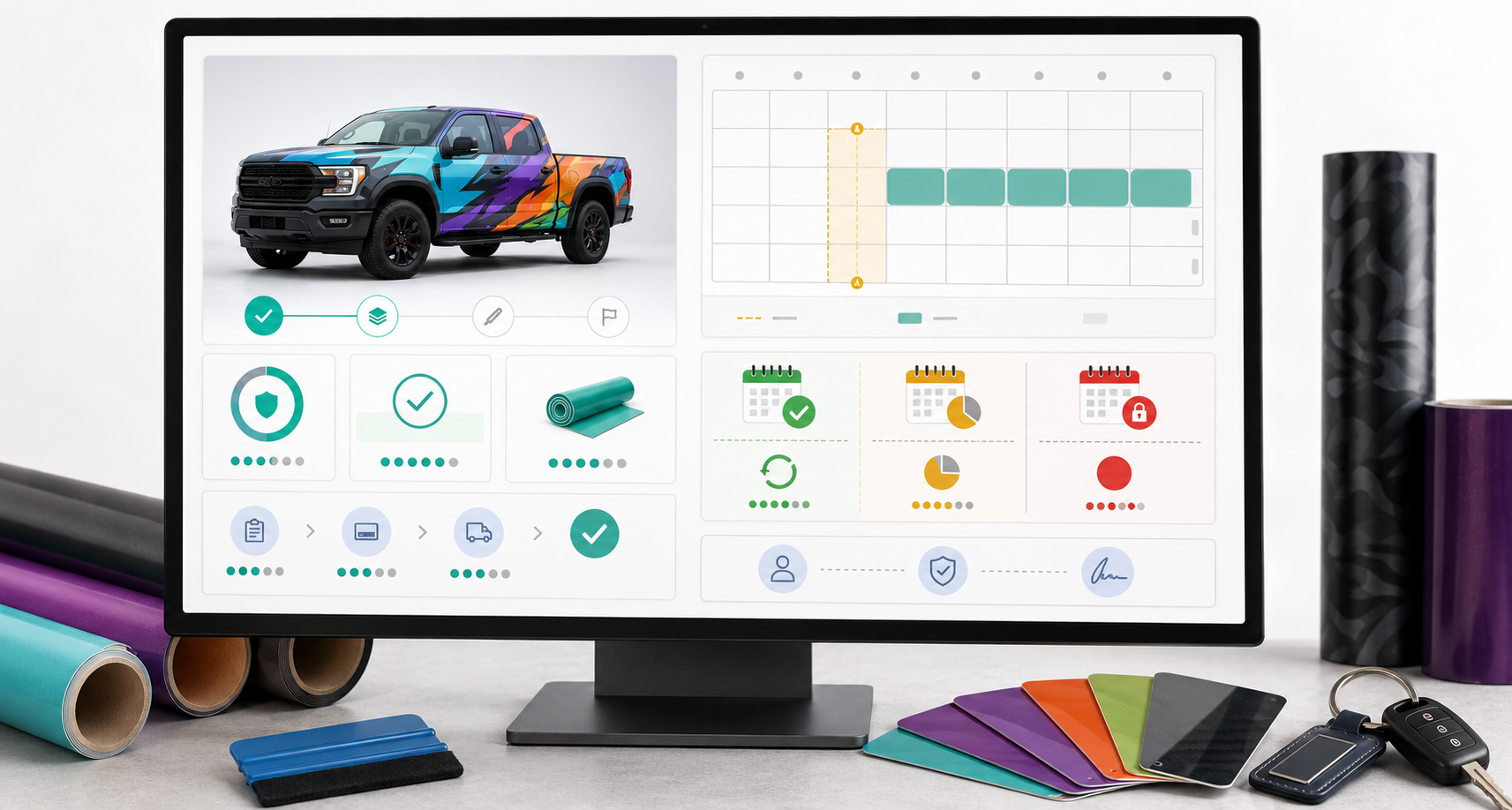
A custom vehicle wrap is one of the highest-risk jobs a shop takes on. You order custom-printed or specialty vinyl for a specific vehicle, you block out days of bay time and a skilled installer, and if the customer backs out, you are left holding material you cannot resell and a hole in your schedule you cannot fill. A clear deposit and cancellation policy is not about being rigid, it is about protecting a job where the costs are committed long before the customer pays in full. This guide shows you how to structure one that is fair to the customer and safe for your shop.
Why wraps need a policy that quick jobs do not
Wraps are different from most shop work in two ways that make a policy essential. First, the material is often custom: printed graphics, a specific color-change vinyl, or a specialty film ordered for that one vehicle, which means it has little or no resale value if the job falls through. Second, the time commitment is large, a full wrap can occupy a bay and an installer for days. That combination, committed material cost plus committed time, is exactly why a casual booking is dangerous. A no-show or last-minute cancellation on a wrap is not a minor gap, it is a direct financial loss, and that is what the deposit and cancellation terms exist to cover.
Structure the deposit to cover your real exposure
The deposit on a wrap should be sized to your actual risk, not a token amount. The single most important principle is that the deposit should at minimum cover your material cost, because that is the money you commit the moment you place the order. Many shops structure it as a meaningful percentage of the total taken at booking, with the balance due at or after completion. For jobs with expensive custom-printed graphics, you may want the deposit to cover material plus a portion of the reserved labor time. The goal is simple: if the customer disappears, the deposit should leave you whole on the costs you already spent, so a cancellation is disappointing rather than damaging.
Tie the deposit to the material order, not the calendar
Timing your deposit correctly is what makes it actually protective. The deposit needs to be collected before you order material or block the schedule, because that is the moment your money and capacity become committed. Taking a deposit after you have already ordered the vinyl defeats the purpose. Make it a firm rule: no custom material is ordered and no bay is reserved until the deposit is paid. This also naturally filters out the tire-kickers from the serious customers, since a customer genuinely ready to commit to a several-thousand-dollar wrap has no problem putting money down to start the process.
Write a cancellation policy that is clear and fair
A good cancellation policy is specific, communicated up front, and reasonable. Define what happens at each stage: a customer who cancels before you have ordered material or scheduled the install can often be fully or largely refunded, while one who cancels after custom material has been ordered forfeits the portion covering that material, because you genuinely spent it. Spell out the notice you expect for rescheduling a booked install. The key is that the customer understands and agrees to these terms at booking, not discovers them at cancellation. A policy explained clearly up front almost never causes conflict, because the customer chose to accept it.
Put the terms in writing at booking
A policy that lives only in your head is not a policy, it is a hope. The deposit amount, what it covers, and the cancellation terms should all be presented and agreed to in writing when the customer books, ideally attached to the quote itself. This protects you if there is ever a dispute, and it protects the customer by making the terms transparent. It also removes the awkward on-the-spot judgment calls, because the rule was set at the start and applies to everyone equally. Keeping the quote, the deposit record, and the agreed terms together on the customer's record means the whole agreement is documented and easy to reference if anyone questions it later.
Run deposits and terms through one system
All of this, collecting the deposit before ordering, attaching clear terms to the quote, and documenting it on the customer's record, is far easier when it runs through one platform instead of a mix of texts, invoices, and memory. When the deposit is tied to the booking, the terms travel with the quote, and everything is stored on the customer's profile, the policy enforces itself and nothing gets lost. A CRM and mobile app like OXMotive lets you build the quote, collect the booking deposit, and keep the agreed terms and customer record in one place, with the job and schedule tied to the same booking so your custom wrap work is protected from quote to install.
How it comes together
Custom wraps commit your money and your calendar before the customer ever pays in full, which is exactly why they need a real deposit and cancellation policy. Size the deposit to at least cover your material, collect it before you order or schedule anything, write clear and fair cancellation terms, and get the customer's agreement in writing at booking. Do that and a cancelled wrap becomes a manageable inconvenience instead of a costly loss, while serious customers move forward with confidence because the terms were clear from the start.
Frequently asked questions
How much deposit should I take for a custom wrap?
Size it to your actual risk, and at minimum to cover your material cost, since that money is committed the moment you order custom vinyl. Many shops take a meaningful percentage of the total at booking, and for expensive custom-printed graphics may include a portion of the reserved labor time. The goal is that if the customer cancels, the deposit leaves you whole on what you already spent.
When should I collect the deposit?
Before you order any custom material or block the schedule, because that is when your money and bay time become committed. Taking the deposit afterward defeats its purpose. Making it a firm rule that no material is ordered and no bay reserved until the deposit is paid also filters serious customers from tire-kickers.
What should my wrap cancellation policy say?
It should be specific and fair: a customer who cancels before material is ordered or the install is scheduled can often be largely refunded, while one who cancels after custom material has been ordered forfeits the portion covering that material. Define the notice you expect for rescheduling. Most importantly, communicate and get agreement on these terms at booking, not at cancellation.
Is it fair to keep a customer's deposit if they cancel?
It is fair to keep the portion that covers costs you genuinely committed, such as custom material you already ordered and cannot resell, as long as the customer agreed to those terms up front. Refunding what you have not yet spent and retaining what you have is both reasonable and defensible. Clear terms presented at booking are what make this fair rather than a surprise.
How do I avoid disputes over deposits and cancellations?
Put the deposit amount, what it covers, and the cancellation terms in writing at booking, ideally attached to the quote, and keep that record with the customer's file. When the customer agreed to clear terms at the start, disputes are rare because nothing is a surprise. Running it through one system that ties the deposit and terms to the booking keeps the whole agreement documented and easy to reference.
This article offers general operational guidance, not legal advice. Deposit and cancellation terms should comply with your local consumer-protection laws, so confirm your policy is enforceable in your jurisdiction.
Subscribe to our newsletter today
Fresh insights and practical tips delivered every week.