.svg)
How to Start a Mobile Detailing Business in 2026: A Complete Guide
Mobile detailing is accessible to start but rewards those who treat it as a real business. Here is a complete 2026 guide, from legal setup and equipment to pricing, first customers, and systems.

.png)
Helping auto shops work smarter and grow.
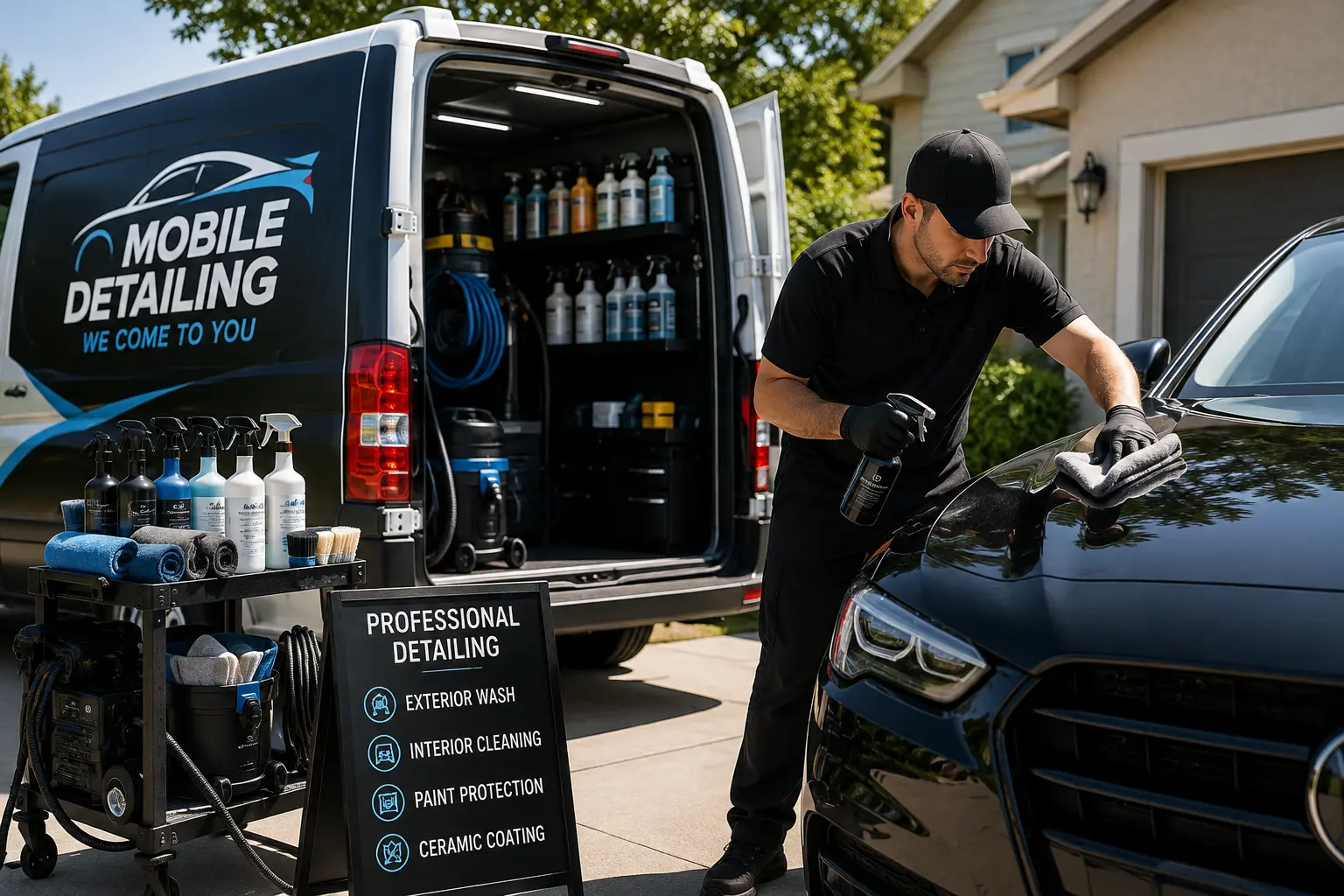
Mobile detailing is one of the most accessible ways to start a business in the automotive world. The startup costs are relatively low, demand is strong, and you bring the service to the customer, which many people happily pay a premium for. But accessible does not mean easy, and the difference between a mobile detailer who builds a real business and one who stays a weekend side hustle comes down to a handful of decisions made early. This guide walks through how to start a mobile detailing business in 2026, from the practical setup to landing your first customers and building something that lasts.
Understand the business you are actually starting
Before buying a single tool, it helps to be clear that you are starting a business, not just learning to detail cars. Industry veterans consistently make this point: detailers usually know how to detail, but many struggle because they do not know how to run a business. The detailing itself is the craft; the business is lead generation, sales, delivery, retention, and operations working together. Demand for detailing is strong in 2026, driven by higher vehicle prices and people keeping cars longer, but the market is also more competitive than ever, with many new operators entering. Going in with the mindset of building a business, not just doing good work, is the single most important starting point.
Handle the basics: registration, insurance, and licensing
Start with the unglamorous foundations, because skipping them causes problems later. Register your business properly, choose a business structure, and get the licenses and permits your area requires, following local rules to avoid legal issues down the road. Get appropriate insurance, since you will be working on customers' valuable vehicles and need to be covered if something goes wrong. Set up a separate business bank account so your finances are clean from day one. These steps are not exciting, but they are what separate a real business from an informal cash operation, and getting them right early is far easier than fixing them after you have grown.
Get your equipment and setup right
Mobile detailing has modest startup costs compared to a fixed shop, which is a big part of its appeal, but you still need reliable equipment. At minimum you will need a vehicle to carry your gear, a water supply and a way to manage power, a pressure washer or equivalent, a vacuum, polishers, and a full kit of quality chemicals, pads, towels, and applicators. You can start lean and reinvest as you grow rather than buying everything top-tier on day one. The key is reliable, professional-grade tools for the services you plan to offer, since your equipment directly affects the quality customers judge you on. Start with what you need to deliver excellent work for your core services, and expand your kit as revenue allows.
Decide your services and pricing
Define what you will offer and what you will charge before you start marketing. Most mobile detailers offer tiered packages, a basic wash-and-vacuum, a fuller interior-and-exterior detail, and premium services like paint correction or ceramic coating as you build skill. Research what other detailers in your area charge so your pricing is competitive but sustainable, and price by vehicle size and condition since a compact car and a filthy full-size SUV are very different jobs. Do not compete purely on being the cheapest, which is a race to the bottom, but position on value and quality. Clear, confident pricing that reflects the real work involved is what makes the business profitable rather than just busy.
Get your first customers
Landing your first customers is where many new detailers stall, but the path is well established. Your first jobs almost always come from people you already know, so detail a few cars for friends, family, and neighbors to build confidence and, crucially, to capture strong before-and-after photos. Set up a Google Business Profile and social media profiles early, since these matter more than a website in the beginning and are where local customers find and judge you. Post your work consistently, ask every happy customer for a review and a referral, and lean on the visual, before-and-after nature of detailing, which is some of the most persuasive marketing there is. Reviews, photos, and word of mouth are what turn those first few jobs into a steady flow.
Build systems from the start, not after the chaos
Here is the step most new detailers skip and later regret: putting a system in place to run the business before the volume overwhelms them. It is tempting to track everything in your head and your phone when you have ten customers, but that approach breaks exactly when you start succeeding, and rebuilding order in the middle of growth is painful. From early on, keep your customers, vehicles, jobs, and follow-ups in one organized system, so as you grow you are scaling an operation rather than escalating chaos. For a mobile detailer with no fixed office, this system needs to live on your phone and travel with you. A platform like OXMotive brings customer and vehicle records, scheduling and jobs, photo capture, and automated follow-up into one mobile app built for working from the road. For more on running a mobile operation well, see our guide on winning with a CRM and mobile workflow.
Focus on retention to build a real business
Finally, understand from the outset that lasting success comes from keeping customers, not just finding them. Chasing new customers forever is exhausting and expensive; a base of repeat customers and recurring maintenance plans is what makes a mobile detailing business stable and profitable. So from your very first jobs, capture customer details, follow up, and give people a reason to book again, whether through great service, a maintenance plan, or a timely reminder. Building retention into how you operate from day one, rather than bolting it on later, is what turns a mobile detailing startup into a durable business rather than a constant hustle for the next job. For the strategy behind this, see our guide on turning one-time customers into recurring revenue.
How it comes together
Starting a mobile detailing business in 2026 is accessible but rewards those who treat it as a real business from the start. Handle the legal and insurance basics, get reliable equipment for your core services, set clear value-based pricing, and land your first customers through your existing network, a strong Google presence, and consistent before-and-after content. Then, crucially, build organized systems and a retention habit from the beginning rather than after chaos hits. Do these things and you give yourself the best chance of turning a mobile detailing startup into a growing, profitable business rather than a hustle that stalls.
Frequently asked questions
How much does it cost to start a mobile detailing business?
Mobile detailing has relatively low startup costs compared to a fixed shop, which is a major part of its appeal. You need a vehicle to carry gear, a water and power setup, a pressure washer, vacuum, polishers, and quality chemicals and supplies. You can start lean with reliable professional-grade tools for your core services and reinvest as you grow, rather than buying everything top-tier on day one. Exact costs vary by how much equipment you already have and the services you plan to offer.
What do I need to legally start a mobile detailing business?
Register your business and choose a structure, obtain the licenses and permits your area requires, and follow local rules to avoid legal issues. Get appropriate insurance since you work on customers' valuable vehicles, and set up a separate business bank account to keep your finances clean from day one. These foundations separate a real business from an informal operation and are far easier to get right early than to fix after you grow.
How do I get my first mobile detailing customers?
Your first customers almost always come from people you already know, so detail cars for friends, family, and neighbors to build confidence and capture before-and-after photos. Set up a Google Business Profile and social media early, since these matter more than a website at first, post your work consistently, and ask every happy customer for a review and referral. The visual, before-and-after nature of detailing makes reviews, photos, and word of mouth your most powerful early marketing.
How should I price mobile detailing services?
Offer tiered packages, from a basic wash-and-vacuum to a full interior-and-exterior detail and premium services like paint correction or coating as your skills grow. Research local competitors so your pricing is competitive but sustainable, and price by vehicle size and condition since jobs vary widely. Avoid competing purely on being cheapest, which is a race to the bottom; position on value and quality with clear, confident pricing that reflects the real work involved.
What is the most common mistake new mobile detailers make?
Treating it as just detailing rather than running a business, and failing to build systems and retention early. Many new detailers track everything in their head and phone, which breaks exactly when they start succeeding, and neglect follow-up so they chase new customers forever. Building an organized system and a retention habit from the first jobs, rather than after chaos hits, is what turns a startup into a durable, profitable business.
[[END FAQ]]
This article offers general guidance and is not legal, tax, or financial advice. Requirements vary by location, so confirm local licensing, insurance, and registration rules with qualified local advisors.
Subscribe to our newsletter today
Fresh insights and practical tips delivered every week.