.svg)
Pricing Your Detailing Services: Packages, Add-Ons, and Memberships That Raise Average Ticket
Pricing is the highest-leverage decision in detailing. Here is how to structure tiers, add-ons, and memberships that raise revenue per car without a single extra customer.

.png)
Helping auto shops work smarter and grow.
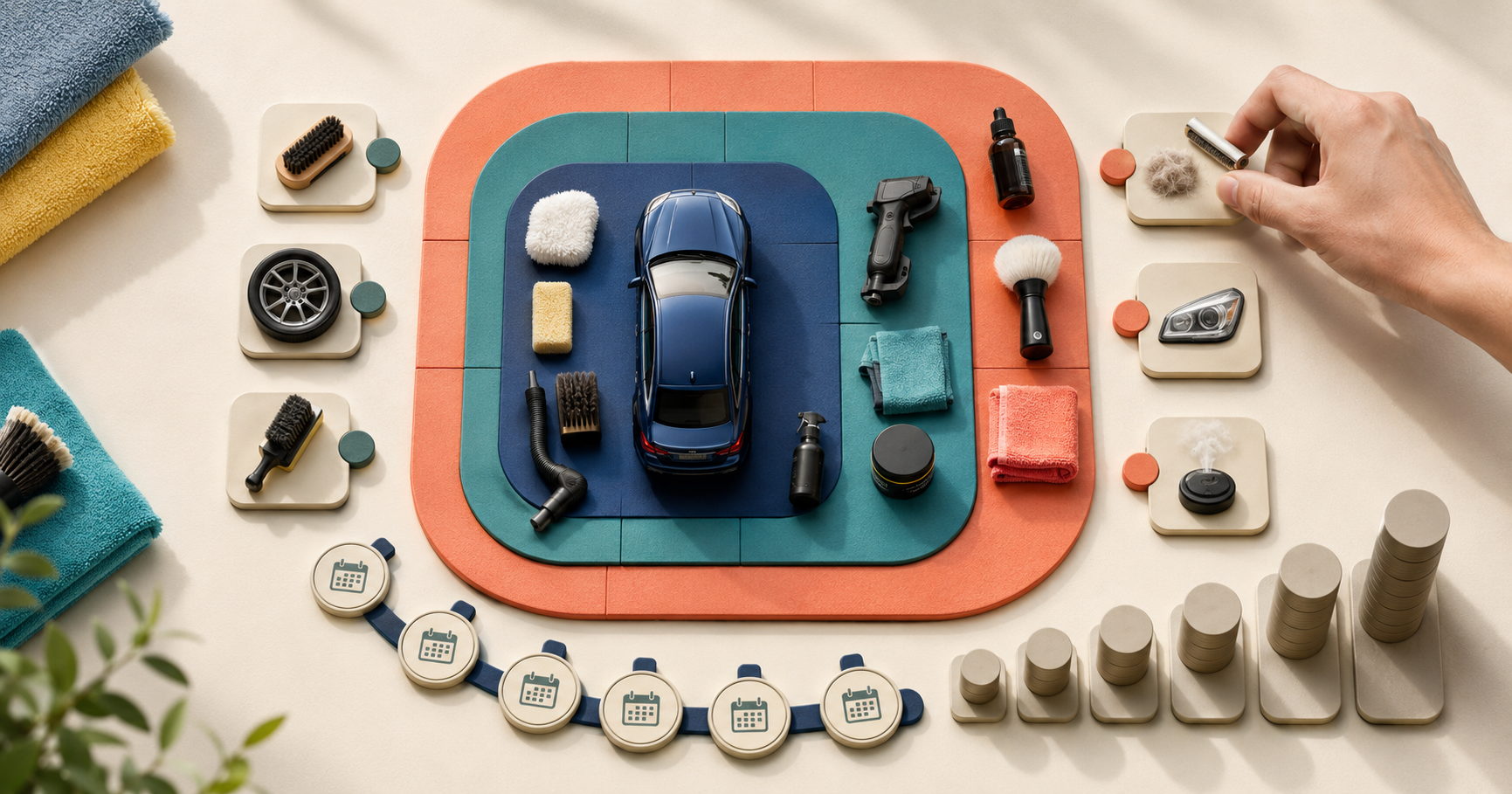
Most detailers set prices by glancing at what the shop down the road charges and shaving a few dollars off. That is how you end up busy and still broke. Pricing is the highest-leverage decision in a detailing business, because the right structure raises the revenue you earn from every single car without needing a single extra customer. Published 2026 pricing guides put a standard full detail somewhere around $200 to $400, but the shops that thrive are not the cheapest, they are the ones with a smart tier, add-on, and membership structure. This guide shows you how to build one.
Start with a clear three-tier package structure
Confusing menus lose sales. The cleanest way to price detailing is three tiers, good, better, best, so every customer can place themselves without a long conversation. A typical structure is an entry package (a solid wash and interior clean that introduces customers to your quality), a mid package (the full interior-and-exterior detail most people actually want), and a premium package (correction, protection, the works). Three tiers work because they anchor the customer's decision: most people avoid the cheapest and the most expensive and land comfortably in the middle, which is exactly where you want a healthy margin. More than three tiers tends to cause decision paralysis, fewer leaves money on the table.
Price for profit, not for the competition
Copying a competitor's price copies their cost structure, which is not yours. Build each package price from the ground up: your labor time, your chemical and material cost, your overhead, and the margin you need. A common rule of thumb is to target a healthy detailing margin, generally cited in the 30 to 50% range, with lower-overhead mobile operations reaching the higher end. When you price from profit rather than from fear of the shop across town, you stop taking jobs that keep you busy but do not pay, and you can defend your price because you know exactly what it covers.
Make add-ons the engine of your ticket growth
Add-ons are where average tickets quietly grow, and the single biggest lever is when you offer them. Industry pricing data is striking on this point: when add-ons are presented at the time of booking, roughly 30 to 40% of customers add at least one, versus far fewer when they are mentioned at the payment screen after the customer has mentally committed to a number. High-margin add-ons like headlight restoration, odor removal, pet-hair removal, and paint decontamination cost you little in materials but carry high perceived value. The move is to present relevant add-ons up front, tied to what the vehicle actually needs, so the customer chooses them before the job starts rather than feeling upsold at the end.
Use memberships to turn one-time details into recurring revenue
The most valuable pricing structure in detailing is the one most shops never build: a maintenance membership. Detailing is naturally recurring, most customers benefit from a wash or refresh every few weeks, yet the majority book only when they happen to think of it. A monthly or bi-weekly plan fixes that. Consider the math: a customer on a bi-weekly plan at $75 a visit is worth around $1,800 a year, with zero acquisition cost after the first sale. Memberships smooth out your slow weeks, lock in customers before a competitor can win them, and turn unpredictable income into a base you can count on. Even converting a handful of your best customers to a plan changes the stability of the whole business.
Bundle premium services so the big ticket feels like a deal
Your highest-value work, paint correction, ceramic coating, PPF, sells better as a bundle than as separate line items. When you package a two-step correction and a ceramic coating together at a price slightly below the sum of the two, the customer perceives a genuine saving while you book a single high-ticket job and save the setup time of doing them on separate visits. Presenting these as a named premium package, rather than as scary standalone prices, makes the biggest job on your menu feel like the smart choice instead of the expensive one. This is how detailers move upmarket without scaring customers off.
Make the pricing structure easy to quote and track
A great pricing structure only works if you can deliver it consistently, and that falls apart when packages, add-ons, and membership terms live in someone's head. To quote the same way every time, present add-ons at booking on every job, and actually remember when a member is due, you need it organized in one place. Storing your packages and add-ons as structured options you can quote in a couple of taps, and keeping each customer's plan and history in a customer profile, means the structure runs the same whether it is you or a new hire at the counter. A CRM and mobile app like OXMotive lets you quote packages consistently and trigger the membership reminders automatically, so the pricing strategy you designed is the one that actually gets used.
How it comes together
Raising your average ticket is not about charging shocking prices, it is about structure: three clear tiers priced for real profit, high-margin add-ons offered at booking, memberships that make good customers recurring, and premium work bundled so the big job feels like a deal. Build those four elements and every car that rolls in is worth more than it would have been on a flat price list, without a single extra marketing dollar. Design the structure once, deliver it consistently, and let it lift the revenue on every job. For a market example of how these services and tiers are priced in practice, see our 2026 car detailing cost guide.
Frequently asked questions
How much should I charge for a full car detail?
Published 2026 pricing guides put a standard full detail on a typical vehicle at roughly $200 to $400, varying with vehicle size, condition, and whether you are mobile or shop-based. Rather than copying that number, build your price from your own labor, materials, overhead, and target margin. These averages are a reference for customer expectations, not a rule for your costs.
How many pricing tiers should a detailing menu have?
Three works best for most shops: an entry package, a full mid-tier detail, and a premium package. Three tiers let customers place themselves quickly and tend to steer most people to the middle option, where you want a healthy margin. More tiers cause decision paralysis, and fewer leaves upsell money on the table.
When is the best time to offer detailing add-ons?
At the time of booking, not at the payment screen. Industry pricing data shows roughly 30 to 40% of customers add at least one add-on when they are presented up front, far more than when they are mentioned after the customer has committed to a price. Tie the add-ons to what the vehicle visibly needs so the recommendation feels helpful rather than pushy.
Are detailing memberships worth it?
Yes, because detailing is naturally recurring and memberships convert that into predictable revenue. A customer on a bi-weekly plan at around $75 a visit is worth roughly $1,800 a year with no further acquisition cost. Memberships also smooth out slow periods and lock in your best customers before a competitor can reach them.
Should I bundle ceramic coating and paint correction?
Bundling high-value services usually sells better than listing them separately. Packaging a correction and a ceramic coating together at a price slightly below the two individual prices gives the customer a clear perceived saving and gives you a single high-ticket job with less setup time. Presenting it as a named premium package makes your biggest job feel like the smart choice.
Pricing and margin figures reflect widely published 2026 detailing industry guides and are provided as planning ranges. Set your own prices based on your labor, materials, overhead, and local market.
Subscribe to our newsletter today
Fresh insights and practical tips delivered every week.