.svg)
Building Recurring Revenue: Membership and Maintenance Plans for Detailing Shops
Recurring revenue turns a shop that rebuilds from zero each month into one with predictable income. Here is how detailing shops build it with membership and maintenance plans.

.png)
Helping auto shops work smarter and grow.
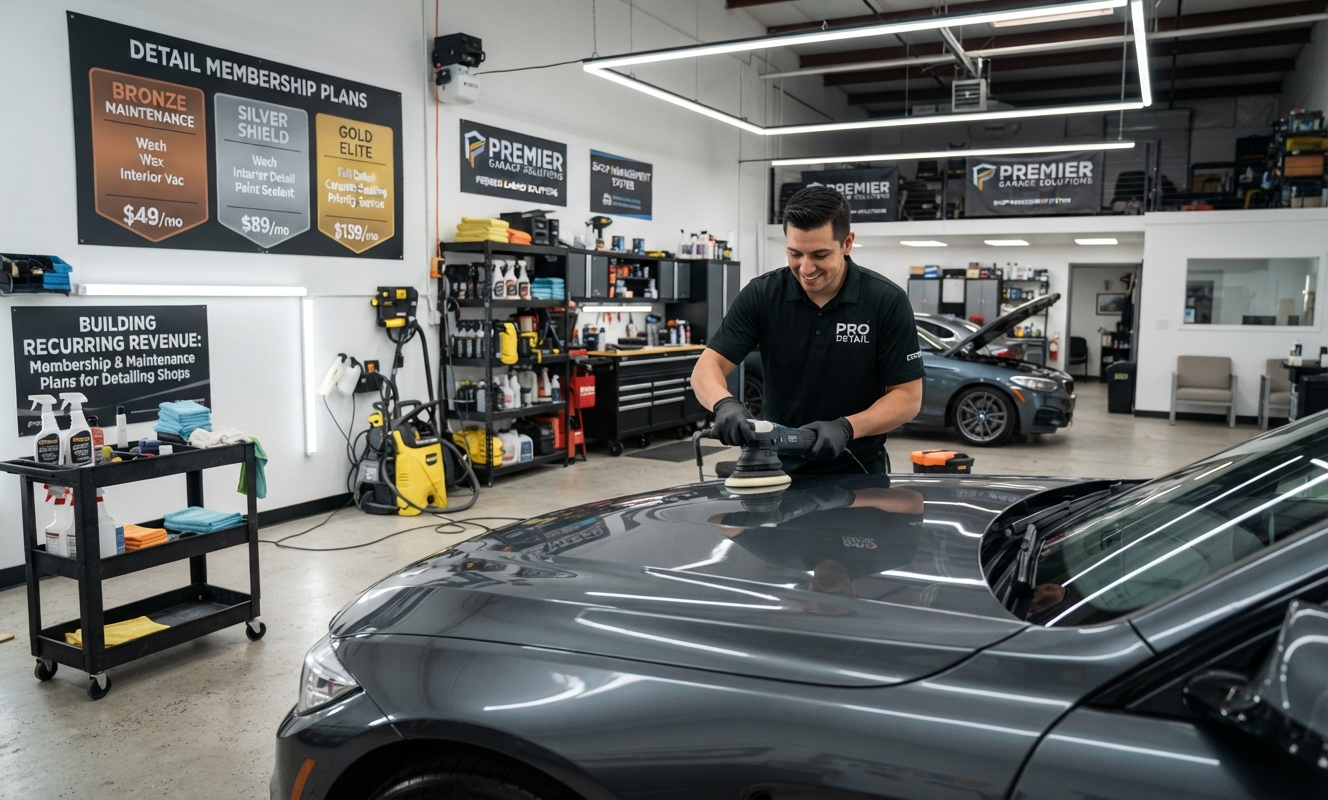
Most detailing and appearance shops live job to job, every month starting near zero and rebuilding revenue from scratch through new bookings. It works, but it is stressful and unpredictable, and it leaves the business permanently dependent on a constant flow of new work. There is a better model layered on top of the one-off jobs: recurring revenue through membership and maintenance plans. Done well, recurring plans give a shop predictable income, more loyal customers, and a more valuable business. This guide explains why recurring revenue matters and how a detailing shop can build it.
Why recurring revenue changes everything
The difference between a shop that relies entirely on one-off jobs and one with a base of recurring revenue is profound. Recurring plans provide predictable, dependable income that you can count on before the month begins, which smooths cash flow, reduces the stress of always chasing the next job, and makes planning and investment possible. It also tends to make a business more valuable, because predictable recurring revenue is worth more than unpredictable one-off sales. Even converting a portion of your customers to recurring plans meaningfully changes the financial character of the shop, giving you a stable base underneath the variable job work rather than starting from zero every single month.
Membership and maintenance plans that fit detailing
Recurring revenue in a detailing shop usually takes the form of maintenance or membership plans, where a customer pays regularly, monthly or on another cadence, for ongoing service. Common structures include a monthly maintenance wash or mini-detail, a package of scheduled details across the year, or a membership that bundles regular upkeep with perks and priority booking. Protection customers are especially natural fits, since a ceramic coating or paint protection investment benefits from regular maintenance to perform its best, making a maintenance plan an easy, logical sell. The core idea is turning something a customer would benefit from doing regularly into a subscription they commit to, which serves the vehicle and the shop alike.
Why customers actually want them
Recurring plans are not just good for the shop, they genuinely benefit the customer, which is what makes them sellable. A plan keeps the customer's vehicle consistently maintained without them having to remember to book each time, often saves them money versus one-off pricing, and gives them perks like priority scheduling. For someone who values keeping their vehicle in great shape, especially after investing in a coating or wrap, a maintenance plan removes effort and delivers consistent results. Framing a plan around the value to the customer, a always-clean, protected vehicle with no hassle, is what makes it attractive, and a plan that genuinely serves the customer is one they stay in and value rather than resent.
Selling plans at the right moment
Timing is critical when selling a recurring plan, and the best moment is at peak satisfaction, right after the customer sees the result of great work. A customer thrilled with a fresh detail, a new coating, or a completed wrap is at the height of caring about their vehicle's appearance, which is exactly when a maintenance plan to keep it looking that way resonates most. Offering the plan at that moment, framed as the way to preserve the result they are admiring, converts far better than trying to sell it cold later. Building the plan offer into your process at job completion, especially for protection work, is how you consistently turn one-time customers into recurring members.
The operational side of recurring revenue
Recurring plans introduce ongoing commitments that must be managed, and this is where many well-intentioned programs fall apart. You need to track who is on which plan, what they are entitled to, when their recurring service is due, and handle the recurring billing reliably. Done manually, this quickly becomes a mess as the program grows, missed services, billing errors, and confusion that undermine the very predictability the plans are supposed to create. Managing memberships properly requires a system that keeps each customer's plan, entitlements, and schedule organized and prompts the recurring service. Keeping customer plan records, scheduled services, and automated reminders in one place is what lets a recurring program run smoothly rather than collapse under its own admin.
Starting a recurring program at your shop
You do not need an elaborate program to begin, and starting simple is usually best. Pick one clear, valuable plan, a monthly maintenance wash, or a coating-maintenance plan for your protection customers, price it so it is a fair deal for the customer and profitable for you, and start offering it at job completion to your happiest customers. As it takes hold, you can refine and expand. The goal is to begin building a base of recurring revenue underneath your job work, and even a modest program started today compounds into meaningful, predictable income over time. For the related strategy of smoothing seasonal swings, see our guide on turning seasonal customers into year-round revenue.
How it comes together
Recurring revenue transforms a detailing shop from a business that rebuilds from zero every month into one with a predictable, valuable base of income. Membership and maintenance plans fit detailing and protection work naturally, genuinely benefit customers, and sell best when offered at the peak-satisfaction moment of completed work. The key to making them last is managing the plans, entitlements, schedules, and billing in an organized system rather than by hand. Start with one simple, valuable plan offered to your happiest customers, run it on a system that keeps it organized, and build recurring revenue into a durable foundation for your shop.
Frequently asked questions
Why is recurring revenue valuable for a detailing shop?
Because it provides predictable, dependable income you can count on before the month begins, which smooths cash flow, reduces the stress of always chasing the next job, and makes planning and investment possible. It also tends to make the business more valuable, since predictable recurring revenue is worth more than unpredictable one-off sales. Even converting a portion of customers to plans gives the shop a stable base underneath variable job work.
What kind of membership plans work for detailing?
Common structures include a monthly maintenance wash or mini-detail, a package of scheduled details across the year, or a membership bundling regular upkeep with perks and priority booking. Protection customers are especially natural fits, since a ceramic coating or paint protection investment benefits from regular maintenance, making a maintenance plan a logical sell. The idea is turning something a customer would benefit from doing regularly into a subscription they commit to.
When is the best time to sell a maintenance plan?
At peak satisfaction, right after the customer sees the result of great work. A customer thrilled with a fresh detail, new coating, or completed wrap is at the height of caring about their vehicle's appearance, which is exactly when a plan to keep it looking that way resonates most. Offering it then, framed as the way to preserve the result they are admiring, converts far better than trying to sell it cold later.
Do customers actually want subscription plans?
Yes, when the plan genuinely benefits them. It keeps their vehicle consistently maintained without having to remember to book, often saves money versus one-off pricing, and adds perks like priority scheduling. For someone who values keeping their vehicle in great shape, especially after a coating or wrap, a maintenance plan removes effort and delivers consistent results, which is what makes it something they stay in and value rather than resent.
How do I manage recurring memberships without it becoming a mess?
You need a system that tracks who is on which plan, what they are entitled to, when their recurring service is due, and handles recurring billing reliably. Done manually this becomes chaos as the program grows, with missed services and billing errors undermining the predictability plans are meant to create. Keeping plan records, scheduled services, and automated reminders in one organized system is what lets a recurring program run smoothly.
[[END FAQ]]
This article offers general business guidance. Structure any membership, billing, and cancellation terms in compliance with applicable consumer and payment regulations.
Subscribe to our newsletter today
Fresh insights and practical tips delivered every week.