.svg)
Ceramic Coating vs. Wax vs. Sealant: Which Paint Protection Is Right for You?
Wax, sealant, and ceramic coating are three levels of paint protection, not the same thing. Here is how they compare on durability, cost, and protection, and how to choose the right one.

.png)
Helping auto shops work smarter and grow.
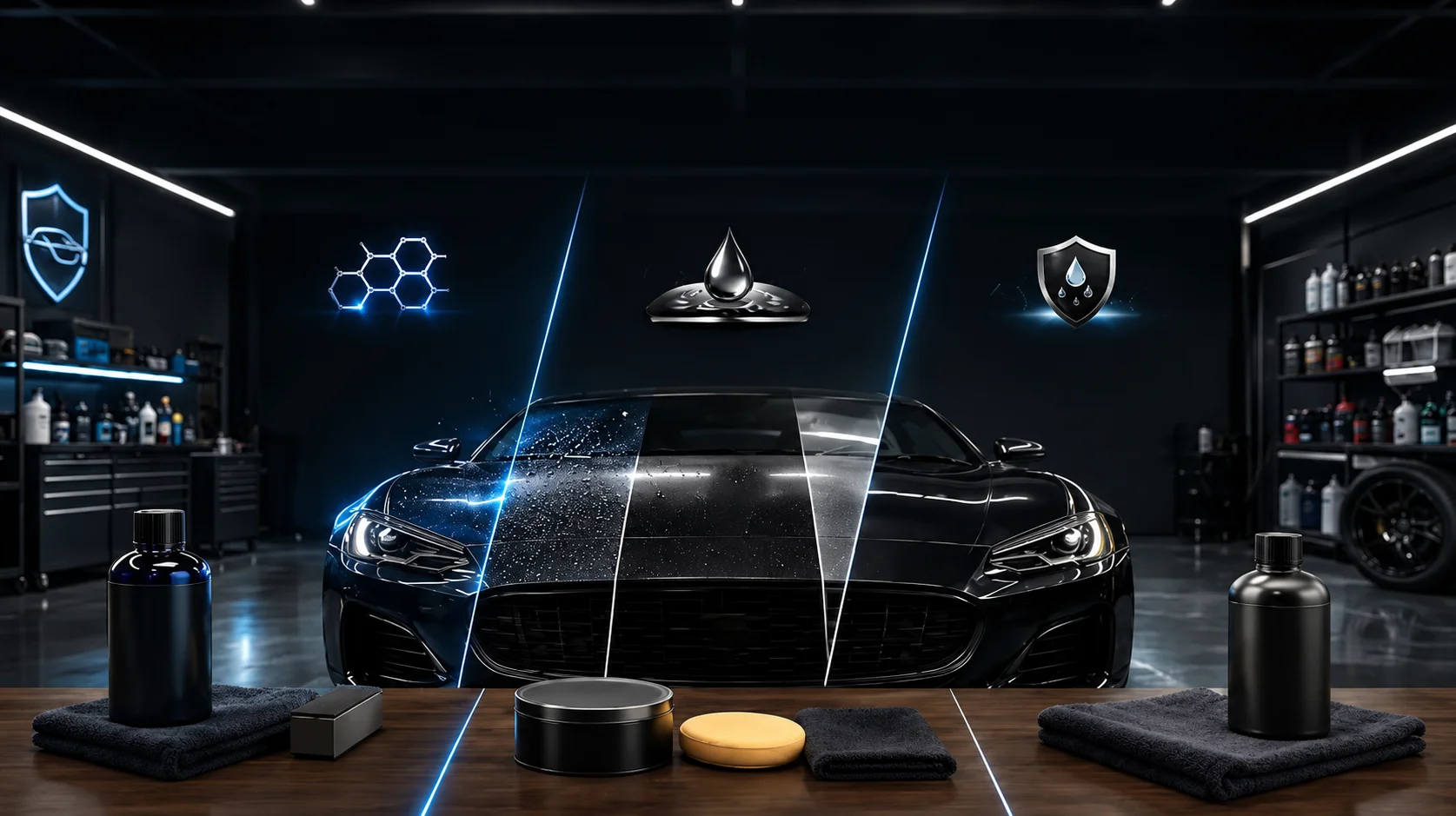
When it comes to protecting a car's paint, three options come up again and again: wax, sealant, and ceramic coating. They all add shine and a layer of protection, but they differ enormously in how long they last, how much they cost, and what they are best for, and choosing the wrong one for your needs means either overpaying or being disappointed. This guide compares ceramic coating, wax, and sealant clearly, so you can decide which paint protection is right for your vehicle, or explain the difference confidently if you run a shop.
Paint protection at a glance
Here is the quick comparison. Wax is the traditional option, giving a warm, deep shine and light protection, but it lasts only weeks to a couple of months and needs frequent reapplication. Sealant is a synthetic step up, offering more durable protection that typically lasts several months, with a clean, reflective finish. Ceramic coating is the premium option, a liquid polymer that bonds to the paint and lasts years, with the strongest gloss, the best protection against UV, chemicals, and water spots, and a hydrophobic, easy-clean surface. In short: wax is cheapest and shortest-lived, sealant is the durable middle ground, and ceramic is the longest-lasting and most protective at the highest cost. The sections below explain each and who it suits.
Wax: traditional shine, short life
Wax, usually carnauba-based, is the classic paint protection and still has its place. Its strengths are a warm, rich depth of shine that many enthusiasts love, low cost, and easy do-it-yourself application. Its weakness is durability: wax lasts only a few weeks to a couple of months before it needs reapplying, because it sits on top of the paint and wears off with washing, weather, and time. Wax suits someone who enjoys the ritual of regular application, wants a specific traditional look, or wants basic protection at minimal cost and does not mind redoing it often. For low-effort, long-term protection, though, it is the weakest of the three.
Sealant: the durable middle ground
Paint sealant is a synthetic product designed to do what wax does but last longer. It bonds to the paint more effectively than wax and typically provides several months of protection, with a crisp, glossy, reflective finish, though some prefer the warmer look of wax. Sealant is a sensible middle ground: more durable and lower-maintenance than wax, but far less expensive and less involved than a ceramic coating. It suits someone who wants solid, lasting protection without the commitment or cost of ceramic, and who is happy to reapply once or twice a year rather than every few weeks. For many everyday drivers, sealant hits a practical balance of protection, appearance, and value.
Ceramic coating: premium, long-lasting protection
Ceramic coating is the premium option and works differently from the other two. Rather than sitting on top of the paint, it chemically bonds to the clear coat and cures into a hard, durable layer that lasts years rather than weeks or months. It delivers the strongest gloss, the best protection against UV fading, chemical stains, bird droppings, and water spots, and a slick, hydrophobic surface that makes the car dramatically easier to wash. The trade-offs are cost and application: a professional ceramic coating is a significant investment and requires expert preparation to perform properly. It suits someone who wants the best, longest-lasting protection and easiest maintenance, and who sees it as protecting a long-term investment in the vehicle.
What ceramic coating still will not do
It is important to set one expectation, because it is the most common misunderstanding. Even ceramic coating, the most protective of the three, is a chemical barrier, not a physical one. It does not stop rock chips, deep scratches, or physical impact, it protects against UV, chemicals, staining, and light marring while making cleaning far easier. If your primary concern is physical damage from road debris, none of these three products is the answer, that is what paint protection film is for, and it is often applied alongside a coating. Understanding that all three of these are chemical protection, not armor, is what prevents disappointment regardless of which you choose. For that comparison, see our guide on PPF versus ceramic coating.
How to choose the right one for you
The choice comes down to how long you want the protection to last, how much effort and money you want to spend, and what you are protecting against. If you enjoy frequent hands-on care, want a traditional look, or want minimal cost, wax fits. If you want solid, lasting protection with modest effort and cost, sealant is the practical middle choice. If you want the best gloss, the longest life measured in years, and the easiest ongoing maintenance, and you are willing to invest, ceramic coating is the answer. There is no single best option, only the best for your priorities, which is exactly the honest guidance a good shop gives rather than pushing the most expensive choice by default.
For shops: guiding this choice builds trust
If you run a shop, this is a conversation you have constantly, and handling it honestly, matching the recommendation to what the customer actually wants rather than always upselling to ceramic, is what earns trust and repeat business. Walking a customer through the trade-offs and helping them choose the right protection for their needs and budget often leads to a more confident purchase and a longer relationship. Recording what protection each customer chose and when it will need attention, in a customer and vehicle record, and following up with reminders for reapplication or maintenance, turns a one-time protection sale into recurring work. For coated-car aftercare, see our guide on ceramic coating maintenance.
How it comes together
Wax, sealant, and ceramic coating are three levels of paint protection, not three versions of the same thing. Wax gives a traditional shine and light protection for weeks, sealant offers durable synthetic protection for months, and ceramic coating delivers the strongest, longest-lasting protection and easiest maintenance for years, at a premium price. None of them stops rock chips, that is film's job. Choose based on how long you want protection to last, how much effort and money you want to spend, and what you are protecting against, and you will get exactly the protection that fits rather than paying for more or less than you need.
Frequently asked questions
What is the difference between wax, sealant, and ceramic coating?
They are three levels of paint protection. Wax gives a warm traditional shine and light protection lasting weeks to a couple of months. Sealant is a synthetic product offering more durable protection for several months with a crisp, reflective finish. Ceramic coating is a liquid polymer that bonds to the paint and lasts years, with the strongest gloss, the best protection against UV, chemicals, and water spots, and an easy-clean hydrophobic surface, at the highest cost.
Which lasts longer, wax, sealant, or ceramic coating?
Ceramic coating lasts by far the longest, measured in years, because it chemically bonds to the clear coat rather than sitting on top of the paint. Sealant is next, typically lasting several months. Wax is the shortest-lived, lasting only a few weeks to a couple of months before it wears off and needs reapplying. Durability is one of the main reasons ceramic coating commands its premium price.
Is ceramic coating worth it over wax or sealant?
It depends on your priorities. Ceramic coating is worth it for someone who wants the best gloss, the longest-lasting protection measured in years, and the easiest ongoing maintenance, and who is willing to invest. If you prefer minimal cost and enjoy frequent application, wax fits, and if you want solid lasting protection with modest cost and effort, sealant is the practical middle ground. There is no single best option, only the best for your needs.
Does wax, sealant, or ceramic coating protect against scratches?
No. All three are chemical protection, not physical armor. Even ceramic coating, the most protective, does not stop rock chips, deep scratches, or impact, it protects against UV, chemicals, staining, and light marring while making cleaning easier. If your main concern is physical damage from road debris, paint protection film is the product designed for that, and it is often applied alongside a ceramic coating.
Which paint protection should I choose?
Choose based on how long you want protection to last, how much effort and money you want to spend, and what you are protecting against. Wax suits minimal cost, a traditional look, and frequent hands-on care; sealant suits solid, lasting protection with modest effort and cost; ceramic coating suits those wanting the best gloss, multi-year life, and easiest maintenance who are willing to invest. Match the product to your priorities rather than defaulting to the most or least expensive.
[[END FAQ]]
This article offers general education on paint protection options. Durability varies by specific product, application quality, and maintenance, so follow manufacturer guidance and consult a qualified installer for your vehicle.
Subscribe to our newsletter today
Fresh insights and practical tips delivered every week.