.svg)
Tracking Product and Material Usage Rates in an Appearance or Protection Shop
Appearance shops run on consumables, but few track how fast they use them. Here is why tracking material usage rates protects your margins, sharpens quoting, and prevents stockouts.

.png)
Helping auto shops work smarter and grow.
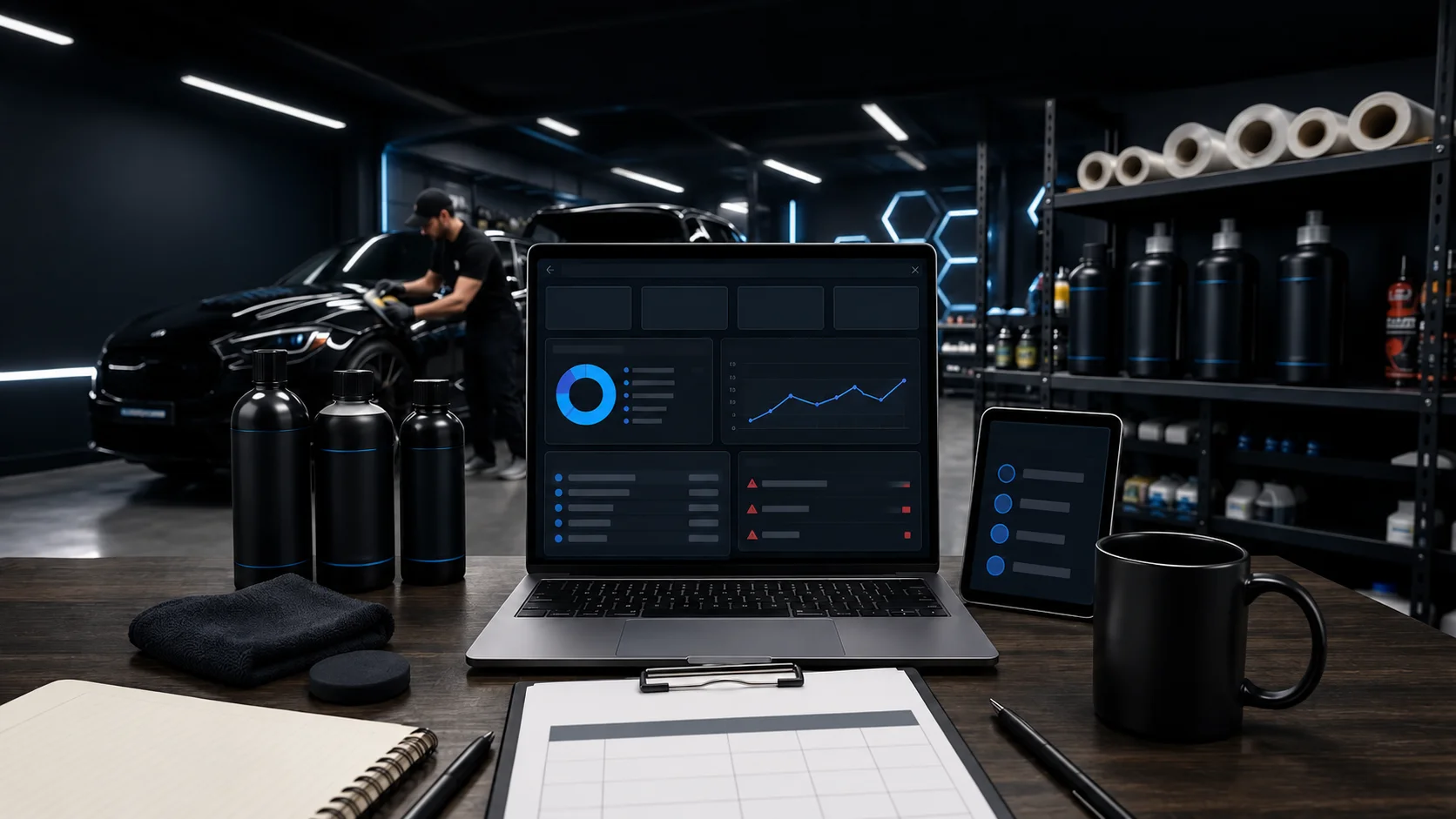
Every appearance and protection shop runs on consumables: film, coatings, chemicals, pads, and supplies that get used up job by job. Most owners have a rough sense of what they spend on these, but few actually track the rate at which they consume them, and that gap quietly erodes margins. Knowing how much material each job really uses, and how fast your stock turns over, is what separates a shop that prices accurately and never runs dry from one that guesses and gets surprised. This guide explains what usage-rate tracking is, why it matters, and how to do it practically.
What usage-rate tracking means
Usage-rate tracking is simply knowing how quickly you consume your materials relative to the work you do, how much PPF goes on an average vehicle, how far a bottle of coating stretches, how many jobs a case of chemicals covers, and how fast each of these depletes over a month. It turns a vague sense of "we go through a lot of film" into concrete figures you can act on. This is the appearance-shop version of inventory and consumption tracking that product-based businesses take for granted, adapted to the reality that your "products" are the materials consumed in delivering a service rather than items sold off a shelf.
Why it protects your margins
The most important reason to track usage rates is margin protection. Materials are a real cost of every job, and if you do not know how much a job actually consumes, you cannot know its true profitability. A coating or wrap that looks profitable on the invoice can be quietly unprofitable once you account for how much product it really took, especially on large or difficult vehicles. Tracking consumption lets you see your true material cost per job and per service, which is the foundation of pricing that actually protects your margin. Without it, you are pricing on assumptions, and assumptions are where profit silently leaks away.
Why it makes your quoting more accurate
Usage data directly improves quoting. When you know that a full wrap on a mid-size SUV consumes a predictable amount of film, or that a certain coating package uses a known quantity of product, you can quote with confidence that the price covers your real costs. This matters most on the large, variable jobs where guessing hurts, because underestimating material on a big job can wipe out its margin. Shops that track usage build quotes on real consumption figures rather than gut feel, which means fewer jobs that turn out to lose money and more consistent profitability across the range of vehicles they work on.
Why it prevents running out and overstocking
Tracking how fast you consume materials also solves the practical inventory problem every shop faces: running out of a critical product mid-job, or tying up cash in stock you do not need. When you know your consumption rate, you know when to reorder, before you run dry but without over-buying. Running out of film or coating in the middle of a booked job is expensive and unprofessional, while overstocking ties up money and risks products expiring. Knowing your usage rate lets you keep the right amount of the right materials on hand, which keeps jobs running smoothly and cash working efficiently rather than sitting on a shelf.
How to track usage rates practically
You do not need a complex system to start. The practical approach is to record what materials each job consumes as part of documenting the job itself, so that over time you build a real picture of consumption per service and per vehicle type. Combined with tracking what you buy and when, this shows both your cost per job and your depletion rate. The key is capturing it consistently as part of the normal workflow rather than as a separate chore, because usage data is only useful if it is complete. A shop that logs material use alongside each job gradually turns guesswork into hard numbers it can price and plan around.
Turning usage data into better decisions
Once you have real usage figures, they inform decisions well beyond reordering. You can see which services consume the most material relative to their price, and adjust pricing accordingly. You can spot when a particular technician or product is unusually wasteful. You can compare the true profitability of different services once material cost is properly counted. And you can negotiate better with suppliers when you know your real volumes. Usage tracking, in other words, feeds directly into the broader business analytics that let an owner run on evidence rather than instinct. Keeping job records that capture what each job involved and reporting that surfaces the patterns is what turns raw consumption into decisions. For the wider picture, see our guide on business analytics for shop owners.
How it comes together
Tracking product and material usage rates is one of those unglamorous practices that quietly protects a shop's profitability. Knowing how fast you consume film, coatings, and supplies reveals your true cost per job, makes your quoting accurate, prevents both running out and overstocking, and feeds the analytics that drive better decisions. Most shops never do it and price on assumptions as a result, which is exactly why it is an opportunity. Capture material use as part of documenting each job, build up real consumption figures over time, and you turn one of the biggest hidden variables in your business into something you actually control.
Frequently asked questions
What is material usage-rate tracking for a shop?
It is knowing how quickly you consume your materials relative to the work you do, how much film goes on an average vehicle, how far a bottle of coating stretches, how many jobs a case of chemicals covers, and how fast each depletes over time. It turns a vague sense of consumption into concrete figures, the appearance-shop version of the inventory tracking product businesses rely on, adapted to materials consumed in delivering a service.
Why does tracking material usage matter?
Mainly for margin protection. Materials are a real cost of every job, and without knowing how much a job consumes, you cannot know its true profitability, so a job that looks profitable on the invoice may not be once material is counted. Tracking consumption reveals your real material cost per job and per service, which is the foundation of pricing that protects your margin rather than letting profit leak away on assumptions.
How does usage tracking improve quoting?
It lets you quote on real consumption rather than guesswork. When you know a full wrap on a given vehicle uses a predictable amount of film, or a coating package uses a known quantity of product, you can price confident that it covers your costs. This matters most on large, variable jobs where underestimating material can wipe out the margin, so usage data means fewer money-losing jobs and more consistent profitability.
How does it help with inventory?
Knowing your consumption rate tells you when to reorder, before you run dry but without over-buying. Running out of film or coating mid-job is expensive and unprofessional, while overstocking ties up cash and risks products expiring. Usage-rate tracking lets you keep the right amount of the right materials on hand, keeping jobs running smoothly and cash working efficiently instead of sitting on a shelf.
How do I start tracking material usage?
Record what materials each job consumes as part of documenting the job, so over time you build a real picture of consumption per service and vehicle type, combined with tracking what you buy and when. The key is capturing it consistently within the normal workflow rather than as a separate chore, since the data is only useful if complete. Logging material use alongside each job gradually turns guesswork into hard numbers.
[[END FAQ]]
This article offers general operational guidance. Adapt any tracking approach to your shop's materials, services, and accounting practices.
Subscribe to our newsletter today
Fresh insights and practical tips delivered every week.