.svg)
Building a Referral Program for Your Detailing or Protection Shop
How to build a referral program for a detailing or protection shop: why referrals convert best, when to ask, two-sided incentives, and tracking that keeps it running.

.png)
Helping auto shops work smarter and grow.
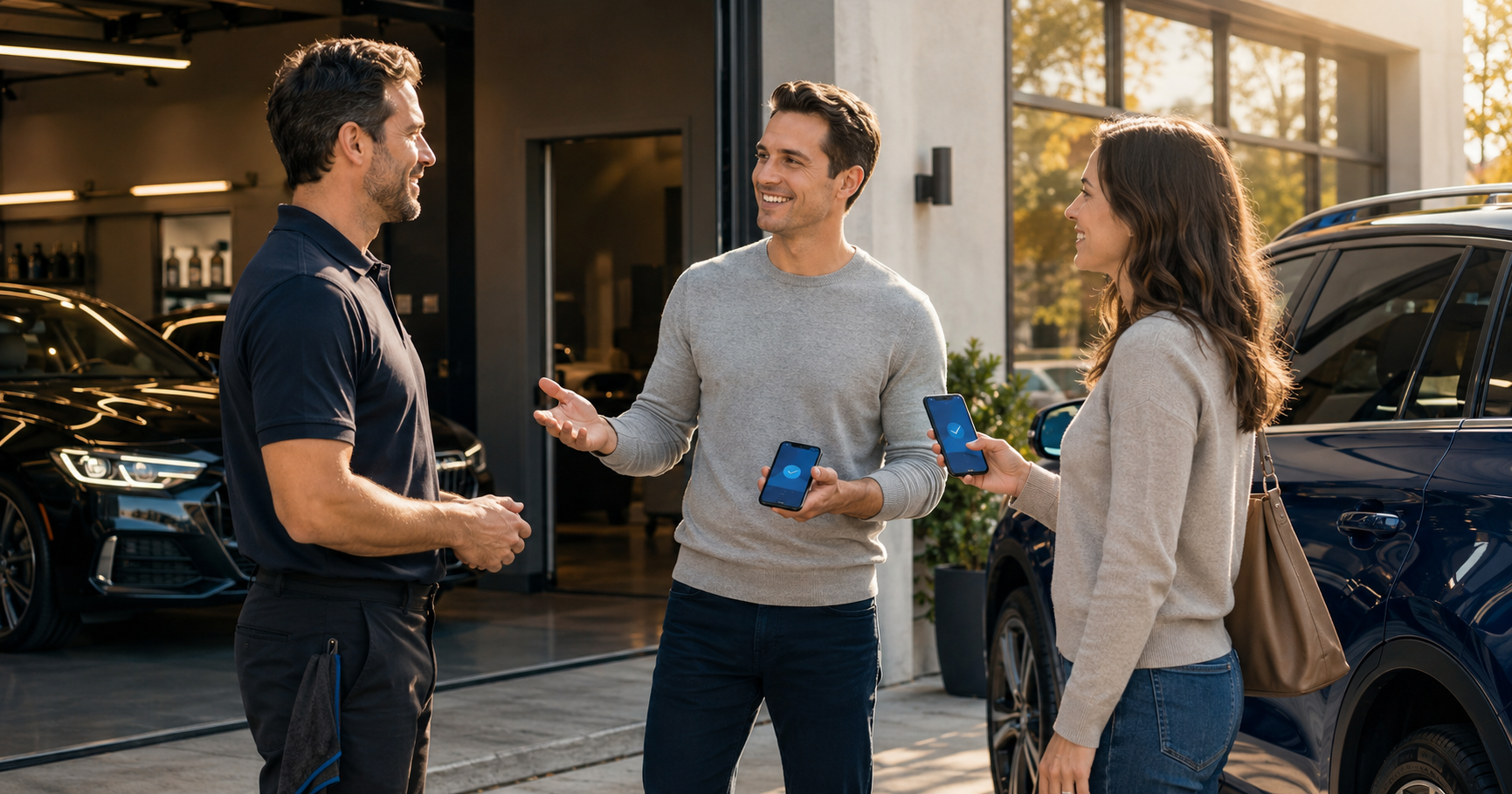
Word of mouth has always been the lifeblood of appearance and protection shops. When someone sees a friend's freshly coated or wrapped car and asks who did it, that recommendation closes easier than any ad, because it arrives with built-in trust. The problem is that most shops leave this to chance. A referral program turns that occasional lucky recommendation into a deliberate, repeatable source of new customers. This guide covers how to build one that actually works for a detailing or protection shop.
Why referrals are your best source of customers
Referred customers are the highest-quality leads a shop can get. They arrive already trusting you because someone they know vouched for your work, they are less price-sensitive because the recommendation carried weight, and they tend to become loyal and refer others themselves. Compared to the cost and uncertainty of paid advertising to strangers, a referral is cheaper to acquire and more likely to convert. For visual, high-trust work like coatings, wraps, and detailing, where customers are nervous about handing over an expensive vehicle, that pre-built trust is worth more than in almost any other business.
Deliver work worth talking about first
No referral program can rescue mediocre work. The foundation is a result and an experience worth mentioning, exceptional quality, clear communication, and a smooth process from quote to pickup. Before building any formal program, be honest about whether customers leave genuinely impressed. If they do, a referral program amplifies that. If they do not, the program will fall flat, and the effort belongs on fixing the experience first. Referrals are the reward for being referable, so the work always comes before the incentive.
Just ask, at the right moment
The simplest reason shops do not get more referrals is that they never ask. Most happy customers are willing to recommend you but simply do not think to, so a direct, well-timed ask does most of the work. The best moment is at peak satisfaction: right after you reveal a finished coating or wrap, when the customer is delighted with how their vehicle looks. A genuine remark that you grow through word of mouth and would appreciate them sending friends your way, made at that moment, is remarkably effective and costs nothing.
Structure an incentive that rewards both sides
A formal program adds fuel by giving customers a concrete reason to act. The most effective structure is two-sided, rewarding both the existing customer and the new one they bring. For example, the referrer earns a credit or discount on their next service, and the new customer gets a discount on their first. This feels generous rather than self-serving, since the referrer is giving their friend a gift, not just collecting a bounty. Keep the reward meaningful enough to motivate, and match it to your economics, a discount on a future service costs you less than paying for an ad and brings a customer back at the same time.
Make referring effortless
Friction kills referrals. The easier you make it, the more you get, so remove every obstacle between a willing customer and an actual referral. Give them something simple to pass along, a card, a link, a code, so recommending you takes seconds rather than effort. When a referred customer arrives, make sure crediting the referrer is simple and reliable, because nothing kills a program faster than a customer who referred someone and never got their promised reward. The whole system should be so simple that a happy customer can refer a friend without thinking about it.
Track referrals so the program actually runs
A referral program only works if you can track who referred whom and reliably deliver the rewards. This is where most informal programs quietly die: a customer refers someone, the shop loses track, the reward never lands, and word gets around that the program is not real. Recording the source of each new customer and noting referral credits owed keeps the program honest and lets you see which customers are your best advocates so you can thank them. Keeping referral sources and rewards in your customer records, and using follow-up messaging to make the ask and deliver reward reminders, is what turns a good intention into a system that runs reliably.
Combine referrals with reviews for compounding growth
Referrals and online reviews are close cousins, and the same happy moment feeds both. A customer thrilled enough to refer a friend is also the ideal person to leave a glowing review, and both amplify word of mouth, one privately to a friend and one publicly to every future customer searching for a shop. Asking for both at that peak-satisfaction moment compounds your growth: reviews build the reputation that makes referrals easier to close, and referrals bring in the customers who leave more reviews. For the review side of this loop, see our guide to building a Google review engine.
How it comes together
A referral program is not complicated, it is deliberate. Do work worth talking about, ask at the moment of peak satisfaction, offer a two-sided incentive that rewards both parties, make referring effortless, and track it reliably so rewards always land. Pair it with a steady review habit and your happiest customers become a compounding engine of new business. For appearance and protection shops built on trust and visible results, a deliberate referral program is one of the highest-return, lowest-cost growth moves available.
Frequently asked questions
Why are referrals so valuable for an appearance shop?
Referred customers arrive already trusting you because someone they know vouched for your work, they are less price-sensitive, and they tend to become loyal and refer others. They are cheaper to acquire and more likely to convert than paid ads to strangers. For high-trust work like coatings and wraps, where customers are nervous handing over an expensive vehicle, that built-in trust is especially powerful.
How do I ask customers for referrals without being awkward?
Ask at the moment of peak satisfaction, typically right after revealing a finished coating, wrap, or detail when the customer is delighted. A genuine remark that you grow through word of mouth and would appreciate them sending friends your way is natural and effective at that moment. Most happy customers are willing to refer but simply never think to until asked.
What is the best structure for a referral incentive?
A two-sided reward that benefits both the referrer and the new customer works best, for example a credit on the referrer's next service and a discount on the new customer's first. This feels generous because the referrer is giving their friend a gift rather than just collecting a bounty. A discount on a future service also costs less than an ad and brings the customer back.
Why do referral programs fail?
Usually because rewards are not tracked and delivered reliably. A customer refers someone, the shop loses track, the promised reward never arrives, and word spreads that the program is not real. Making referrals effortless to give and reliably crediting the referrer every time are what keep a program credible and running, which requires actually recording referral sources.
Should I focus on referrals or online reviews?
Both, because the same happy customer feeds each and they compound. A customer thrilled enough to refer a friend is also ideal for a glowing review, and reviews build the reputation that makes referrals easier to close. Asking for both at the peak-satisfaction moment creates a growth loop where reviews and referrals reinforce each other.
[[END FAQ]]
This article offers general marketing guidance. Design any referral incentive to fit your own margins and comply with local promotional and tax rules.
Subscribe to our newsletter today
Fresh insights and practical tips delivered every week.