.svg)
Buying Aftermarket Wheels: A Guide to Fitment, Offset, and Getting It Right
A car owner's guide to buying aftermarket wheels: what bolt pattern, offset, center bore, diameter, and load rating mean and how to get fitment right.

.png)
Helping auto shops work smarter and grow.
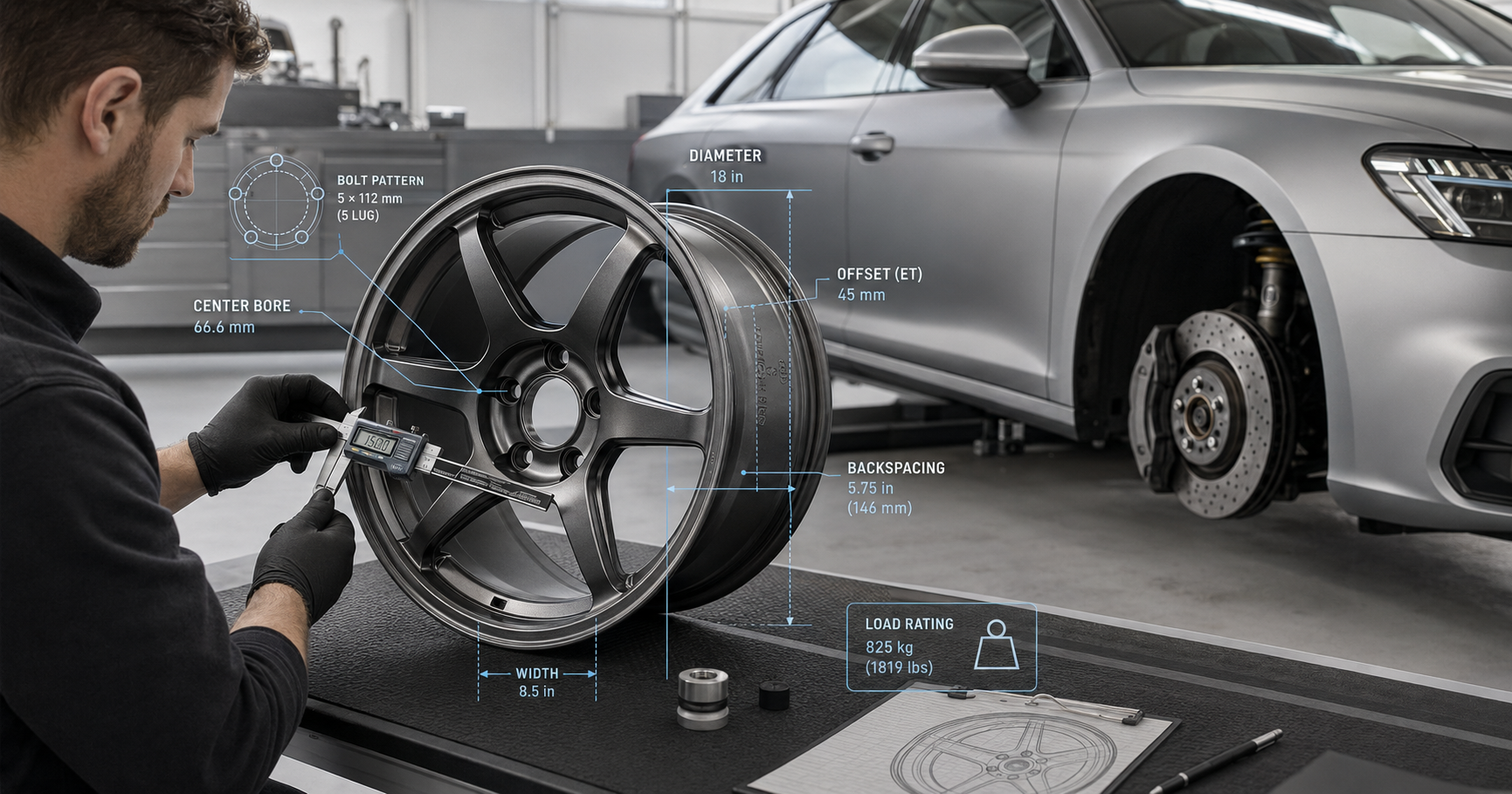
New wheels are one of the most popular upgrades a car owner can make, and also one of the easiest to get wrong. A set that looks perfect online can rub the fender, foul the brakes, or not bolt on at all if the fitment numbers are off. The specifications that govern fitment, bolt pattern, offset, bore, diameter, and load rating, are not complicated once explained, but they are unforgiving. This guide walks through what each number means and how to make sure a set of aftermarket wheels actually fits, whether you are buying or advising a customer.
Bolt pattern: the first thing that must match
Bolt pattern, also called the lug pattern, is the number of bolts and the diameter of the circle they sit on, written like 5x114.3, meaning five bolts on a 114.3mm circle. This has to match your vehicle exactly, since a wheel with the wrong pattern simply will not mount. It is the first filter in any wheel search and the one with no flexibility, other than dedicated adapters, which should be used with care. Confirming the vehicle's exact bolt pattern before anything else saves a lot of wasted time looking at wheels that could never fit.
Offset: the number that decides how they sit
Offset is the distance between the wheel's mounting surface and its centerline, measured in millimeters and usually marked as ET. It determines how far the wheel sits in or out relative to the hub, which affects both appearance and clearance. Too much positive offset can cause the wheel or tire to rub inner suspension components, while too little, or negative offset, pushes the wheel outward where it can rub the fender or extend past it. Offset is where most fitment problems happen, because a set with the wrong offset may bolt on fine yet rub or sit wrong, so it deserves the most attention.
Center bore: the fit that carries the weight
The center bore is the hole in the middle of the wheel that sits over the hub. On a proper fit, the hub carries the weight of the vehicle, known as hub-centric. If the wheel's bore is larger than the hub, it needs hub-centric rings to center it correctly, otherwise the wheel is centered only by the lug bolts, which can cause vibration. The bore must be at least as large as the hub, never smaller, and matching it correctly, with rings where needed, is what keeps the ride smooth and the wheel properly seated.
Diameter and width: looks meet practicality
Diameter and width set the size of the wheel and the tire that fits it. Going up in diameter, sometimes called plus-sizing, changes the look and usually requires a lower-profile tire to keep the overall rolling diameter close to stock, which matters for speedometer accuracy and clearance. Wider wheels need wider tires and more clearance in the wheel well. Bigger is not automatically better: an aggressive diameter and width can hurt ride quality, increase the chance of rubbing, and cost more in tires. Matching the size to the vehicle and the owner's priorities matters more than maxing out the numbers.
Load rating: the specification people forget
Every wheel has a load rating, the maximum weight it is engineered to carry, and it is the specification enthusiasts most often overlook. For heavier vehicles, trucks, SUVs, and anything used for towing or hauling, the wheel's load rating must meet or exceed the vehicle's requirements. Fitting a lightweight wheel designed for a small car onto a heavy truck is a genuine safety risk, not just a durability concern. This is one of the most important checks a good wheel shop makes, and one a customer buying purely on looks may not even know exists, which is exactly why professional guidance matters here.
Why buying on looks alone goes wrong
Almost every wheel fitment problem traces back to choosing on appearance and skipping the numbers. A wheel can be the right bolt pattern and still rub because of offset, vibrate because of an unaddressed bore mismatch, or be unsafe because of an inadequate load rating. This is why buying from a shop that verifies fitment against your specific vehicle, rather than grabbing a set that looks right, prevents expensive and frustrating mistakes. The visual is the fun part, but the fitment numbers are what determine whether the wheels actually work on the car.
For rims and wheel shops: fitment accuracy is the whole job
For a wheel shop, getting fitment right on every order is the core of the business and the source of most of what can go wrong: a wrong offset ordered, a bore not accounted for, or a custom order placed against the wrong vehicle spec turns into returns, re-orders, and unhappy customers. Keeping precise fitment details, bolt pattern, offset, bore, and load requirements, recorded per customer vehicle and attached to each order is what prevents costly mistakes on special orders and deposits. Managing that with organized order and job tracking and a detailed customer and vehicle record keeps custom wheel orders accurate. For the operational side of custom orders and deposits, see our guide to managing custom orders, deposits, and fitment.
Frequently asked questions
What is the most important number for wheel fitment?
Bolt pattern is the first thing that must match exactly, because a wheel with the wrong pattern will not mount at all. After that, offset is the number that causes the most problems, since a wheel can bolt on fine but still rub the fender or suspension if the offset is wrong. Both need to be confirmed against your specific vehicle.
What does wheel offset mean?
Offset is the distance in millimeters between the wheel's mounting surface and its centerline, usually marked as ET. It controls how far the wheel sits in or out relative to the hub. Too much positive offset can cause rubbing on inner suspension parts, while too little or negative offset pushes the wheel outward where it can rub or extend past the fender.
Do aftermarket wheels need hub-centric rings?
Often, yes. If the wheel's center bore is larger than the vehicle's hub, hub-centric rings are needed to center the wheel properly so the hub carries the weight. Without them the wheel is centered only by the lug bolts, which can cause vibration. The bore must be at least as large as the hub and never smaller.
Does wheel load rating matter for my vehicle?
Yes, especially for heavier vehicles. Every wheel has a maximum load rating, and for trucks, SUVs, and vehicles used for towing or hauling it must meet or exceed the vehicle's requirement. Fitting a lightweight wheel not rated for the vehicle's weight is a safety risk, not just a durability issue, which is why it is a key check when buying.
Can I put bigger wheels on my car?
Usually within limits. Going up in diameter typically requires a lower-profile tire to keep the rolling diameter close to stock for speedometer accuracy and clearance, and wider wheels need more room in the wheel well. Bigger wheels can reduce ride quality and increase the chance of rubbing, so size should be matched to the vehicle rather than maximized.
[[END FAQ]]
This article provides general education on wheel fitment. Always verify the correct specifications for your specific vehicle with a qualified wheel professional before purchasing.
Subscribe to our newsletter today
Fresh insights and practical tips delivered every week.