.svg)
Why Collecting Customer Data Is a Competitive Advantage in Today's Market
In a crowded market, the shops that know their customers best win. Here is why systematically collecting customer data is a competitive advantage rivals can't copy.

.png)
Helping auto shops work smarter and grow.
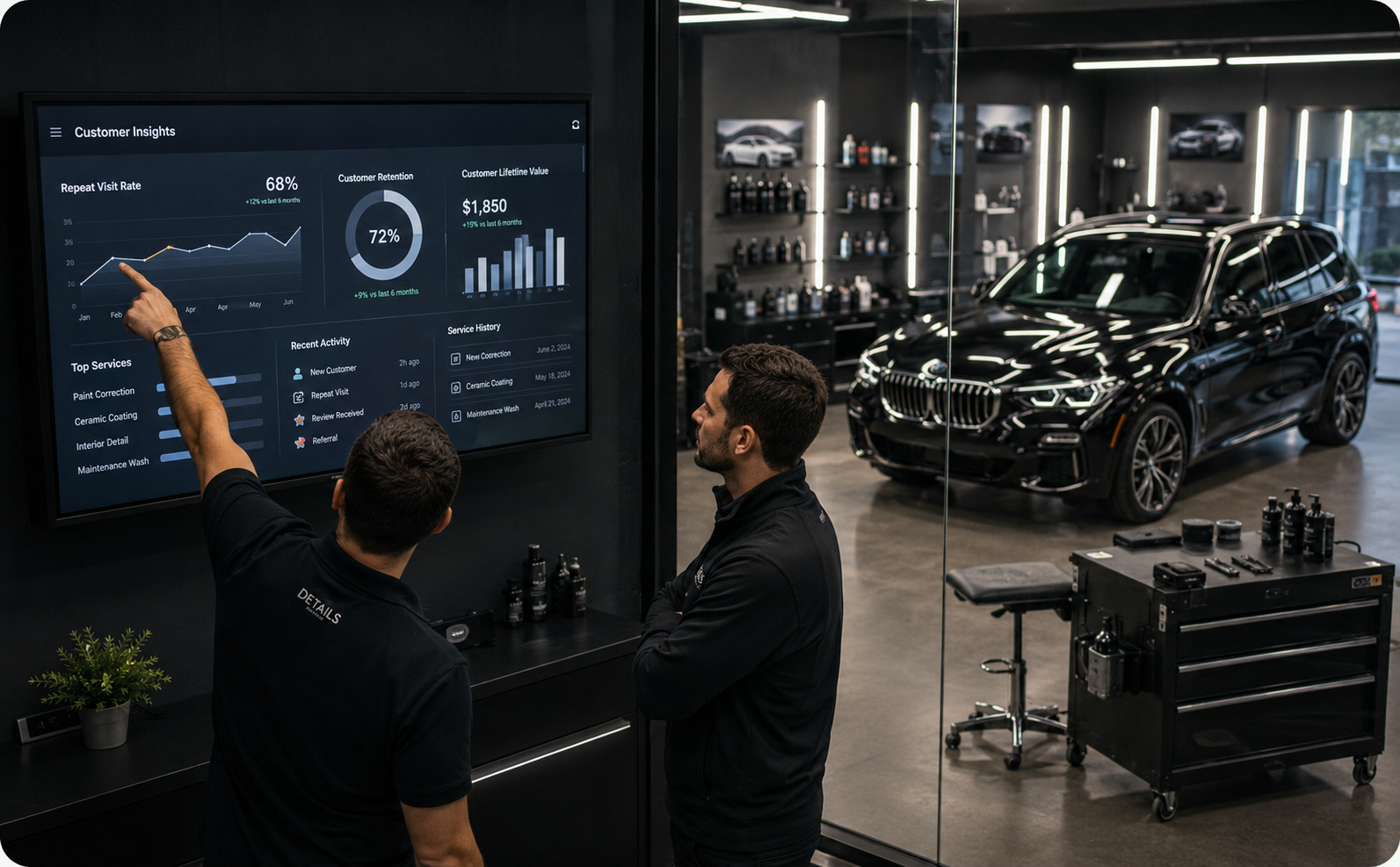
Two shops on the same street can offer the same services at similar prices, and one will quietly outgrow the other year after year. Often the difference is not skill or location, it is that one shop knows its customers and the other forgets them the moment they drive away. In a market where advertising is expensive and customers have endless choices, the businesses that systematically collect and use customer data hold an advantage that is very hard to compete against. This article explains why, and what it means for an appearance or protection shop.
Why customer data has become the real competitive edge
Every shop competes on the obvious things, price, quality, speed, but those are easy for a rival to match. What is far harder to copy is a deep, organized understanding of your customers: who they are, what they own, what they have bought, and what they need next. That knowledge compounds over time and cannot be replicated by a competitor no matter how good their marketing is, because it is built from your own history with real people. A shop that captures and uses this information can retain customers, sell more to each one, and market with precision, while a shop that operates on memory starts from zero with every transaction. In a crowded market, that gap is the advantage.
Retention: the cheapest growth you will ever find
The most immediate payoff of customer data is retention, and retention is where the money is. It is far cheaper to keep an existing customer than to acquire a new one, and returning customers tend to spend more over time, yet you cannot retain customers you do not remember. Data is what makes retention systematic: knowing when a customer is due for their next service, what vehicle they own, and what they bought last time lets you bring them back deliberately instead of hoping they think of you. A shop with organized records can turn one-time jobs into repeat relationships, which is the single most reliable and profitable form of growth available to a small business.
Personalization is now the expectation, not the extra
Customers increasingly expect businesses to know them. When a shop greets a returning customer by name, already knows their vehicle, remembers the coating applied last spring, and recommends exactly the right next service, the experience feels effortless and professional. That is only possible with data. The alternative, asking the customer to re-explain everything every visit, feels careless by comparison and quietly erodes loyalty. In a market where a competitor is one search away, the personalized experience that data enables is often what makes a customer stay, and it is impossible to fake without organized records behind the counter.
Data turns marketing from guesswork into precision
Marketing without data is expensive guessing, blasting the same generic message to everyone and hoping some of it lands. Customer data changes that entirely. When you know each customer's service history, vehicle, and preferences, you can reach the right people with the right message at the right time: a seasonal reminder to customers who need it, a maintenance nudge to coating customers, a win-back offer to those who have gone quiet. That precision means less wasted spend and higher response, which is a direct competitive advantage over a shop broadcasting into the void. The data you already collect on every job is what makes targeted, efficient marketing possible.
Better decisions come from knowing your own numbers
Beyond individual customers, aggregated data tells you how your business actually works. Which services are most profitable, which customer segments retain best, where jobs are being lost, which locations outperform, all of it lives in your customer and job records if you capture them. A shop that reviews this information makes decisions based on reality, while a competitor running on gut feeling is guessing. Over time, better-informed decisions about pricing, services, and marketing compound into a meaningfully stronger business. The same data that helps you serve individual customers also helps you steer the whole operation.
Why most shops leave this advantage on the table
Here is the opportunity: most small shops collect almost no usable customer data. Information lives on paper invoices, in text threads, and in the owner's head, which means it cannot be searched, analyzed, or acted on. Because so few competitors do this well, the shop that gets organized gains an edge that is disproportionate to the effort. The key is capturing data as part of the normal workflow rather than as extra admin, so every job automatically builds the record. Keeping customer and vehicle profiles in one system, with reporting to see the patterns, turns the data you already generate into an asset you can actually use. Handled responsibly, with attention to consent and privacy, that data becomes a durable advantage.
How it comes together
In today's market, the shops that win are increasingly the ones that know their customers best. Organized customer data drives retention, enables the personalization customers now expect, makes marketing precise instead of wasteful, and reveals how your business truly performs. It is an advantage a competitor cannot copy, because it is built from your own history. And because most shops still run on memory and paper, simply getting organized puts you ahead. Start collecting and using your customer data deliberately, and you build a competitive edge that compounds with every job.
Frequently asked questions
Why is customer data a competitive advantage?
Because it is one of the few advantages a competitor cannot copy. Price, quality, and speed are easy to match, but a deep, organized understanding of your own customers, who they are, what they own, and what they need next, is built from your unique history with real people. That knowledge compounds over time and lets you retain, personalize, and market in ways a shop running on memory cannot.
How does customer data improve retention?
It makes retention systematic instead of accidental. Knowing when a customer is due for service, what vehicle they own, and what they bought last time lets you bring them back deliberately rather than hoping they remember you. Since keeping an existing customer is far cheaper than acquiring a new one and repeat customers spend more, organized data turns one-time jobs into the most reliable form of growth.
Do customers really expect personalization from a small shop?
Increasingly, yes. When a shop knows a returning customer's name, vehicle, and service history and recommends the right next step, the experience feels professional and effortless. The alternative, asking customers to re-explain everything each visit, feels careless and erodes loyalty. With a competitor one search away, the personalized experience that data enables is often what makes a customer stay.
How does data make marketing more effective?
It replaces guesswork with precision. Knowing each customer's history, vehicle, and preferences lets you send the right message at the right time, a seasonal reminder, a maintenance nudge, a win-back offer, instead of blasting everyone with the same generic message. That means less wasted spend and higher response, a direct edge over a shop marketing blindly.
Why don't more shops already do this?
Because most keep their information on paper invoices, in text threads, and in the owner's head, where it cannot be searched or acted on. That is exactly the opportunity: since so few competitors capture usable data, the shop that gets organized gains an outsized edge. The key is capturing data as part of the normal workflow, handled responsibly with attention to consent and privacy, so every job builds the record automatically.
[[END FAQ]]
This article offers general business guidance. Collect and use customer data responsibly and in compliance with applicable privacy and anti-spam laws.
Subscribe to our newsletter today
Fresh insights and practical tips delivered every week.