.svg)
How a CRM and Mobile App Work Together for Wrap, Tint, and Tire Shops
A CRM organizes your customers and a mobile app puts that information where the work happens. Here is how the two work together for wrap, tint, and tire shops.

.png)
Helping auto shops work smarter and grow.
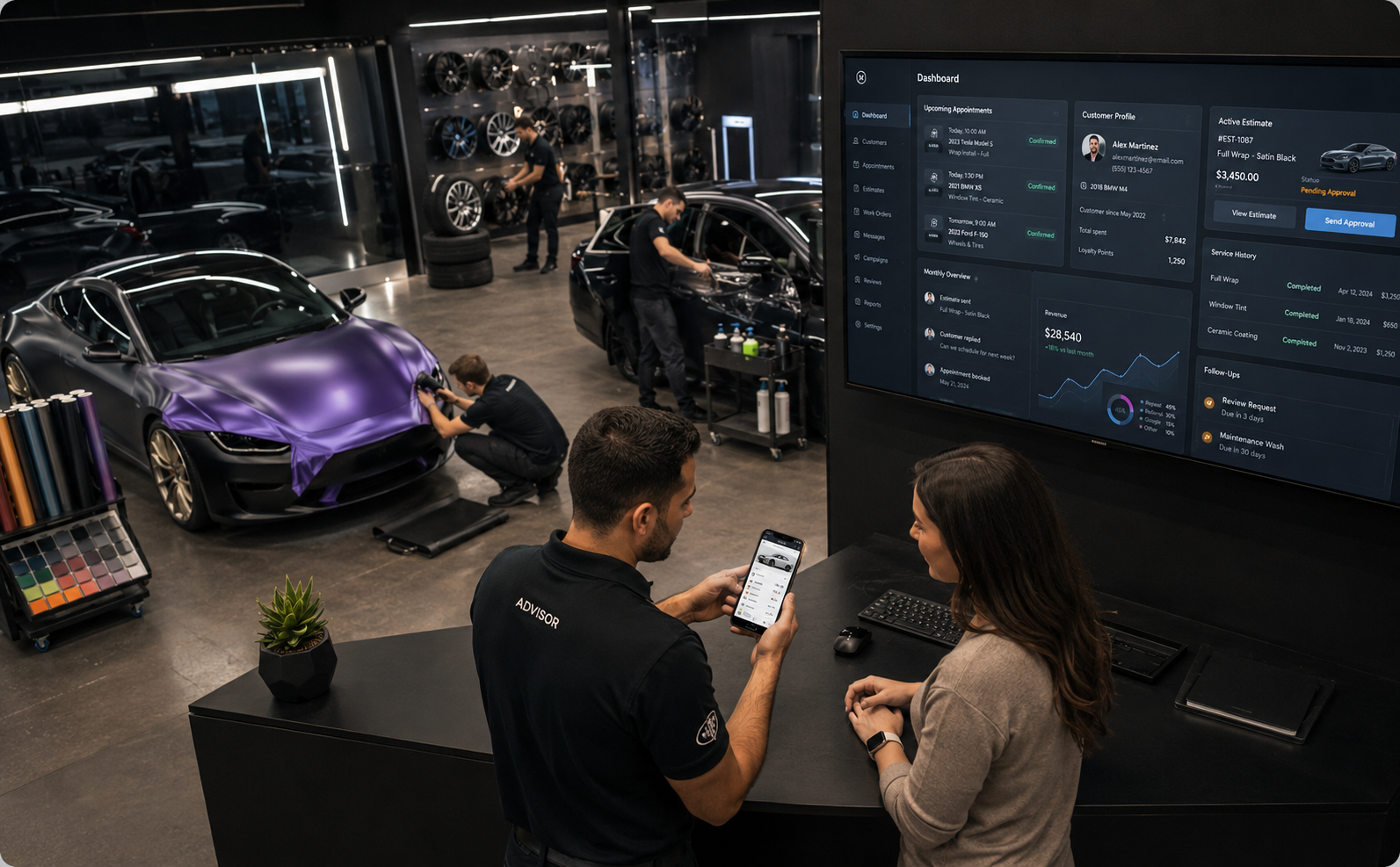
A CRM organizes your customers. A mobile app puts that information where the work actually happens. Separately, each solves half a problem. Together, they close the gap that costs wrap, tint, and tire shops time and money every day: the distance between the office computer where records live and the bay, driveway, or counter where jobs are done. This guide explains how the two work together and what that combination looks like across three very different kinds of shop.
Why a desktop-only system fails a busy shop
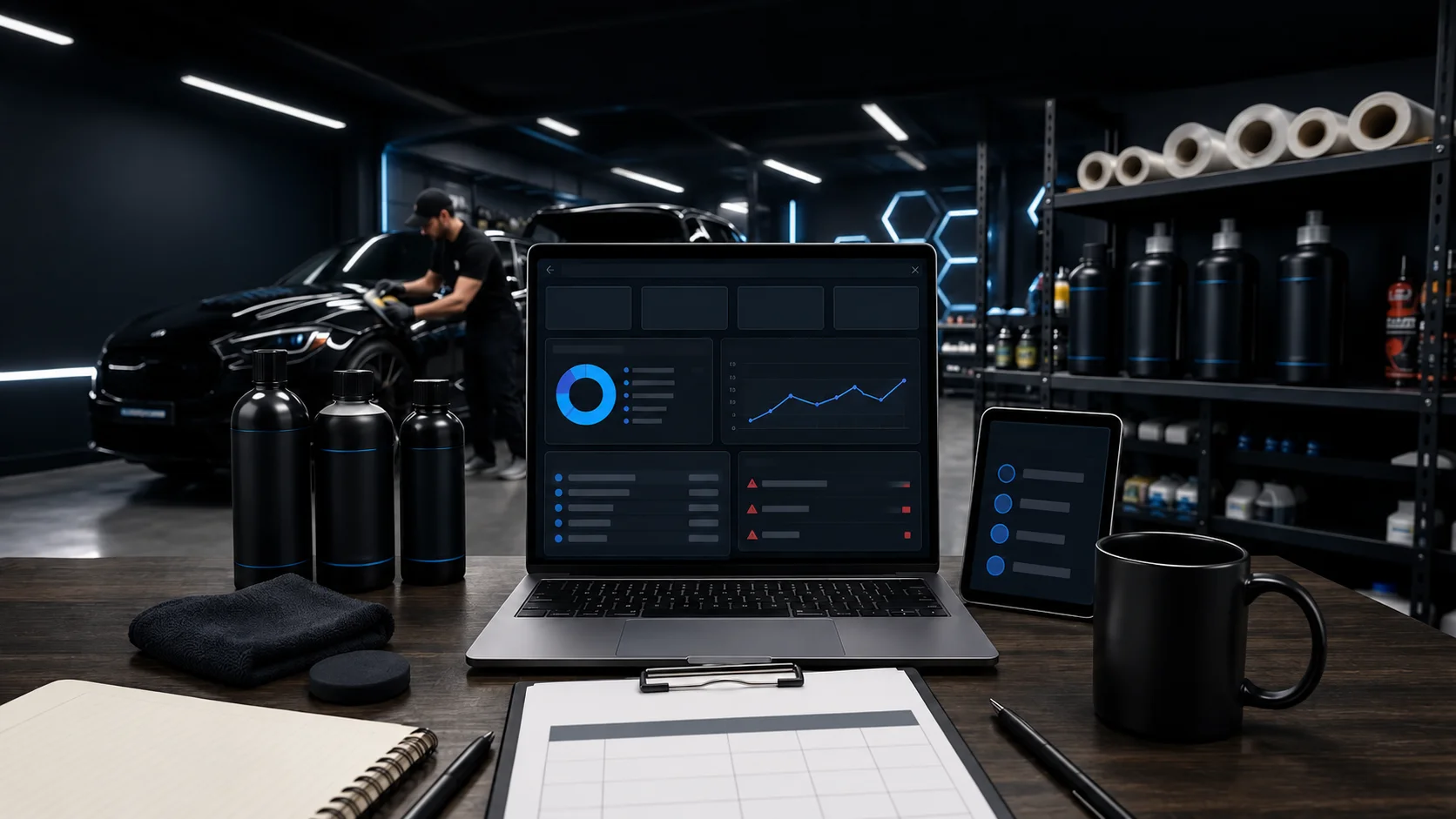
Most shops do not run from a desk. The installer is in the bay, the tire tech is at the vehicle, the estimator is walking a customer's car in the lot. When your customer and job information only lives on an office computer, everyone has to remember details until they get back to a terminal, which means records get updated late, photos sit forgotten in a personal phone, and job statuses lag behind reality. A CRM alone, if it is desktop-bound, recreates the very problem it was meant to solve. The mobile app is what makes the CRM usable in the moment, so the record is accurate by the time the technician walks away from the car.
What the CRM provides
The CRM is the system of record, the single organized place where every customer, vehicle, job, and conversation lives. It holds contact details and communication preferences, a full service history for each vehicle, what was quoted and installed, photos, and the follow-up each customer is due for. Instead of a name on an invoice and the rest in someone's memory, you get a searchable, connected record that any authorized team member can pull up. That organized foundation is what makes consistent pricing, timely rebooking, and professional service possible, and it is the difference between a shop that scales and one that stalls on chaos.
What the mobile app adds
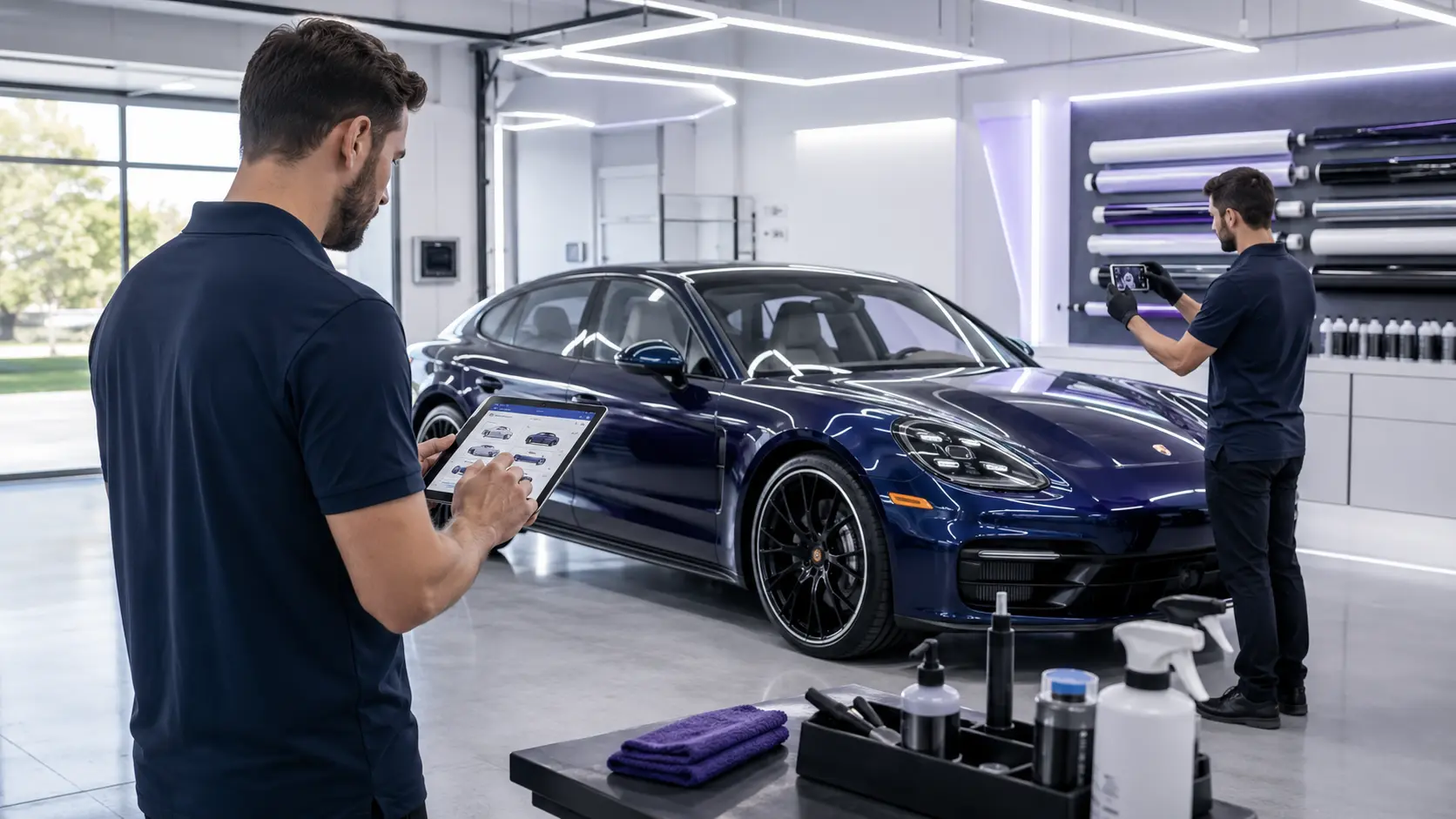
The mobile app takes that record and makes it live where the work is. From a phone, a technician can pull up a customer's full history before starting, add a new customer on the spot without double-entering later, capture before-and-after photos straight to the job, update a job's status as work moves, and keep the whole record current in real time. The paperwork is done by the time the appointment ends, not piled up for a late-night catch-up. For any shop whose work happens away from a desk, the mobile app is not a convenience feature, it is what turns the CRM from a filing cabinet into an operating tool.
For wrap shops: managing a long, visual sales cycle
Wrap work has a long cycle, from inquiry and quote to design approval, deposit, and a multi-day install, and it is intensely visual. The CRM and app together keep that whole arc in one place: the lead and quote so a several-thousand-dollar job does not get lost in a buried DM, the vehicle and material details, and the project photos that are both quality-control records and your best marketing. On the floor, the installer captures vehicle condition and finished-wrap photos directly to the job from their phone, so the portfolio builds itself and the customer record stays complete. Documenting each vehicle also protects against disputes over pre-existing damage.
For tint shops: capturing fast-moving, high-volume demand
Tint runs on speed and volume, with customers comparing shops in the same hour and installers unable to stop mid-film to answer the phone. Here the combination shines by capturing every inquiry into one record and letting the team respond from the same customer profile rather than scattered phones. The app lets whoever is free pull up a quote, add a walk-in, or update a job status without leaving the floor, and it keeps each vehicle's installed film and coverage on record for warranty questions and future work. The result is that a busy day full of interruptions still produces clean, complete records instead of a pile of half-remembered jobs.
For tire shops: keeping seasonal and storage details straight
Tire and wheel shops juggle seasonal rushes, stored tire sets, and fitment details that must be exactly right. The CRM keeps each customer's vehicle, wheel and tire specifications, storage relationship, and seasonal service history in one place, so a returning customer is recognized and their stored set is on record rather than lost. The mobile app lets the team confirm vehicle and service details, update job status, and keep records current at the vehicle during a hectic changeover season. When any location can see the same shared history, a customer who visits a different branch is still known, which is exactly what keeps service consistent when demand spikes.
How the two create one operating system
The point is not two separate tools but one connected system. The CRM organizes the information and the mobile app keeps it accurate in real time, and together they mean your entire customer database travels with your team and stays current job to job. Every feature that matters, customer and vehicle records, photo and video capture, job tracking, and customer messaging, works from the same record whether you are at the counter or at the car. That is what lets a wrap, tint, or tire shop run on accurate information instead of memory, regardless of where the work happens.
How it comes together
A CRM without a mobile app leaves your best information stuck at a desk your team rarely sits at. A mobile app without a CRM is just a phone with no organized record behind it. Put them together and you get a system that captures every customer, keeps every job current from the floor, and travels with your team through a wrap install, a tint rush, or a tire changeover. For shops whose work happens everywhere but the office, that combination is the foundation everything else is built on.
Frequently asked questions
Why isn't a desktop CRM enough for a shop?
Because shop work happens in the bay, at the vehicle, or in the lot, not at a desk. A desktop-only CRM forces staff to remember details until they return to a terminal, so records get updated late, photos are forgotten, and job statuses lag behind reality. A mobile app makes the CRM usable in the moment, keeping the record accurate by the time the technician leaves the car.
What does the mobile app do that the CRM can't alone?
The app makes the record live where work happens: pulling up a customer's history before starting, adding customers on the spot, capturing photos directly to the job, and updating job status in real time from a phone. It turns the CRM from a static filing cabinet into an operating tool, so the paperwork is finished by the end of the appointment rather than piled up for later.
How does this help a wrap shop specifically?
Wrap work has a long, visual sales cycle from quote to multi-day install. The CRM keeps the lead, quote, vehicle, materials, and project photos in one place so a high-value job is not lost in a buried message, and the app lets installers capture vehicle condition and finished-wrap photos from their phone. That builds your portfolio automatically and documents each vehicle against disputes.
How does it help a tire shop during seasonal rushes?
It keeps each customer's vehicle, wheel and tire specs, stored-set relationship, and seasonal history in one record, so returning customers are recognized and their stored tires are on file. The app lets staff confirm details and update job status at the vehicle during hectic changeovers, and shared records mean a customer is known even at a different branch, keeping service consistent when demand peaks.
Do the CRM and app work as one system?
Yes. The CRM organizes the information and the mobile app keeps it accurate in real time, working from the same record whether you are at the counter or the car. Customer records, photo capture, job tracking, and messaging all run off one shared database, so your entire customer history travels with your team and stays current from job to job.
[[END FAQ]]
This article describes general operational benefits. Specific features and workflows vary by shop and setup.
Subscribe to our newsletter today
Fresh insights and practical tips delivered every week.