.svg)
How Fast Should You Respond to a Detailing or Wrap Lead? And How to Actually Do It
The first shop to reply usually wins the job. Here is how fast you should respond to a detailing or wrap lead, and how to actually do it when you are busy in the bay.

.png)
Helping auto shops work smarter and grow.
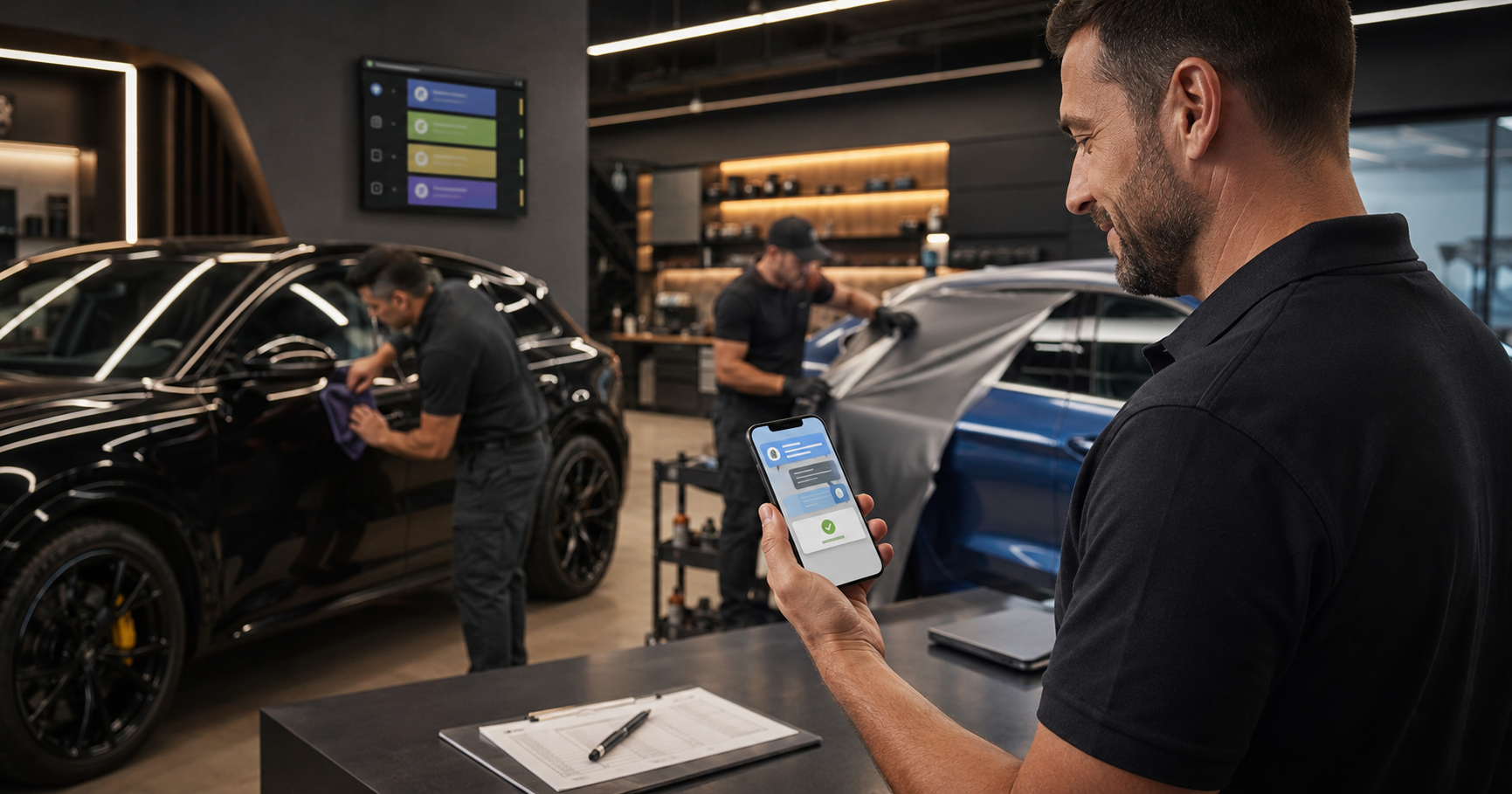
When someone reaches out about a detail, a wrap, or a coating, they are rarely contacting only you. They are messaging several shops at once, and the one that responds first has an enormous advantage, often winning the job before the others even reply. Speed of response is one of the highest-leverage things an appearance shop controls, and yet it is where most shops quietly lose business every week. This guide covers how fast you actually need to respond, why it matters so much, and how to do it consistently even when you are buried in the bay.
Why the first shop to respond usually wins
A customer reaching out is at a peak of intent, they want the problem solved now, and they are shopping around. The shop that replies first gets to shape the conversation, answer questions while interest is hottest, and often locks in the job before a competitor responds at all. Waiting hours, or until the end of the day, means the customer has usually already engaged with a faster shop and mentally moved on. This is not about being pushy, it is about being present at the moment the customer is ready to act. In a market where several shops offer similar work, response speed is frequently the deciding factor, not price or even quality.
How fast is fast enough?
The honest answer is: faster than you probably think. Lead response is one of those areas where minutes matter, and the drop-off in your odds as time passes is steep, a reply within a few minutes dramatically outperforms one an hour later, which in turn beats one the next day. A practical standard for a busy shop is to respond within minutes during business hours and to have some form of acknowledgment go out quickly even when you cannot give a full quote yet. The goal is not to have the complete answer instantly, it is to make contact while the customer is still in buying mode, then follow through. Speed opens the door; the conversation closes the sale.
The real problem: you are in the bay, not at the phone
Here is the tension every shop owner knows. The reason you cannot respond fast is the same reason you are worth contacting, you are doing the work. When you are mid-wrap or elbow-deep in a detail, you are not watching your inbox, and by the time you surface, hours have passed and three leads have gone cold. This is the core operational problem behind slow response, and it is why simply telling yourself to reply faster does not work. The fix is not willpower, it is building a system where fast response does not depend on you being free at the exact moment a lead arrives.
Capture every lead in one place
The first step to responding fast is never missing a lead in the first place. When inquiries scatter across a personal phone, a business line, Instagram DMs, Facebook messages, and a web form, some inevitably fall through the cracks, and you cannot respond quickly to a message you have not seen. Bringing every inquiry into one place, so the whole team can see and act on it, is the foundation. A lead that lands in a single, visible queue gets answered; a lead buried in one platform's notifications while you work in another gets forgotten. Consolidation is what makes consistent speed even possible.
Use quick acknowledgments and templates to buy time
You do not have to choose between doing the work and answering leads if you separate the acknowledgment from the full response. A fast initial reply, even a brief one that says you have received their message and will follow up shortly with details, keeps the customer engaged and signals professionalism, buying you time to give a proper quote when you surface. Templated replies for your most common inquiries let anyone on the team respond in seconds without composing from scratch. The combination, an immediate acknowledgment plus a ready template, means a customer hears back right away even when you are busy, which is most of what winning the speed game requires.
Let the whole team respond, from anywhere
Fast response should not bottleneck on one person. When your lead queue and customer information live in one system that the whole team can access from their phones, whoever is free can pick up an inquiry, see the context, and respond, without waiting for the owner to get off a job. A mobile-accessible system means a lead can be answered from the floor between steps, not just from the office computer after hours. Spreading the ability to respond across the team, with everyone working from the same shared information, is what turns fast response from an occasional lucky event into a reliable habit. Keeping customer inquiries and records together with a mobile app and quick messaging is what makes responding in minutes realistic for a working shop.
How it comes together
Responding fast to leads is one of the cheapest, highest-return improvements an appearance shop can make, because the first shop to reply usually wins, and most shops are slow. The barrier is never desire, it is that you are busy doing the work, so the solution is systematic: capture every lead in one visible place, use quick acknowledgments and templates to respond instantly even when you are occupied, and let your whole team answer from anywhere. Build that system and you stop losing jobs to faster competitors and start being the shop that got there first. For the related payoff on the quoting side, see our guide on why fast quotes win jobs.
Frequently asked questions
How quickly should I respond to a new lead?
Faster than most shops think, ideally within minutes during business hours. Lead response is an area where minutes matter, and your odds of winning the job drop steeply as time passes: a reply within a few minutes dramatically outperforms one an hour later, which beats one the next day. Even a quick acknowledgment while you prepare a full quote keeps the customer engaged during their peak intent.
Why does responding first matter so much?
Because customers reaching out are shopping several shops at once and are at their peak of intent. The shop that replies first shapes the conversation, answers questions while interest is hottest, and often wins the job before competitors even respond. In a market where shops offer similar work and pricing, response speed is frequently the deciding factor rather than price or quality.
How do I respond fast when I'm busy doing the work?
By building a system rather than relying on willpower. Capture every lead in one visible place so none are missed, use quick acknowledgments and templated replies to respond instantly even mid-job, and let your whole team answer from their phones so response does not bottleneck on you. The point is that fast response should not depend on you being free the moment a lead arrives.
What if I can't give a full quote right away?
Separate the acknowledgment from the full response. A brief immediate reply confirming you received their message and will follow up shortly with details keeps the customer engaged and signals professionalism, while buying you time to prepare a proper quote when you surface from the bay. Speed opens the door; the detailed conversation closes the sale afterward.
Why do leads get missed in the first place?
Usually because inquiries scatter across a personal phone, business line, Instagram, Facebook, and web forms, so some fall through the cracks unseen. You cannot respond quickly to a message you never noticed. Bringing every inquiry into one visible queue the whole team can see is the foundation of fast response, because a consolidated lead gets answered while a buried one gets forgotten.
[[END FAQ]]
This article offers general business guidance. Send any automated or templated customer messaging in compliance with applicable consent and anti-spam rules.
Subscribe to our newsletter today
Fresh insights and practical tips delivered every week.