.svg)
How Multi-Location Shops Manage Customer Data, Jobs, and Services Across Every Branch
Running several shops means coordinating customer data, jobs, and services across every branch. Here is how multi-location businesses manage all three as one connected system.

.png)
Helping auto shops work smarter and grow.
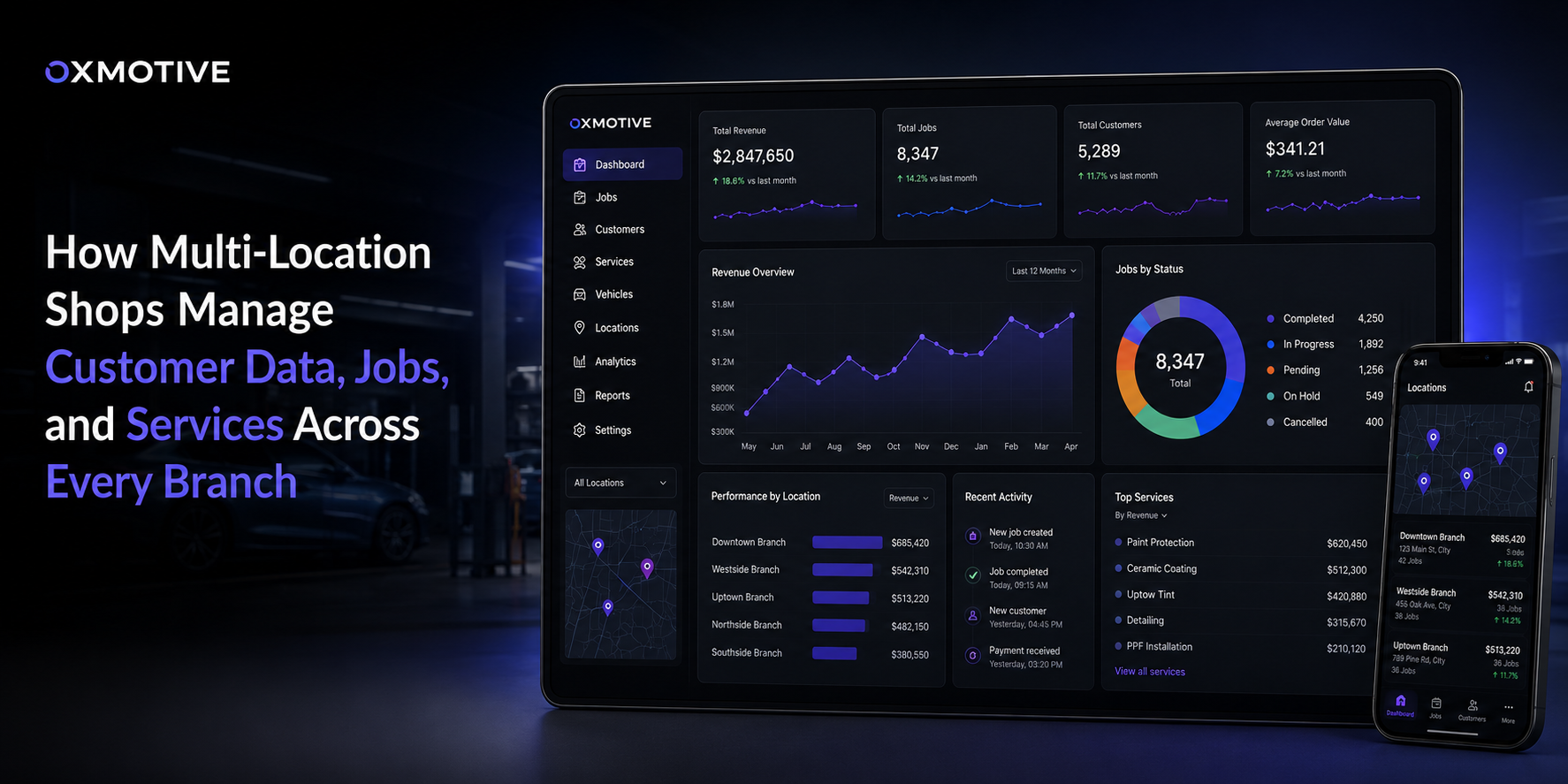
Running one shop well is hard enough. Running several, each with its own customers, jobs in progress, and service menu, introduces a coordination challenge that catches many growing owners off guard. The businesses that scale smoothly are not the ones that work harder at each location, they are the ones that manage customer data, jobs, and services as one connected system rather than as separate shops that happen to share a name. This guide covers how successful multi-location appearance and protection businesses keep all three, data, jobs, and services, consistent and visible across every branch.
The three things that must stay coordinated
When you expand, three distinct things need to stay coordinated across locations, and each fragments differently if you let it. Customer data must be unified so a customer is known at any branch. Jobs must be visible across the business so work in progress can be tracked and managed no matter where it happens. And services and pricing must be consistent so a customer gets the same offering and the same quote regardless of which location they visit. Owners often focus on just one of these and let the others drift. Managing all three deliberately is what separates a true multi-location brand from a loose collection of shops.
Unifying customer data across locations
The foundation is shared customer data. Every customer, vehicle, and service history should live in one central system visible from any location, so a customer served at one branch is instantly recognized at another with their full history intact. Without this, each location builds its own isolated list, customers become strangers when they visit a different site, and the owner can never see the true, combined customer base. Unified customer data is what lets the whole business treat a customer as one relationship rather than several disconnected transactions, and it is the single most important thing to get right when managing multiple locations.
Managing jobs across the whole business
Beyond customers, the work itself needs cross-location visibility. Each job, its vehicle, service, status, photos, and assigned staff, should be trackable within a shared system so that both the local team and ownership can see what is happening. This lets a manager run their location's schedule while the owner sees total workload, capacity, and progress across every branch from one place. When jobs live only in each location's own head or notebook, the owner is blind to the overall operation and cannot spot a location that is overwhelmed or underused. Shared job management turns several separate work queues into one operation you can actually oversee and balance.
Keeping services and pricing consistent
The third piece is consistency of what you sell. A multi-location brand should offer the same services with the same standards and the same pricing across locations, or customers notice the discrepancy and trust erodes, especially customers who visit more than one of your branches. Defining your services and prices once in a shared system, rather than letting each location invent its own, keeps the brand coherent and prevents the confusion and disputes that inconsistent pricing creates. It also makes reporting meaningful, because you are comparing locations selling the same things. Consistency here is what makes your brand feel like one professional business rather than a franchise in name only.
Giving each location the right level of access
Unifying everything does not mean everyone sees everything, and good multi-location management balances central oversight with local control. Role-based permissions let each location's staff work with what they need, their customers, their jobs, while managers oversee their branch and ownership retains the full cross-location view. This structure keeps data secure and roles clear as you grow, so unifying your data does not mean losing control of it. The goal is one shared system with appropriate access levels, giving each person exactly the visibility their role requires and no more, which is what makes a larger organization both coordinated and secure.
Seeing the whole business from one place
The payoff of managing data, jobs, and services centrally is a single, true view of the entire operation. Instead of stitching together separate reports, the owner sees combined and per-location performance at a glance, which location is busiest, which is most profitable, where customers are being lost, how the whole business is trending. That visibility is what makes good decisions possible at scale and what lets you manage by facts rather than gut feel across locations. Keeping customer records, job management, multi-location support, role-based permissions, and cross-location reporting in one platform is what turns multiple branches into one manageable business. For the data-sync side specifically, see our guide on keeping customer data in sync across locations.
How it comes together
Managing a multi-location appearance or protection business well comes down to coordinating three things across every branch: unified customer data so customers are known everywhere, shared job visibility so ownership can oversee and balance the whole operation, and consistent services and pricing so the brand stays coherent. Layer role-based access over a single shared system and you get both coordination and control, plus one true view of the entire business. Get this right and each new location strengthens a unified brand rather than adding another disconnected island to manage.
Frequently asked questions
What do multi-location shops need to coordinate across branches?
Three things: customer data, so a customer is known at any location; jobs, so work in progress is visible and manageable across the business; and services and pricing, so customers get the same offering and quote everywhere. Each fragments differently if neglected, and owners often manage one while letting the others drift. Coordinating all three deliberately is what separates a true multi-location brand from a loose collection of shops.
How do you keep customer data consistent across locations?
By keeping every customer, vehicle, and service history in one central system visible from any location, so a customer served at one branch is instantly recognized at another with full history intact. This prevents each location from building an isolated list where customers become strangers elsewhere and the owner never sees the true combined customer base. Unified customer data is the most important foundation of multi-location management.
How can an owner track jobs across multiple locations?
By managing jobs in a shared system where each job's vehicle, service, status, photos, and staff are trackable. This lets local managers run their own schedule while ownership sees total workload, capacity, and progress across every branch from one place. When jobs live only in each location's notebook or memory, the owner is blind to the overall operation and cannot spot a branch that is overwhelmed or underused.
Why does consistent pricing matter across locations?
Because customers, especially those who visit more than one branch, notice discrepancies, and inconsistent pricing erodes trust and creates disputes. Defining services and prices once in a shared system keeps the brand coherent, prevents confusion, and makes reporting meaningful since you are comparing locations selling the same things. Consistency is what makes the business feel like one professional brand rather than a franchise in name only.
Does unifying data mean every employee sees everything?
No. Role-based permissions let each location's staff work with what they need while managers oversee their branch and ownership keeps the full cross-location view. This balances central oversight with local control, keeping data secure and roles clear as you grow. The goal is one shared system with appropriate access levels, giving each person exactly the visibility their role requires and no more.
[[END FAQ]]
This article offers general guidance. Handle customer data securely and in compliance with applicable privacy laws across all locations.
Subscribe to our newsletter today
Fresh insights and practical tips delivered every week.