.svg)
Types of Window Tint Explained: Ceramic vs Carbon vs Dyed and What to Choose
Ceramic vs carbon vs dyed window tint explained: how they compare on heat rejection, durability, signal interference, and price, and how to choose the right film.

.png)
Helping auto shops work smarter and grow.
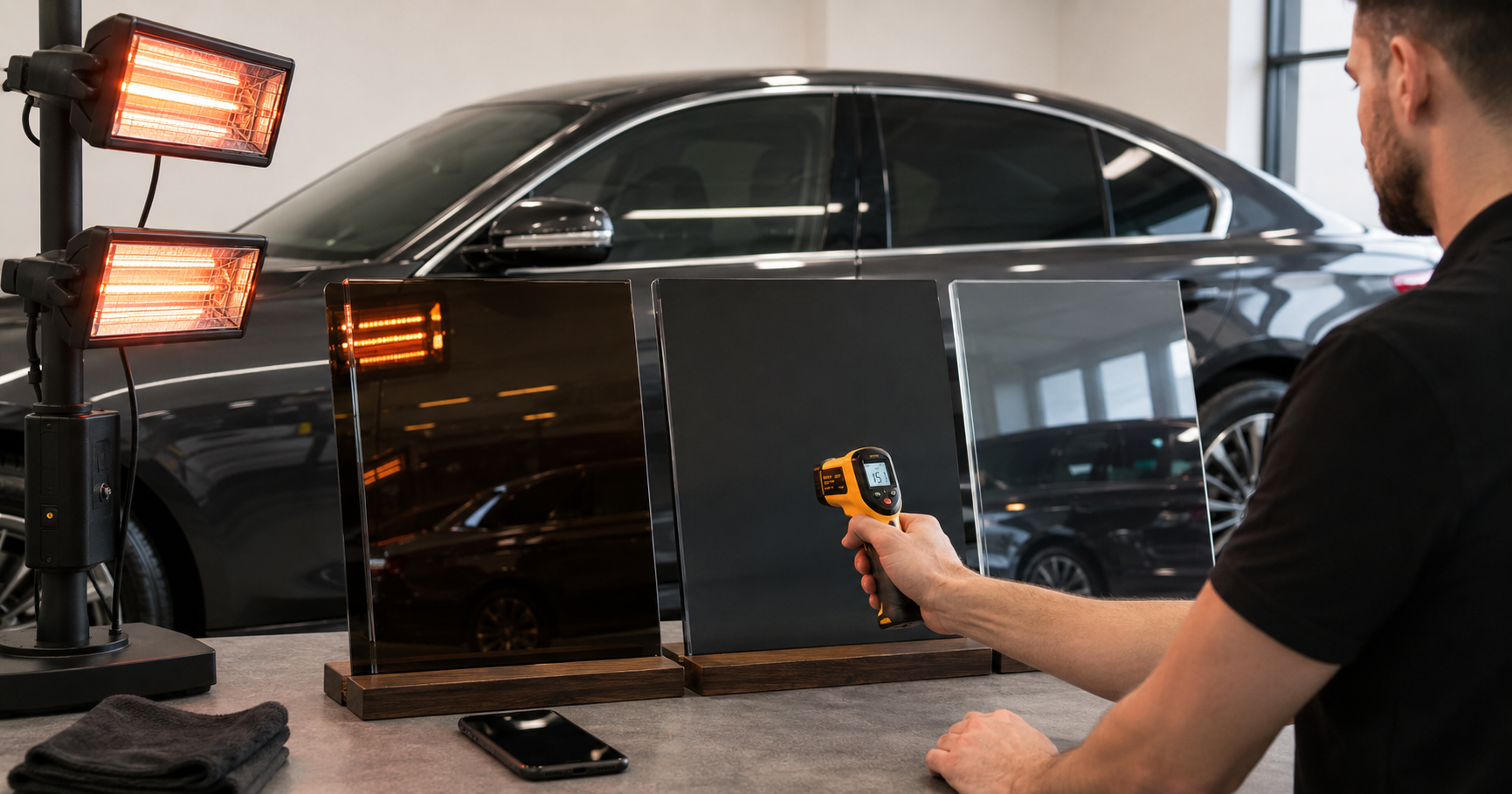
When customers shop for window tint, they usually ask for a shade, a percentage like 20% or 35%. But the shade only controls how dark the glass looks. The film technology behind it is what determines heat rejection, durability, and price, and it matters far more than the number. A cheap dyed film and a premium ceramic film at the same 20% shade look identical on the glass but perform nothing alike. This guide explains the main tint types so you can choose based on what actually matters.
Shade versus film type: the key distinction
The single most useful thing to understand about tint is that darkness and heat rejection are two different things. Visible light transmission, or VLT, is the percentage that describes how dark the film is. Heat rejection is measured separately, often as total solar energy rejected, or TSER. With basic films the two are loosely linked, but with modern ceramic film they are largely decoupled: you can run a light, nearly clear shade and still block the majority of infrared heat. That is why choosing film by shade alone is a mistake, and why a good shop steers the conversation toward performance rather than just a number.
Dyed tint: the budget option
Dyed film is the original and cheapest technology, a pigment-dyed layer laminated to the film. It blocks visible light effectively, so it darkens the glass and cuts glare, but it does little against infrared heat. Typical cost runs around $100 to $250 for a full vehicle. Its main drawback is longevity: the dye breaks down under UV and tends to fade to a purple hue over roughly three to five years. Dyed film makes sense for a lease, a second car, or a tight budget where the look matters more than heat performance, but it is the weakest heat performer of the three.
Carbon tint: the durable middle ground
Carbon film uses carbon particles rather than dye, and it sits in the middle of the market on both price and performance. It delivers solid heat rejection, commonly in the 35 to 45% TSER range, along with a premium matte finish that many drivers prefer. Its standout advantage is color stability: carbon does not fade or turn purple, so it looks the same in year five as it did on day one, and it commonly lasts ten or more years. For a driver in a moderate climate who wants durability and a good look without paying for nano-ceramic, carbon is a strong value.
Ceramic tint: the premium performer
Ceramic film uses non-conductive nano-ceramic particles engineered to reject infrared heat with high efficiency. It is the top performer on heat, commonly reaching up to 60% TSER and blocking 90% or more of infrared radiation, along with roughly 99% UV protection and excellent optical clarity. Because the ceramic particles are non-conductive, it does not interfere with phone, GPS, radio, or sensor signals. It also lasts the longest, often ten to fifteen years or more. Typical cost is $400 to $900. For daily drivers, hot climates, and anyone who parks outdoors, ceramic is usually the best long-term value despite the higher upfront price.
What about metallic and hybrid films?
Older metallic film rejects heat by reflecting it with embedded metal particles, and it performs reasonably, but the metal interferes with wireless signals, degrading phone reception, GPS, radio, and sensors. In a world of connected cars and phones, that is a serious drawback, and since ceramic now matches or beats its heat performance without the interference, there is little reason to choose metallic today. Hybrid films stack technologies, often dyed plus metallic, for middle-of-the-road performance at a middle price, but they still carry some of the signal interference of metal. For most buyers the real decision is between dyed, carbon, and ceramic.
How to choose the right film
Match the film to how the vehicle is actually used. For a hot climate, long highway commutes, or a car parked outdoors, ceramic's superior heat rejection and clarity justify the premium. For a moderate climate or a vehicle kept only a few years, carbon offers durability and a great look at a lower price. Dyed suits the tightest budgets where appearance matters more than heat. Compare films on their TSER number within your budget rather than on the category name, since quality varies within each type, and always confirm the shade you choose is legal for your region before installation.
For tint shops: sell the technology, not just the shade
Customers who only know they want limo dark are shopping on price, because a number is easy to compare across shops. Shops that explain the difference between film types, and show the heat-rejection numbers, shift the conversation from price to value and consistently sell more premium film. That requires presenting options clearly and keeping a record of exactly what film and shade went on each vehicle, which matters for warranty and repeat business. Managing that with structured quotes and jobs and a full customer and vehicle record makes the premium sale repeatable. For the legal side, see our guide to Ontario window tint laws.
Frequently asked questions
What is the difference between ceramic, carbon, and dyed tint?
Dyed is the cheapest, darkens glass and cuts glare but rejects little heat and fades over time. Carbon is a durable middle option with a matte finish, solid heat rejection, and no fading. Ceramic is the premium tier, with the highest heat rejection, about 99% UV protection, no signal interference, and the longest lifespan. The film type affects performance far more than the shade.
Does a darker tint block more heat?
Not necessarily. Darkness is measured by visible light transmission, while heat rejection is a separate measurement. With ceramic film the two are largely decoupled, so a light, nearly clear shade can still block most infrared heat. A cheap dyed film and a premium ceramic film at the same shade look identical but perform very differently, which is why film type matters more than darkness.
Why does dyed tint turn purple?
The pigment dye in the film breaks down under ultraviolet exposure over time, which shifts the color toward purple and reduces its effectiveness, usually within three to five years. Carbon and ceramic films use particles that do not break down this way, so they hold their true color indefinitely rather than fading.
Is ceramic tint worth the extra cost?
For most daily drivers, especially in hot climates or where the car is parked outdoors, yes. Ceramic rejects significantly more heat than carbon or dyed film, blocks far more infrared radiation, offers strong UV protection, and lasts the longest, often ten to fifteen years. The higher upfront price is offset by better comfort, lower cabin heat, and a longer service life.
Does window tint interfere with phone or GPS signals?
Metallic film can interfere with phone reception, GPS, radio, and vehicle sensors because of its metal content. Ceramic film uses non-conductive particles and does not cause signal interference despite its high heat rejection, which is one reason it has largely replaced metallic film. Dyed and carbon films also do not cause signal problems.
[[END FAQ]]
Performance figures and price ranges reflect published 2026 industry comparisons and manufacturer specifications and are provided as general ranges. Actual numbers vary by brand and product line, and legal tint limits vary by region, so confirm local law before installation.
Subscribe to our newsletter today
Fresh insights and practical tips delivered every week.