.svg)
Getting Your Shop Ready for Winter: A Seasonal Prep Checklist for Appearance and Protection Shops
A practical winter prep checklist for appearance and protection shops: repositioning services, pre-season promotions, building readiness, and handling weather disruptions.

.png)
Helping auto shops work smarter and grow.
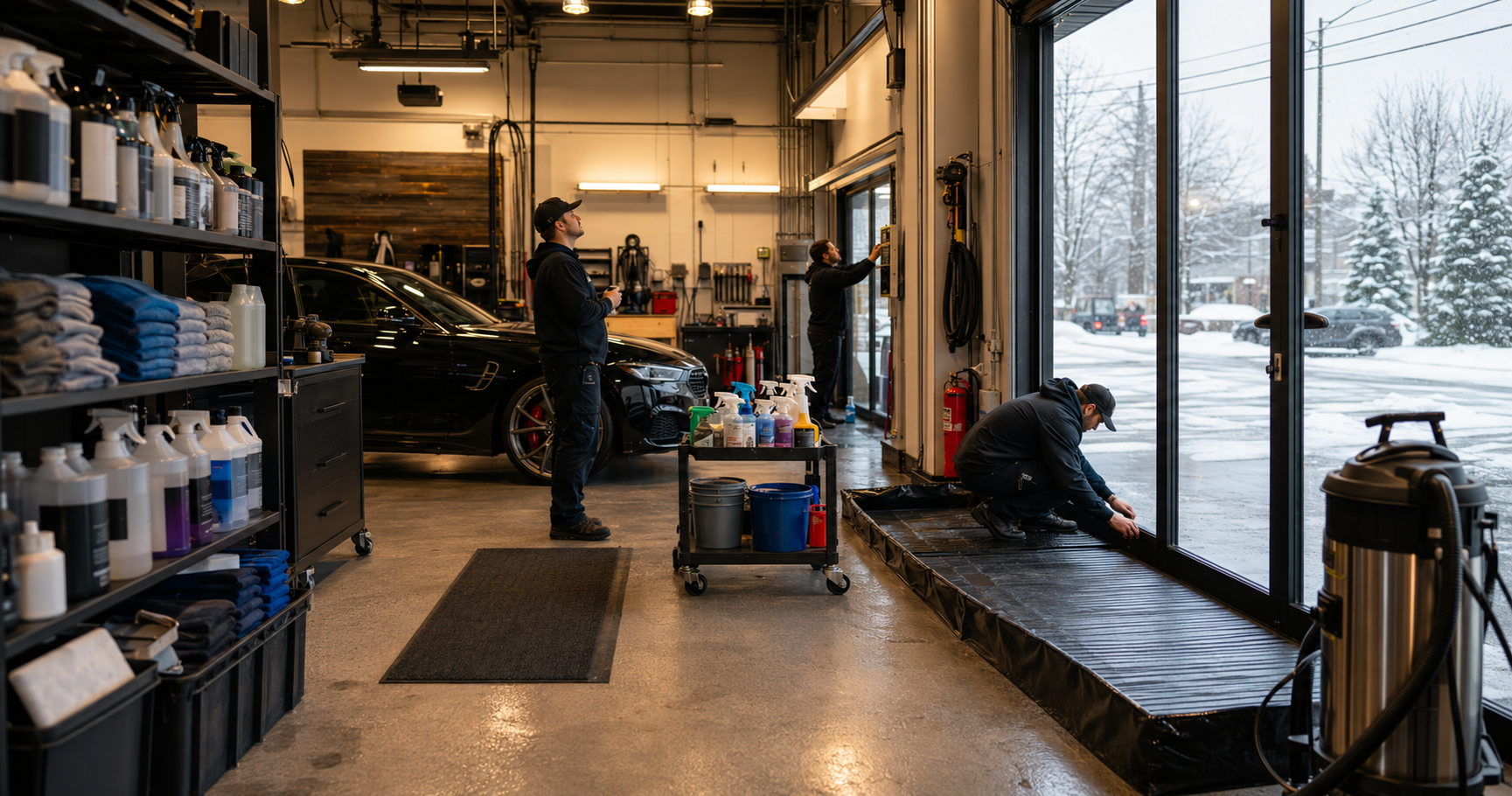
For appearance and protection shops in a cold climate, winter is not a slow season to wait out, it is a demand shift. The work changes from summer's show-car details and wraps to protection, salt removal, and paint defense, and the shops that prepare for that shift capture it while the unprepared ones just get quieter. Winter also brings its own operational headaches: weather cancellations, shorter days, and heating costs. This guide is a practical checklist to get your shop ready, both to capture the seasonal demand and to run smoothly through the hard months.
Reposition your services for winter demand
The first move is recognizing that customer needs change with the season. Summer interest in gloss and appearance gives way to winter concern about protection: guarding paint from road salt, sealing the vehicle before the weather turns, and cleaning up the salt and grime the season creates. Lead with the services that match, ceramic coatings and sealants, paint protection film, undercarriage and salt washes, and interior protection against salt and moisture. Repackaging your offering around winter protection, rather than pushing summer services into a season that does not want them, is what keeps the schedule full.
Run a pre-season promotion before the first freeze
Timing matters with protection work, because the ideal time to apply coatings and film is before winter arrives, not mid-storm. That makes early fall the natural window for a pre-season push encouraging customers to protect their vehicle ahead of the salt. Reaching out to past customers, especially those who bought coatings or protection before, with a timely reminder is one of the most effective seasonal moves a shop can make, since these customers already understand the value and simply need prompting at the right moment. A shop that owns its customer list can do this in an afternoon.
Prepare the building and equipment
Cold weather affects the physical shop in ways that directly hit the work. Many coatings, films, and paint products have minimum temperature and cure requirements, so heating the shop adequately is not just comfort, it is a quality requirement. Check that the heating system works before you need it, confirm your products can be stored and applied within their temperature specs, and prepare for the water and salt that vehicles will track in. Getting the building ready before the first cold snap prevents the scramble, and the ruined jobs, that come from discovering a heating or temperature problem mid-install.
Plan for weather disruptions to the schedule
Winter guarantees some level of schedule chaos: storms, unsafe roads, and customers who cannot make it in. The shops that handle this well plan for it rather than reacting each time. Build some flexibility into the schedule, have a clear and communicated policy for weather cancellations and rebooking, and make it easy to reach customers quickly when a day has to change. Being able to message everyone affected by a closure or delay in minutes, rather than calling one by one, is the difference between a controlled adjustment and a lost day, and it protects the customer relationship through the disruption.
Use the seasonal rhythm for what summer is too busy for
If winter genuinely is quieter for your shop even after repositioning, that slack is valuable rather than wasted. It is the time to do the things the busy season never allows: train staff on new techniques or products, tackle deferred equipment maintenance, refine your pricing and packages for spring, catch up on marketing and reviews, and finally sort out the operational systems you never had time to fix. Shops that treat a slow stretch as preparation rather than dead time come into spring sharper and better organized than they left the previous one.
Keep marketing active through the cold months
A common winter mistake is going quiet, which cedes visibility right when you could be building it. Keep asking for reviews after every job, since a steady flow matters more than volume in local search, and stay active so that when spring demand returns you are top of mind rather than restarting from cold. Winter protection content, seasonal offers, and simply staying in front of your existing customers all keep the pipeline warm. The shops that disappear each winter spend every spring rebuilding awareness they did not have to lose.
How it comes together
Winter rewards preparation. Reposition your services toward protection, run a pre-season promotion before the freeze, get the building and products ready for the cold, plan for weather disruptions, use any genuine downtime to improve the business, and keep marketing active so spring starts strong. Most of these depend on one underlying capability: knowing your customers and being able to reach them quickly. Being able to segment past customers and message them, whether a pre-season coating reminder or a same-day weather closure, through SMS updates built on your customer records is what turns a seasonal plan into action. For the demand side of the cold season, see our guide to scaling through Canada's changing seasons.
Frequently asked questions
How should an appearance shop prepare for winter?
Reposition services toward winter protection like coatings, PPF, and salt washes, run a pre-season promotion before the first freeze, prepare the building and products for cold-weather temperature requirements, plan for weather disruptions, and keep marketing active. The underlying enabler is knowing your customers well enough to reach the right ones at the right time.
What services sell best in winter?
Protection-focused services tend to lead in winter: ceramic coatings and sealants, paint protection film, undercarriage and salt washes, and interior protection against salt and moisture. Customer priorities shift from summer's focus on gloss and appearance to guarding the vehicle against road salt and harsh conditions, so repackaging around protection matches demand.
When should I promote winter protection services?
Early fall, before winter arrives, because coatings and film are best applied ahead of the salt and cold rather than mid-season. Reaching out to past customers who previously bought protection with a timely pre-season reminder is especially effective, since they already understand the value and mainly need prompting at the right moment.
How do I handle weather cancellations?
Plan for them rather than reacting each time: build flexibility into the schedule, set and communicate a clear weather cancellation and rebooking policy, and make it easy to reach affected customers fast. Being able to message everyone impacted by a closure in minutes, instead of calling one by one, keeps a storm day from becoming a lost day and protects the customer relationship.
Is winter downtime bad for an appearance shop?
Not if you use it. Genuine slow stretches are the time to train staff, do deferred equipment maintenance, refine pricing and packages for spring, and improve operational systems the busy season never allows. Keeping marketing and review requests active through winter also means spring demand finds you already visible rather than starting from cold.
[[END FAQ]]
This article offers general seasonal operations guidance. Product temperature and cure requirements vary by manufacturer, so always follow the specifications for the coatings, films, and products your shop uses.
Subscribe to our newsletter today
Fresh insights and practical tips delivered every week.