.svg)
From One Wrap Shop to a Global Multi-Service Brand: Expanding Across Canada, the USA, and Dubai
A wrap shop is a launchpad, not a ceiling. Here is how to grow one into a global multi-service brand across Canada, the USA, and Dubai by adding services and locations.

.png)
Helping auto shops work smarter and grow.
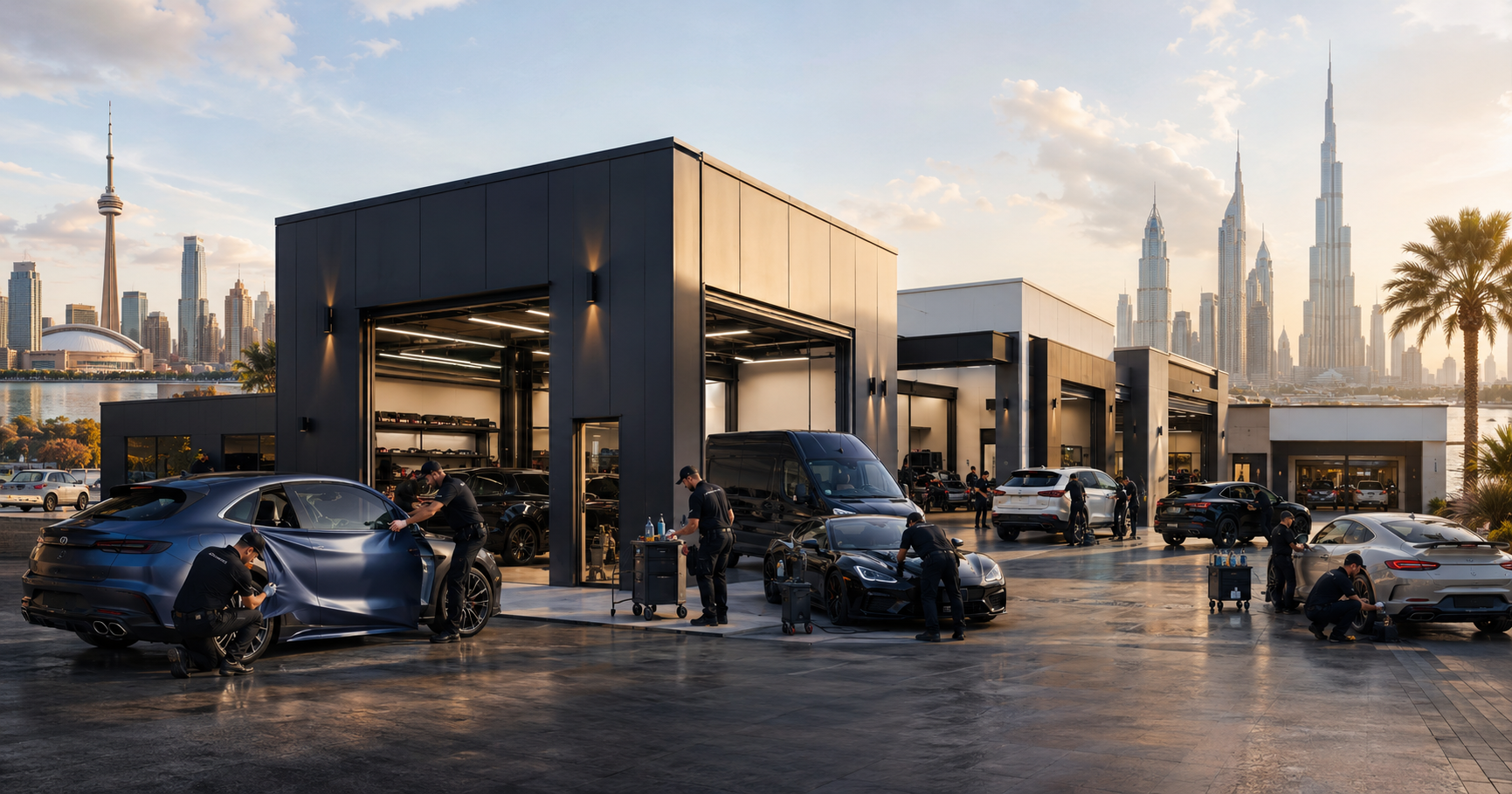
A wrap shop is a natural launchpad for something much bigger. The customer who trusts you to wrap a $60,000 vehicle is the same customer who needs tint, paint protection film, ceramic coating, detailing, and wheels, and often owns more than one car. The opportunity in front of many successful wrap shops is not just another wrap bay, it is becoming a full appearance-and-protection destination and, eventually, a brand that operates across multiple cities and even countries. This article maps how a single wrap shop can grow into a global multi-service business, with Canada, the USA, and Dubai as three very different examples of what that expansion looks like.
Why a wrap shop is the ideal foundation to expand from
Wrapping sits at the premium, trust-heavy end of the market, which makes it an unusually strong base to grow from. Your customers have already chosen you for high-value, appearance-critical work, so they are exactly the audience for adjacent premium services. The skills overlap too: surface preparation, precision application, and an eye for finish carry directly into PPF, tint, and coating. And the equipment, clean space, and installer talent you already have are the same assets those services need. Rather than chasing a brand-new customer base, expansion lets you sell more to the customers and vehicles you already serve, which is the lowest-risk growth a shop can pursue.
Adding services: from one bay to a full appearance destination
The first axis of growth is depth of services. A wrap shop that adds paint protection film, window tint, ceramic coating, detailing, and wheel and tire services transforms from a single-purpose shop into a one-stop destination where a customer can protect and perfect an entire vehicle in one place. This multiplies revenue per customer, smooths out demand because the services peak at different times, and deepens loyalty because there is no reason to go anywhere else. Each added service also feeds the others: a wrap customer becomes a PPF customer, a PPF customer becomes a detailing-and-maintenance customer, and one relationship generates years of work across multiple services and vehicles.
Adding locations: taking the model to new cities and countries
The second axis is geographic reach. Once your multi-service model works in one location, expanding to new cities, and eventually new countries, multiplies the whole business. This is where a wrap brand becomes a genuine brand: a recognizable name delivering a consistent premium experience across markets. But geographic expansion only works if the model is repeatable, because you are duplicating your operation, and every location must deliver the same quality and experience under the same name. The shops that expand successfully are the ones that systematized how they operate before they multiplied, so each new location is a copy of something proven rather than an experiment.
Canada, the USA, and Dubai: three markets, three opportunities
These three markets show how differently the same multi-service model can play out. In Canada, harsh winters, road salt, and gravel make protection services, PPF, ceramic coating, and undercarriage and paint care, a strong seasonal and year-round draw, and the seasonal swing itself creates demand for interior and maintenance work in the off months. In the USA, a vast market with strong car culture and high vehicle ownership supports both high-volume services like tint and premium work like full wraps and PPF across countless metro markets. In Dubai, an affluent market with an exceptional concentration of luxury and exotic vehicles, intense sun, and heat creates premium demand for the highest-end wraps, PPF, and ceramic coating, where customers expect and will pay for top-tier work. One brand, one operating model, adapted to three very different climates and customer bases.
The hard part is consistency, not ambition
Expanding across services and borders sounds exciting, but the real challenge is unglamorous: keeping quality, pricing, and customer experience consistent across every service and every location. A customer should get the same standard whether they are wrapping a car in Toronto, coating one in Texas, or protecting an exotic in Dubai. That consistency depends on shared standards, shared processes, and shared information, so that no location is reinventing how it operates and no customer is a stranger at a branch they have not visited before. Expansion multiplies whatever you already are: a well-run operation becomes a well-run brand, and a chaotic one becomes chaos at scale. Getting the operating foundation right is what makes global growth work.
The operating backbone that makes it possible
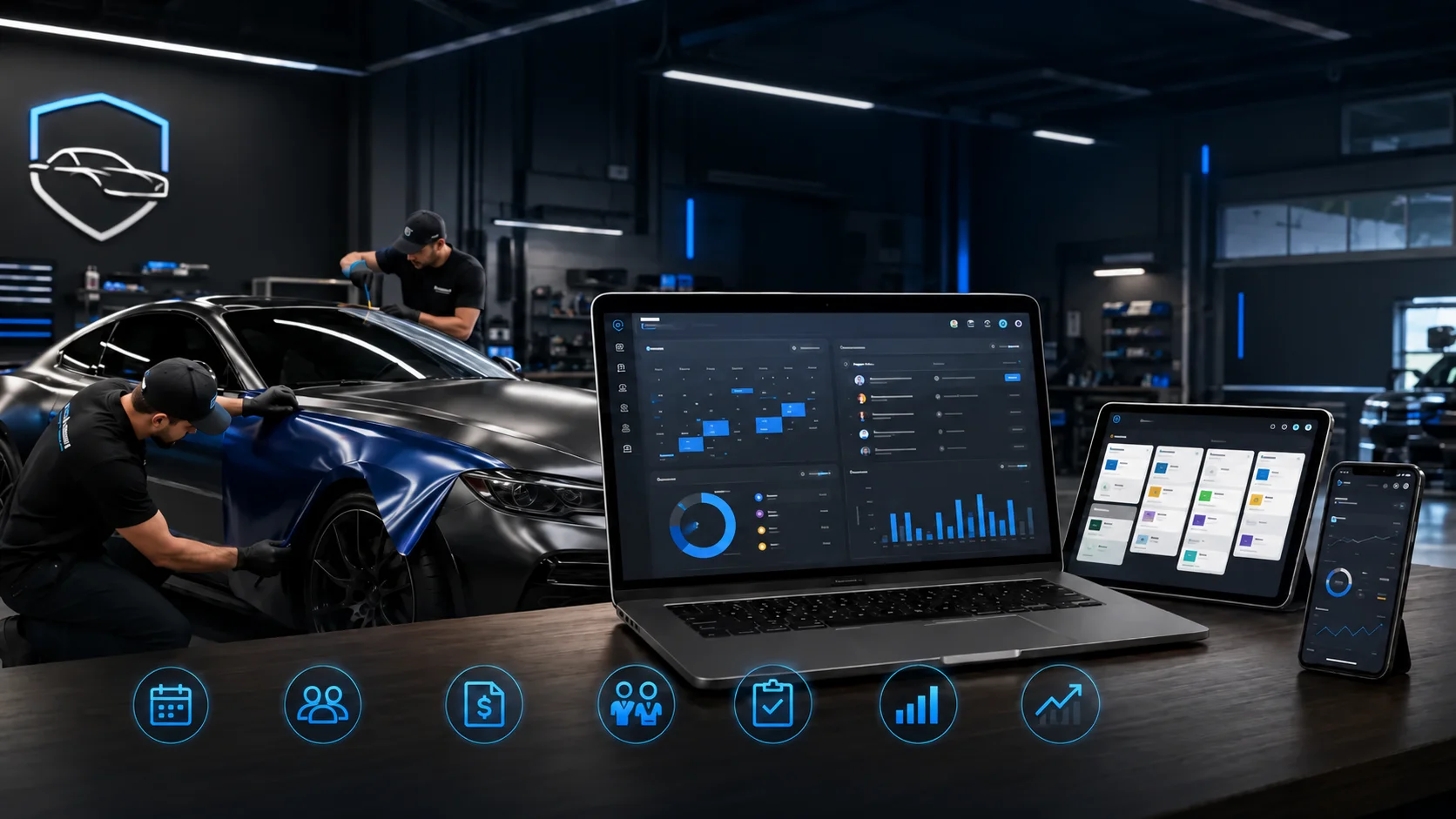
Everything above, more services, more locations, more countries, rests on one requirement: your customers, vehicles, jobs, and operations organized in a single system that works across every location and travels with your team. Without it, each service and each branch becomes its own island of paper and memory, and the brand fragments. With it, a customer's full history follows them across services and cities, every location runs the same playbook, and ownership sees the entire global operation from one place. A CRM and mobile platform like OXMotive is built to be that backbone, bringing customer and vehicle records, job management, and multi-location support into one system, with a mobile app so every location and every installer works from the same live information. For the strategy behind this kind of growth, see our guide on why either growth path needs a CRM and on choosing your shop's next move.
How it comes together
A wrap shop is a foundation, not a ceiling. By adding adjacent premium services you turn each customer into years of multi-service work, and by taking that proven model to new cities and countries you turn a shop into a global brand. Markets as different as Canada, the USA, and Dubai each offer real opportunity for the same multi-service model, adapted to local climate and clientele. The deciding factor is not ambition, it is consistency, and consistency comes from an organized operating foundation that spans every service and location. Build that foundation, prove the model, and a single wrap shop can grow into something genuinely global.
Frequently asked questions
Why is a wrap shop a good business to expand from?
Because it sits at the premium, trust-heavy end of the market. Wrap customers have already chosen you for high-value work, making them the ideal audience for adjacent services like PPF, tint, coating, and detailing. The skills, equipment, clean space, and installer talent overlap directly, so expansion means selling more to customers and vehicles you already serve rather than chasing an entirely new audience, which is the lowest-risk way to grow.
What services should a wrap shop add first?
The natural adjacencies are paint protection film, window tint, ceramic coating, detailing, and wheel and tire services, since they share skills and equipment with wrapping and appeal to the same customers. Each feeds the others: a wrap customer becomes a PPF customer, who becomes a detailing and maintenance customer. Adding them turns a single-purpose shop into a one-stop destination and multiplies revenue per customer.
How do Canada, the USA, and Dubai differ as markets?
Canada's harsh winters and road salt drive strong demand for protection and seasonal maintenance work. The USA offers a vast market with strong car culture supporting both high-volume tint and premium wraps and PPF across many metros. Dubai's affluent market, exceptional concentration of luxury and exotic vehicles, and intense heat create premium demand for the highest-end work. The same model adapts to three very different climates and customer bases.
What is the hardest part of expanding across locations and countries?
Consistency, not ambition. Keeping quality, pricing, and customer experience the same across every service and location is the real challenge, because a customer should get the same standard whether in Toronto, Texas, or Dubai. That depends on shared standards, processes, and information so no location reinvents how it operates. Expansion multiplies whatever you already are, so a well-run operation scales well and a chaotic one scales badly.
What do I need in place before expanding globally?
A single operating system that organizes your customers, vehicles, jobs, and operations across every service and location and travels with your team. Without it, each branch becomes an island of paper and memory and the brand fragments. With it, customer history follows people across services and cities, every location runs the same playbook, and ownership sees the whole operation from one place, which is what makes multi-service, multi-country growth actually work.
[[END FAQ]]
This article offers general business strategy guidance. Expanding across regions involves local licensing, tax, labor, and regulatory requirements that vary by country, so consult qualified local advisors before entering a new market.
Subscribe to our newsletter today
Fresh insights and practical tips delivered every week.