.svg)
PPF vs. Ceramic Coating: How to Help Customers Choose (and Sell Both)
PPF and ceramic coating protect against different things. Here is a clear, accurate breakdown your team can use to guide customers and sell both as a premium package.

.png)
Helping auto shops work smarter and grow.
Every appearance and protection shop hears the same two questions all day: what is the difference between PPF and ceramic coating, and if I can only do one, which should I get? The customers asking are ready to spend money, they just do not understand what they are buying. A shop that can explain the difference clearly closes more work, avoids mismatched expectations, and often sells both instead of one. This guide gives your team a straight, accurate way to walk a customer through the choice.
They solve two completely different problems
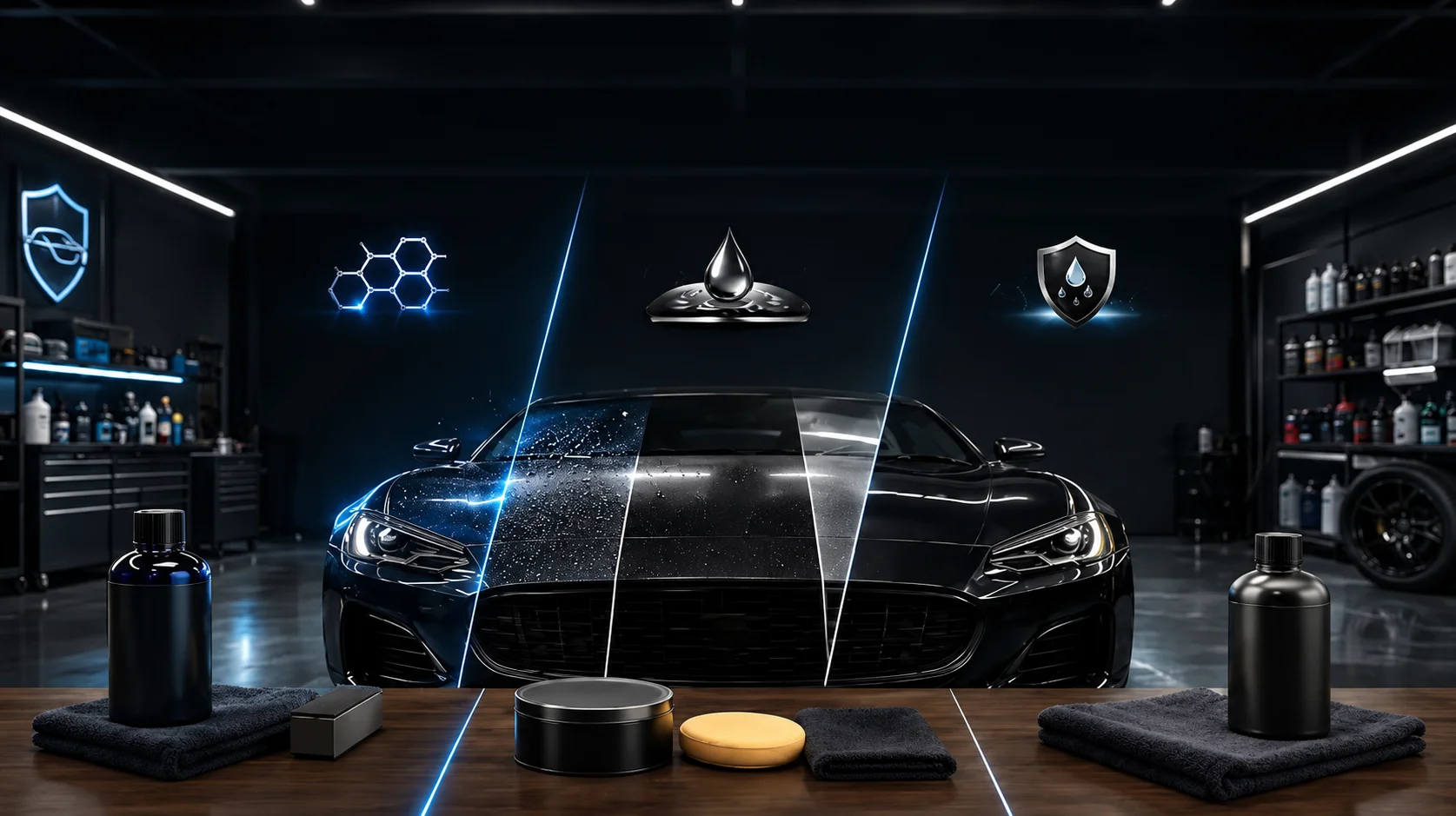
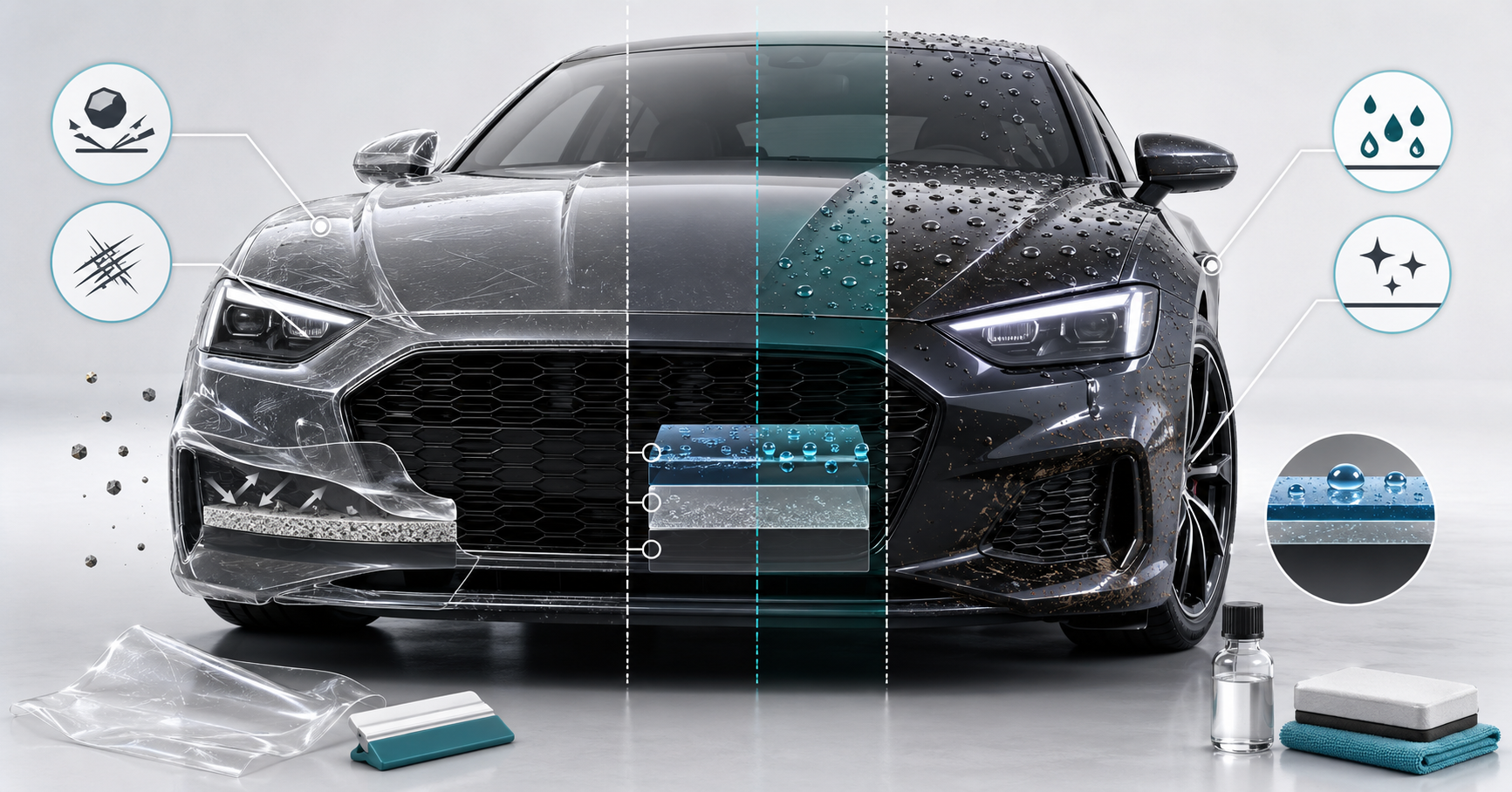
The single most important thing to get across is that PPF and ceramic coating are not competitors, they protect against different things. Paint protection film is a thick, clear urethane layer applied to panels. It is physical armor: it stops rock chips, deep scratches, and door dings, and quality film self-heals light swirls with heat. Ceramic coating is a liquid polymer that bonds to the clear coat. It is a chemical barrier: it fights UV oxidation, bird droppings, acid rain, and water spots, and it makes the surface glossy and easy to wash. Film blocks impact. Coating blocks the environment. Neither one does the other's job, and that framing alone resolves most customer confusion.
Lifespan and cost, in plain numbers
Customers want ballpark figures, so give them ranges rather than dodging. Published 2026 pricing guides generally put full-front PPF in the range of roughly $1,500 to $3,500, with full-vehicle coverage climbing well beyond that, and PPF lasting on the order of 5 to 10 years. Professional ceramic coating typically runs somewhere around $700 to $2,500 installed depending on grade and prep, lasting roughly 2 to 7 years depending on the product and how the customer maintains it. PPF costs more because the material and the install skill required are far greater, months of training versus a prep-and-application process. Present these as planning ranges, then quote the specific vehicle.
How to guide the choice: match the product to the threat
The cleanest way to help a customer decide is to ask what they are actually worried about. If the threat is physical, highway driving, rock chips, a new or expensive vehicle, door dings in parking lots, then PPF is the answer, because it is the only product that meaningfully prevents impact damage. If the concern is keeping the paint glossy, easy to wash, and protected from sun and contaminants at a lower price point, ceramic coating fits. Lean PPF for higher-value vehicles kept several years, and lean ceramic for a customer who wants shine and easy upkeep without the film-level spend. When you frame it as matching the product to the threat, the customer usually reaches the right answer themselves, and trusts you for guiding rather than upselling.
Why the real answer is often both
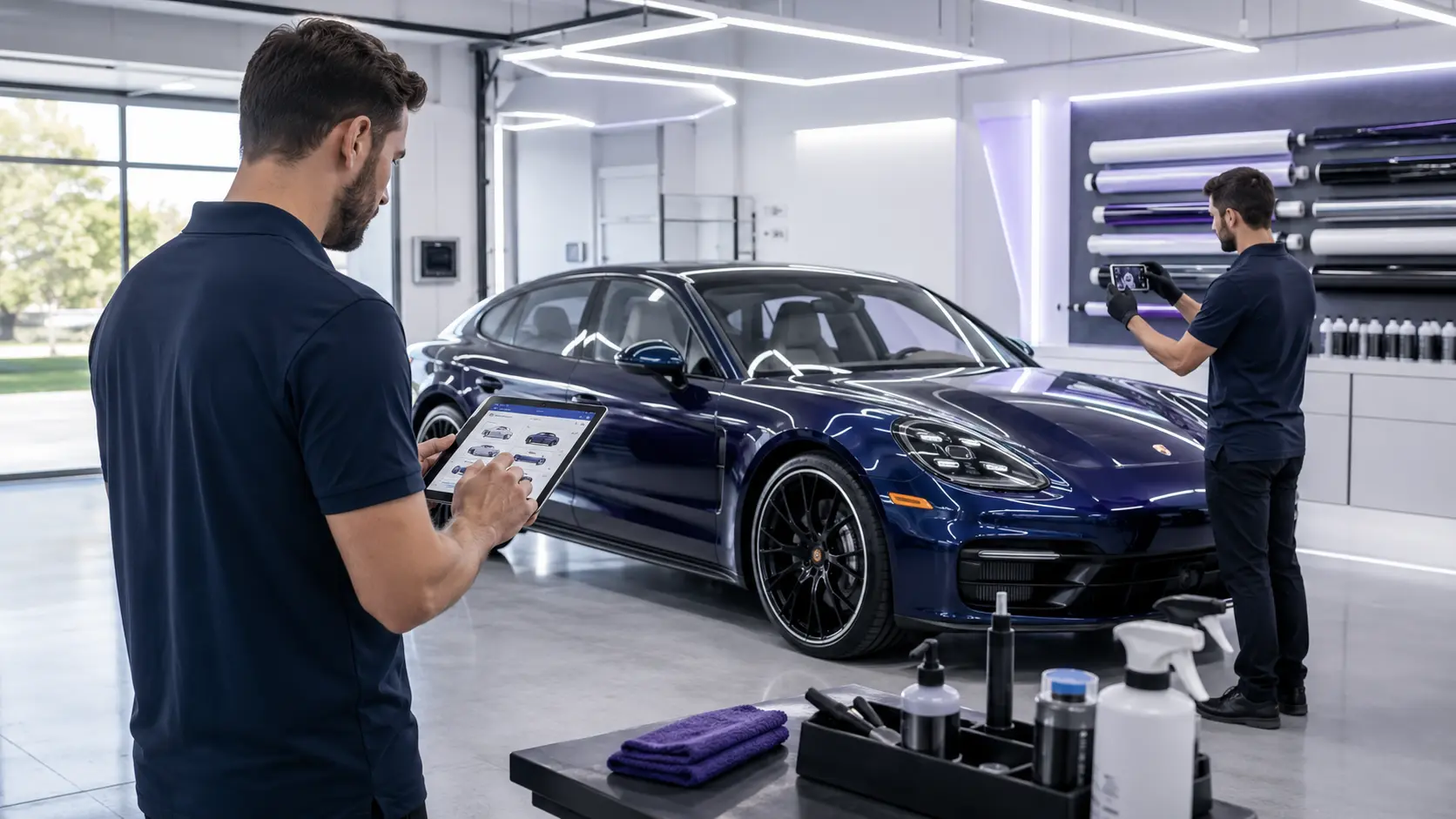
Here is where a good explanation raises your ticket. Because the two products protect against different things, the ideal setup on a newer vehicle is both: PPF on the high-impact zones like the front bumper, hood, mirrors, and rocker panels, with a ceramic coating over the entire vehicle including on top of the film. The film handles impact where it happens, and the coating handles UV, water spots, and easy washing on every panel. Shops commonly package this as a new-car protection package, and it is typically the highest-ticket item on the menu. You are not overselling, you are giving the customer the lowest-hassle ownership experience while booking your most profitable job.
Set expectations so there are no comebacks
Mismatched expectations are what turn a sale into a complaint. Be clear that ceramic coating does not stop rock chips, so a customer who bought ceramic expecting impact protection will feel misled the first time a stone hits the hood. Be equally clear that PPF is not maintenance-free forever and can show edge wear over years. Tell the customer what each product will and will not do before they pay, and note it on their record. When the expectation matches the outcome, you get referrals instead of arguments.
Turn the consultation into a repeatable sale
The shops that win at this do not improvise the conversation each time, they systematize it. A consistent explanation, a clear good-better-best set of options (ceramic only, PPF on impact zones, or the full stack), and a record of what each customer chose and why. Keeping that history in one place, the vehicle, the package quoted, what was installed, when it is due for a ceramic boost, means you can follow up at the right moment to sell the next service. A CRM and mobile app like OXMotive lets you store the consultation outcome in a customer profile, quote the package options as a managed job, and trigger the follow-up automatically, turning a one-time explanation into a repeatable, higher-value sale.
How it comes together
PPF and ceramic coating answer two different customer fears, physical damage and environmental wear, and the shops that explain that clearly sell more of both. Match the product to the threat, quote honest ranges, offer the combined package as the premium option, and set expectations so the outcome matches the promise. Do that consistently and the PPF-versus-ceramic question stops being a source of confusion and becomes your best opportunity to raise ticket value.
Frequently asked questions
What is the difference between PPF and ceramic coating?
PPF is a thick clear urethane film that provides physical protection against rock chips, scratches, and door dings, and quality film self-heals light swirls. Ceramic coating is a liquid polymer that bonds to the paint and provides chemical protection against UV, stains, and water spots while adding gloss and easy cleaning. Film blocks impact, coating blocks the environment, and they do not do each other's job.
Which lasts longer, PPF or ceramic coating?
Paint protection film generally lasts longer, on the order of 5 to 10 years, while professional ceramic coating typically lasts around 2 to 7 years depending on grade and maintenance. PPF is a physical barrier, whereas ceramic wears gradually with washing and exposure and may need periodic boosts to keep its hydrophobic properties.
How much do PPF and ceramic coating cost?
Published 2026 ranges put full-front PPF at roughly $1,500 to $3,500 with full-vehicle coverage costing considerably more, and professional ceramic coating around $700 to $2,500 installed depending on grade and prep. PPF costs more because both the material and the installer skill required are significantly greater. These are planning ranges, and the specific vehicle determines the real quote.
Should a customer get PPF or ceramic coating?
Match the product to the threat. If the worry is physical damage such as rock chips on a new or expensive vehicle, PPF is the right call because it is the only product that meaningfully prevents impact damage. If the goal is gloss, easy washing, and protection from sun and contaminants at a lower price, ceramic coating fits.
Can you use PPF and ceramic coating together?
Yes, and it is often the best setup. PPF goes on high-impact areas like the front bumper, hood, and mirrors, with ceramic coating applied over the whole vehicle including on top of the film. The film handles impact and the coating handles UV, water spots, and easy cleaning, which is why shops sell this combination as a premium new-car protection package.
Cost and lifespan figures reflect widely published 2026 industry pricing guides and are provided as planning ranges. Actual pricing depends on the vehicle, coverage, product grade, and installer.
Subscribe to our newsletter today
Fresh insights and practical tips delivered every week.