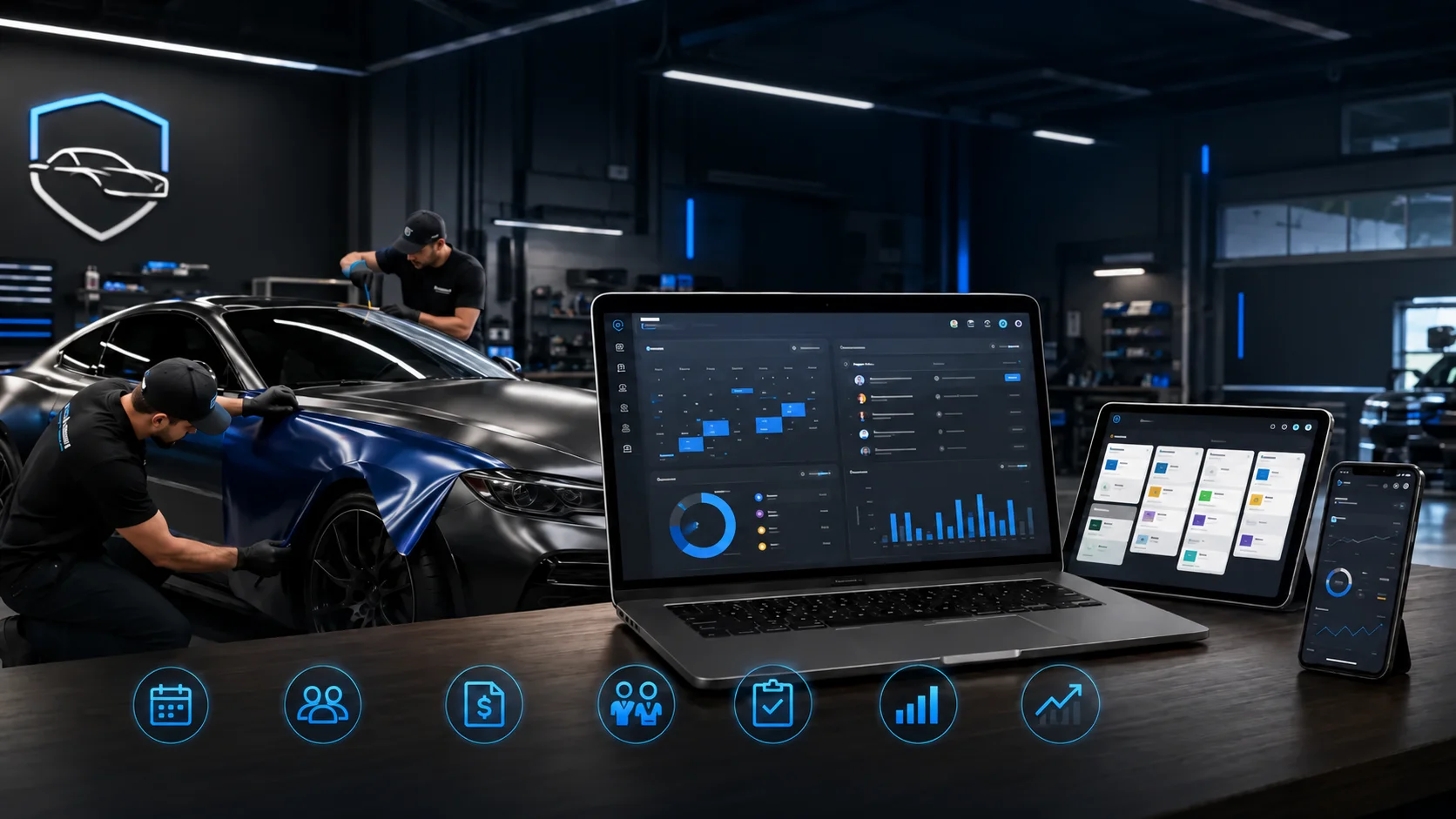
.svg)
The Complete Guide to CRM Software for Wrap Shops
A wrap shop is a relationship business with long cycles, big tickets, and repeat customers. Here is a complete guide to what CRM software does for a wrap shop and how to choose one.

.png)
Helping auto shops work smarter and grow.
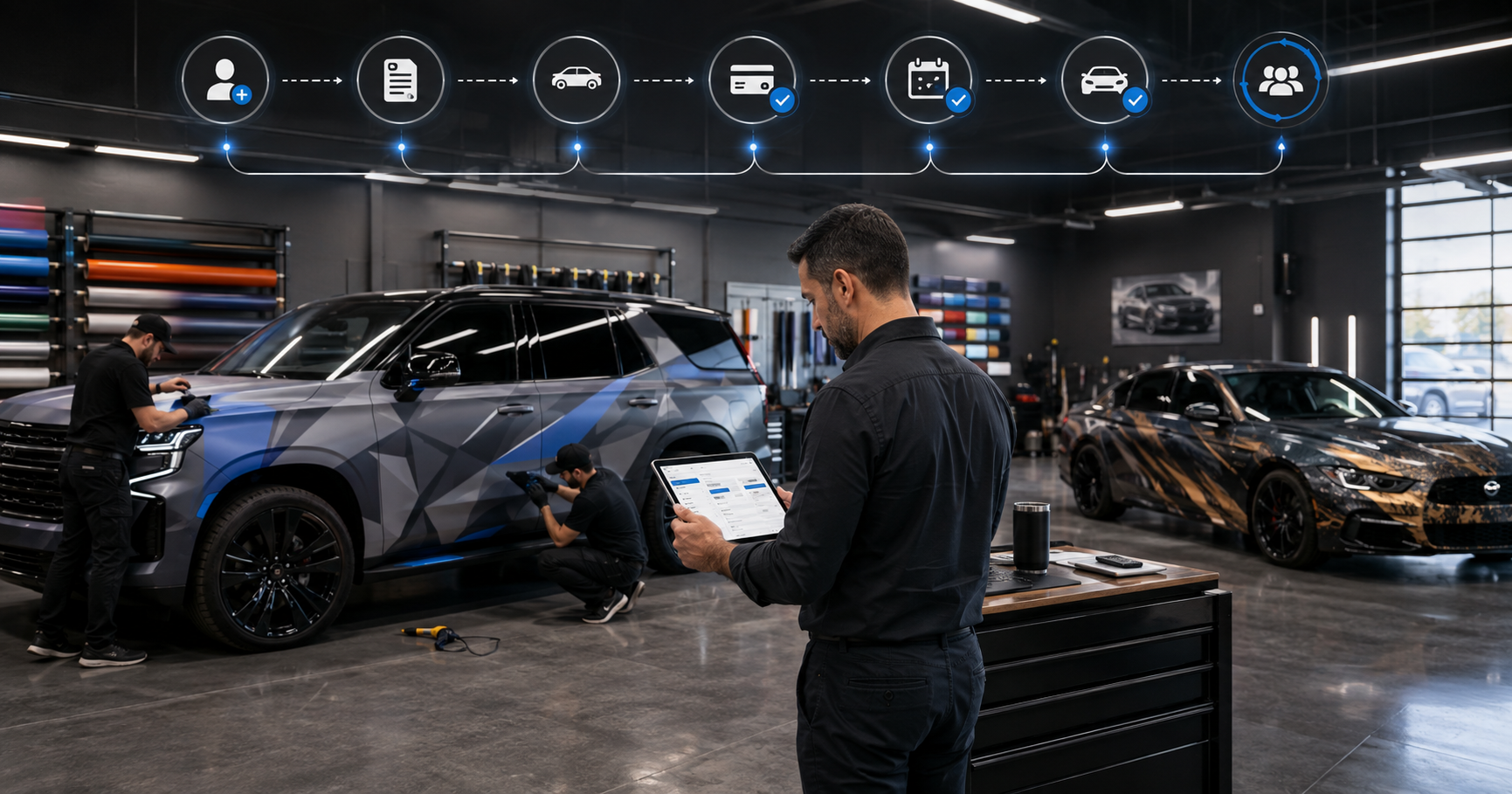
A vinyl wrap is a high-value, high-trust purchase with a long sales cycle, and that makes running a wrap shop a genuine customer-relationship business, not just an installation business. Leads arrive from many places, quotes take back-and-forth, jobs run for days, and the best customers come back for more vehicles and refer their friends. Managing all of that on memory, texts, and paper invoices is where wrap shops lose money. This guide explains what CRM software does for a wrap shop, why it matters specifically for wrap work, and how to choose the right one.
What a CRM actually is for a wrap shop
CRM stands for customer relationship management, and for a wrap shop it simply means one organized system that holds every customer, vehicle, quote, job, photo, and conversation in a single place instead of scattered across your phone and your head. Rather than a filing cabinet, think of it as the operating system for your customer-facing business: it captures leads, tracks quotes and jobs, stores each vehicle's history, and reminds you to follow up. For a shop selling multi-thousand-dollar wraps, that organization is the difference between a business that quietly leaks leads and revenue and one that captures the full value of every relationship it builds.
Why wrap shops need a CRM more than most
Wrap work has characteristics that make a CRM especially valuable. The sales cycle is long, an inquiry can take days or weeks to become a booked job through quoting, design, and deposits, so leads need to be tracked or they vanish. The tickets are large, meaning a single lost lead is a significant loss, not a minor one. The work is intensely visual, so photos are both quality-control records and marketing gold. And customers are high-value and repeat-prone, often owning multiple vehicles and referring others. Each of these, long cycle, big tickets, visual work, valuable customers, is a reason organization pays off more in a wrap shop than in a lower-stakes business.
Capturing and converting leads
The first thing a CRM does for a wrap shop is make sure no lead is lost. Wrap inquiries come from Instagram, Facebook, your website, referrals, and walk-ins, and when they scatter across platforms, some inevitably slip away, each one potentially a several-thousand-dollar job. A CRM brings inquiries into one place where the whole team can see and respond to them quickly, track which quotes are outstanding, and follow up on the ones that have gone quiet. Given how long the wrap sales cycle runs, this lead tracking is where a CRM often pays for itself many times over, simply by converting leads that would otherwise have been forgotten.
Managing quotes, jobs, and the vehicle
Wrap jobs are involved, quote, deposit, design approval, materials, a multi-day install, and a CRM keeps that whole arc organized so nothing falls through. Each job carries its vehicle details, the film and finish chosen, the price agreed, and its current status, so anyone on the team can see where a project stands. Documenting the vehicle's condition at intake also protects you against disputes over pre-existing damage, which matters on high-value cars. Instead of juggling the details of several in-progress wraps in your head, you have each one tracked and visible, which is what lets a shop run multiple complex jobs at once without dropping details.
Photos, follow-up, and repeat business
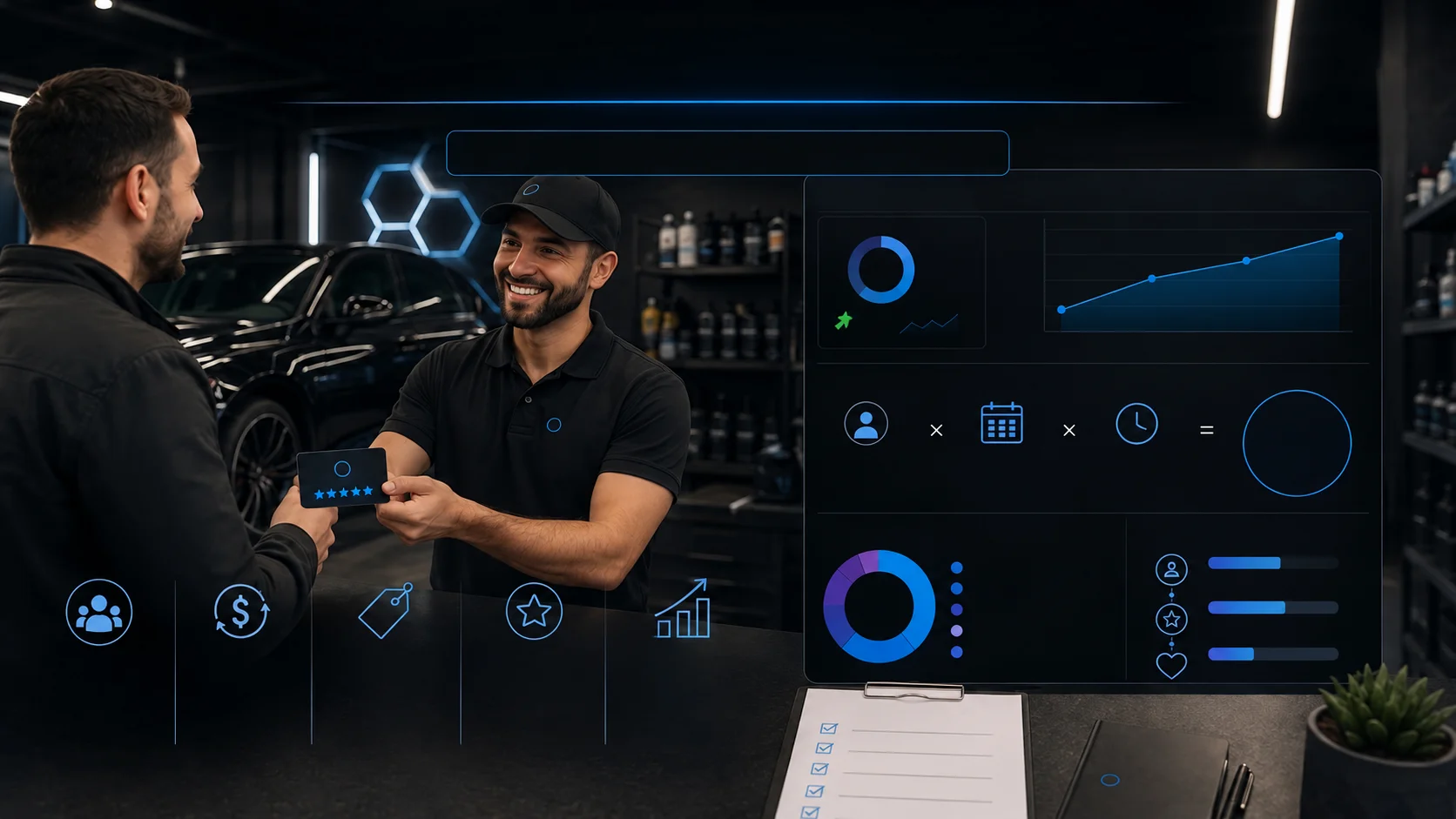
Two of a wrap shop's biggest assets are its portfolio and its past customers, and a CRM strengthens both. Capturing before-and-after photos directly to each job builds your marketing library automatically while creating a record tied to the customer. And because the CRM remembers every customer and vehicle, it lets you follow up, thank them, ask for a review, offer maintenance, and reach out when they might want another vehicle done. Wrap customers are exactly the high-value, repeat-and-referral customers worth staying in touch with, and systematic follow-up is how one wrap becomes several vehicles and a stream of referrals over the years.
How to choose a CRM for your wrap shop
Not every CRM fits a wrap shop. Generic sales CRMs are built around abstract deals, not vehicles, so look for a system designed for appearance and protection work: one that organizes around customers and their vehicles, treats photos as first-class, and offers genuine mobile access so your team can use it in the bay rather than only at a desk. Consider whether it will grow with you if you add services or locations, and make sure you can export your own data. A platform like OXMotive is built specifically for wrap and appearance shops, bringing customer and vehicle records, quote and job management, photo capture, and a mobile app into one system. You can see wrap shop CRM software in more detail or book a demo to test it against your workflow. For a broader framework, see our buyer's guide to shop management software.
How it comes together
A wrap shop is a relationship business with long sales cycles, big tickets, visual work, and high-value repeat customers, which is exactly the profile that benefits most from a CRM. The right system captures every lead so none of those large jobs slip away, keeps complex multi-day jobs organized and documented, builds your photo portfolio automatically, and drives the follow-up that turns one wrap into years of repeat and referral business. Choose a CRM built for how wrap shops actually work, and it stops being software and becomes the backbone that lets your shop grow.
Frequently asked questions
What is CRM software for a wrap shop?
It is one organized system that holds every customer, vehicle, quote, job, photo, and conversation in a single place instead of scattered across your phone, texts, and memory. For a wrap shop it acts as the operating system for the customer-facing side of the business, capturing leads, tracking quotes and jobs, storing each vehicle's history, and prompting follow-up, so the shop captures the full value of every high-value relationship it builds.
Why does a wrap shop need a CRM more than other businesses?
Because wrap work combines a long sales cycle, large tickets, intensely visual work, and high-value repeat customers. Leads can take weeks to convert and vanish if untracked, a single lost lead is a big loss, photos are both records and marketing, and customers often return with more vehicles and referrals. Each of those factors makes organization pay off more in a wrap shop than in a lower-stakes business.
How does a CRM help win more wrap jobs?
By making sure no lead is lost. Wrap inquiries arrive from Instagram, Facebook, your website, referrals, and walk-ins, and scattered across platforms some slip away. A CRM consolidates them so the team can respond quickly, track outstanding quotes, and follow up on quiet ones. Given the long wrap sales cycle, that lead tracking often pays for the system many times over by converting leads that would otherwise be forgotten.
What should I look for in a wrap shop CRM?
A system built for appearance and protection work rather than a generic sales CRM: one that organizes around customers and their vehicles, treats photos as first-class, and offers genuine mobile access for use in the bay. Check that it can grow with you if you add services or locations, and that you can freely export your own data. Fit for how wrap shops actually work matters more than a long generic feature list.
Can a CRM help with repeat and referral business?
Yes, and this is one of its biggest payoffs for wrap shops. Because the CRM remembers every customer and vehicle, it lets you follow up, ask for reviews, offer maintenance, and reach out when a customer might want another vehicle wrapped. Since wrap customers are high-value and repeat-and-referral prone, systematic follow-up is how one wrap becomes several vehicles and a steady stream of referrals over time.
[[END FAQ]]
This article offers general guidance. Evaluate any CRM against your own shop's specific needs before purchasing.
Subscribe to our newsletter today
Fresh insights and practical tips delivered every week.