.svg)
CRM vs. Spreadsheets: When Your Shop Has Outgrown Manual Tracking
Spreadsheets are a fine start and a poor place to stay. Here are the signs your shop has outgrown manual tracking, what a CRM does differently, and when to make the switch.

.png)
Helping auto shops work smarter and grow.
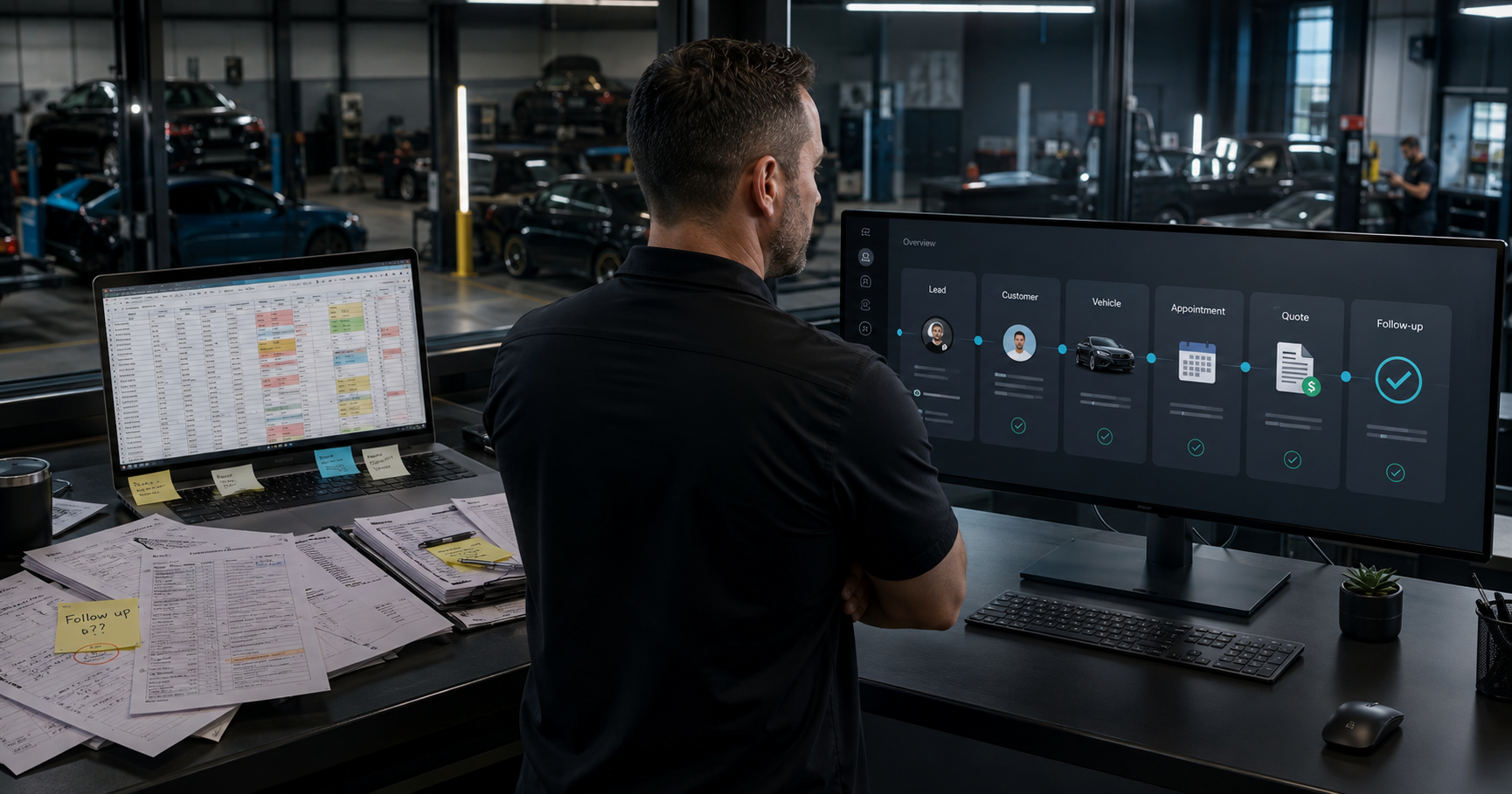
Almost every shop starts the same way: a spreadsheet, a notebook, or a memory good enough to keep track of a manageable number of customers. For a while, it works. Then the business grows, and the same manual tracking that once felt simple starts costing you leads, time, and money in ways that are hard to see until you add them up. Knowing when you have outgrown spreadsheets, and what to move to, is one of the more important operational judgments a shop owner makes. This guide lays out the honest comparison and the signs it is time to switch.
Why spreadsheets work at first
It is worth being fair to the spreadsheet, because it is genuinely useful early on. When you have a small number of customers and jobs, a spreadsheet is free, familiar, flexible, and instantly available, and it does the basic job of remembering names, numbers, and a bit of history. There is no shame in starting there, and for a brand-new shop it is often the sensible choice. The problem is not that spreadsheets are bad, it is that they do not scale, and the very success that grows your customer list is what turns your once-handy spreadsheet into a liability you have quietly outgrown.
Where manual tracking quietly breaks down
As a shop grows, the cracks in manual tracking widen into real costs. Spreadsheets do not remind you to follow up, so leads and rebookings silently slip away. They do not send messages, so customer communication stays manual and inconsistent. They are hard to use from the bay or on a mobile job, so records get updated late or not at all. They do not connect a customer to their vehicles, photos, and full history in any usable way. Multiple people editing them creates errors and version confusion. And they cannot easily show you how your business is performing. None of these is catastrophic alone, but together they mean a growing shop is steadily losing money it cannot even see.
The signs you have outgrown spreadsheets
There are concrete signals that manual tracking is now holding you back. You are forgetting to follow up with leads or past customers, and you know some are slipping away. You cannot quickly answer basic questions about your business, how many jobs last month, which service earns most, who has not returned. Information lives in several places, a spreadsheet, your phone, paper invoices, and never quite lines up. You or your staff waste time hunting for customer details or re-entering them. You cannot easily reach your customers for a promotion or reminder. If several of these sound familiar, the spreadsheet is no longer saving you effort, it is quietly costing you growth, and that is the moment to move on.
What a CRM does that a spreadsheet cannot
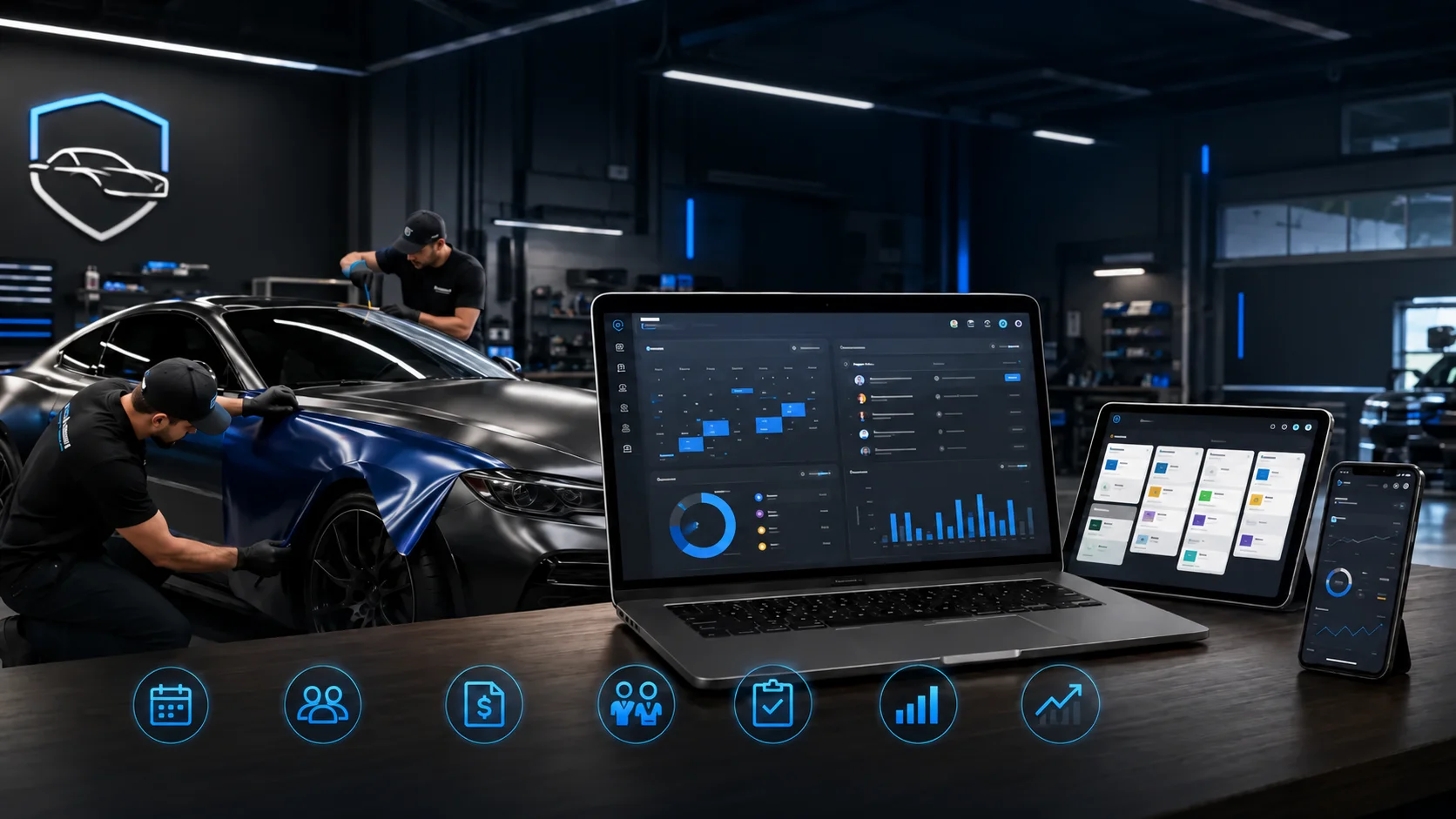
A CRM is built for exactly the job a spreadsheet strains at. It connects each customer to their vehicles, complete service history, photos, and communications in one structured record instead of scattered cells. It actively reminds you to follow up and can send messages, turning retention from a manual chore into a system. It works from a mobile device in the bay, so records stay current. It supports multiple users cleanly with proper roles rather than fighting over one file. And it shows you how your business is performing at a glance. Where a spreadsheet is a passive list you maintain, a CRM is an active system that works for you, which is the entire difference once your shop has scale.
Is it worth the switch?
The honest question every owner asks is whether the cost and effort of moving are worth it, and the answer depends on where you are. If you are tiny and static, a spreadsheet may still be fine. But if you are growing and recognizing the signs above, the cost of staying on manual tracking, in lost leads, missed rebookings, wasted time, and no visibility, almost always exceeds the modest cost of a proper system. The switch is an investment that pays back through the business it stops you from losing. The real risk is not switching too early, it is staying on spreadsheets too long and capping your own growth without realizing it.
Making the move without the pain
Owners often delay because they fear the transition, but moving off spreadsheets is more approachable than it looks, especially with a system built for shops like yours. Choose a CRM designed for appearance and protection work so it fits your workflow rather than forcing you to adapt, one that lets you import your existing data, is genuinely easy for your team to use, and offers support to get you started. A platform like OXMotive brings customer and vehicle records, job tracking, automated follow-up, and reporting into one system your whole team can use, with data export so your information always stays yours. For help evaluating options, see our buyer's guide to shop management software, and you can book a demo to see the difference against your current setup.
How it comes together
Spreadsheets are a fine place to start and a poor place to stay once your shop grows. The manual tracking that felt simple early on quietly costs a growing business leads, time, and visibility, and the signs you have outgrown it, forgotten follow-ups, scattered information, no clear view of performance, are usually obvious once you look. A CRM replaces the passive list with an active system that remembers, communicates, and reports for you. If you recognize the signs, the switch is almost certainly worth it, and with the right shop-focused system, making the move is far easier than staying stuck.
Frequently asked questions
When should a shop switch from spreadsheets to a CRM?
When you notice the signs of outgrowing manual tracking: forgetting to follow up with leads or past customers, being unable to quickly answer basic questions about your business, information scattered across a spreadsheet, phone, and paper that never lines up, wasted time hunting for or re-entering details, and difficulty reaching customers for promotions. If several sound familiar, the spreadsheet is costing you growth rather than saving you effort, and it is time to move.
Are spreadsheets bad for tracking customers?
Not at first. For a small shop, a spreadsheet is free, familiar, flexible, and perfectly adequate for remembering a manageable number of customers. The problem is that spreadsheets do not scale: as your customer list grows, the same tool becomes a liability because it cannot remind you to follow up, send messages, work well on mobile, or connect a customer to their full history. Spreadsheets are a fine start but a poor long-term system.
What does a CRM do that a spreadsheet can't?
A CRM connects each customer to their vehicles, service history, photos, and communications in one structured record, actively reminds you to follow up and can send messages, works from a mobile device in the bay, supports multiple users with proper roles, and shows how your business is performing at a glance. Where a spreadsheet is a passive list you maintain, a CRM is an active system that works for you.
Is switching from spreadsheets to a CRM worth the effort?
If you are growing and recognizing the signs of outgrowing manual tracking, almost always yes. The cost of staying on spreadsheets, in lost leads, missed rebookings, wasted time, and no visibility, typically exceeds the modest cost of a proper system. The bigger risk is staying on spreadsheets too long and capping your own growth without realizing it, rather than switching too early.
Is moving off spreadsheets difficult?
It is more approachable than most owners fear, especially with a system built for shops like yours. Choose a CRM designed for appearance and protection work that lets you import existing data, is easy for your team to use, and offers onboarding support. Picking a system that fits your workflow rather than forcing you to adapt makes the transition straightforward, and the payoff in recovered leads and time comes quickly.
[[END FAQ]]
This article offers general guidance. Evaluate any system against your own shop's size and needs before switching.
Subscribe to our newsletter today
Fresh insights and practical tips delivered every week.