.svg)
How Long Does PPF Last? Paint Protection Film Lifespan, Care, and Warranty Explained
How long does paint protection film last? A clear guide to PPF lifespan, what affects it, how to care for film, and what warranties actually cover.

.png)
Helping auto shops work smarter and grow.
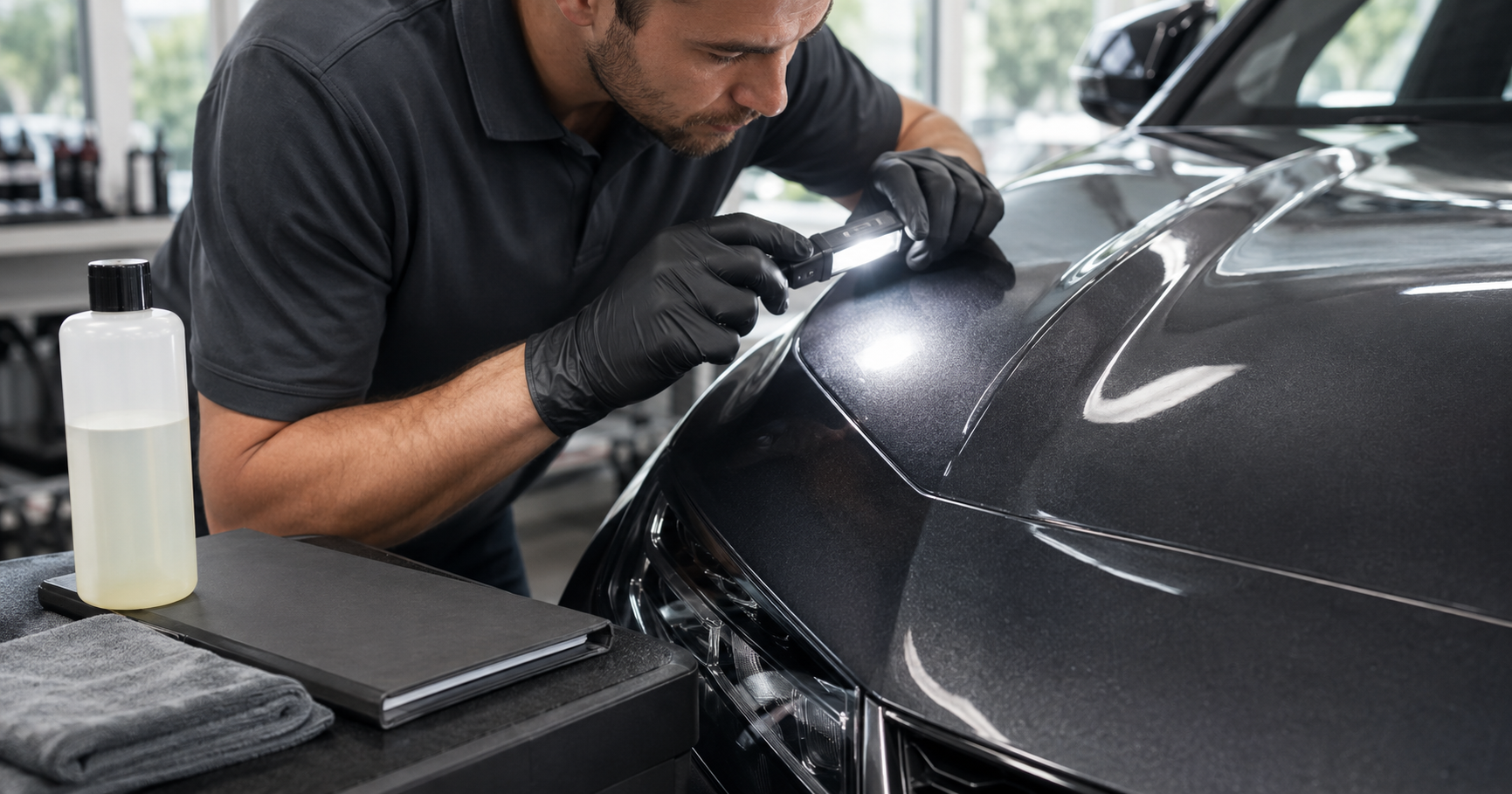
Paint protection film, often called clear bra, is one of the biggest protection investments a car owner makes, so the most common question is fair: how long does it last? The honest answer is a range. Published 2026 industry guides consistently put quality PPF at five to ten years, with premium films reaching the upper end and some new formulations rated beyond that. This guide explains what drives that range, how to make film last, and what a warranty actually covers, so you can set expectations correctly whether you are buying PPF or selling it.
What PPF is and how it protects paint
Paint protection film is a clear, thermoplastic polyurethane layer applied over a vehicle's painted surfaces. It absorbs the impact of rock chips, road debris, bug acids, and minor abrasions before they reach the paint, and premium films add a UV-resistant top coat that guards against sun damage. The best-known feature is self-healing: light surface scratches and swirl marks close up on their own when the film is warmed by the sun or hot water. That self-healing works on shallow marks in the top coat, not on deep gouges or rock strikes that cut through the film, which is an important distinction to set with customers.
How long PPF actually lasts
Lifespan tracks film quality closely. Budget films, often older PVC formulations, typically last two to five years before yellowing or cracking. Mid-range film runs roughly five to seven years. Premium thermoplastic polyurethane film with modern UV inhibitors lasts seven to ten years, and the newest top-tier products are being rated beyond ten under ideal conditions. Those are ranges rather than guarantees because real-world lifespan depends on more than the film itself, which is why two identical cars can see very different results from the same product.
What makes film last longer or fail early
Four variables decide where a given installation lands in that range. Film quality and grade set the ceiling. Installation quality matters enormously, since properly sealed edges and clean adhesion last while lifted edges or trapped contaminants fail early, which is why professional installation is worth paying for. Environment is next: a garage-kept car easily outlasts a daily driver parked in full sun, because UV exposure and heat accelerate aging. Finally, maintenance: film cared for with safe products lasts far longer than neglected film. Only one of these is about the product on the shelf, which is why the installer you choose matters as much as the brand.
How to care for PPF so it reaches its full life
Caring for film is simple but specific. Wait a week or so after installation before washing, to let edges fully cure. Use pH-neutral, film-safe shampoos and avoid harsh chemicals or abrasive tools that can smear or damage the self-healing top coat. Remove acidic contaminants like bird droppings, bug splatter, and tree sap promptly, since left to sit they can stain even protected film. Many owners add a film-specific ceramic coating on top, which makes the surface hydrophobic and much easier to keep clean while adding a first line of defense against stains. That ceramic-over-PPF combination is also a strong value-added service for a shop to offer.
What a PPF warranty actually covers
Premium PPF typically carries a manufacturer warranty in the seven to ten year range, and the length is a useful signal of film grade: a ten-year warranty generally indicates premium film, while a five-year warranty points to a lower tier. Warranties usually cover defects like yellowing, cracking, peeling, and bubbling, meaning the film failing on its own. They do not cover the film absorbing damage it was designed to take, such as a rock chip stopping in the film, because that is the product working as intended. Setting that distinction clearly with customers prevents most warranty disputes, since the confusion is almost always between a defect and normal wear.
When to replace PPF
Film should be replaced when it shows the signs its protective life is over: significant yellowing or cloudiness, brittleness or cracking, or adhesive failure and lifting at the edges. Discoloration means the UV inhibitors are spent, and heavy pitting means the film has absorbed the impacts it was meant to take and has done its job. One caution worth passing to customers: film left on far too long, well past its rated life, becomes harder to remove safely, so timely replacement protects the paint underneath rather than risking it.
For shops: turning film knowledge into trust
PPF is a high-consideration purchase, and customers can tell the difference between a shop that educates and one that just quotes. Being clear about realistic lifespan, what the warranty does and does not cover, and how to care for the film builds the trust that closes premium jobs and prevents comebacks. It also helps to keep a record of what film went on each vehicle and when, so warranty questions and reinstalls years later are easy to handle. Keeping that install history in a customer and vehicle record, along with before-and-after photos of the installation, turns a one-time job into a documented relationship. For how this fits alongside coatings, see our guide to PPF versus ceramic coating.
Frequently asked questions
How long does paint protection film last?
Quality PPF generally lasts five to ten years. Budget PVC films last around two to five years, mid-range film five to seven, and premium thermoplastic polyurethane film seven to ten, with some new top-tier products rated beyond ten years under ideal conditions. Actual lifespan depends on film grade, installation quality, climate, and maintenance.
Does PPF really heal its own scratches?
Yes, within limits. Premium films have a self-healing top coat that closes light surface scratches and swirl marks when warmed by the sun or hot water, usually within minutes to an hour depending on temperature. This works only on shallow marks in the top coat, not on deep cuts or rock chips that penetrate the film, which require replacement of that section.
What does a PPF warranty cover?
Manufacturer warranties, typically seven to ten years on premium film, cover the film failing on its own through yellowing, cracking, peeling, or bubbling. They do not cover the film absorbing damage it was designed to take, such as a rock chip stopping in the film, since that is the product doing its job. Warranty length is also a rough signal of film quality.
How do I care for a car with PPF?
Wait about a week after installation before the first wash so edges can cure, then use pH-neutral, film-safe shampoos and avoid harsh chemicals or abrasive tools. Remove bird droppings, bug splatter, and tree sap promptly because they are acidic. Many owners add a film-specific ceramic coating on top to make the surface hydrophobic and easier to clean.
When should PPF be replaced?
Replace film when it yellows significantly, turns cloudy, becomes brittle or cracked, or starts lifting at the edges. Yellowing means the UV inhibitors are exhausted, and heavy pitting means the film has absorbed the impacts it was meant to take. Replacing on time is important because film left far past its rated life becomes harder to remove without risking the paint underneath.
[[END FAQ]]
Lifespan and warranty figures reflect published 2026 industry guides and manufacturer specifications and are provided as general ranges. Actual coverage varies by film brand, grade, and installer, so confirm the specific warranty terms for your product.
Subscribe to our newsletter today
Fresh insights and practical tips delivered every week.