.svg)
How Much Does It Cost to Wrap a Car? A 2026 Pricing Guide
How much does it cost to wrap a car in 2026? A pricing guide by vehicle size and finish, full versus partial wraps, and what actually drives the cost.

.png)
Helping auto shops work smarter and grow.
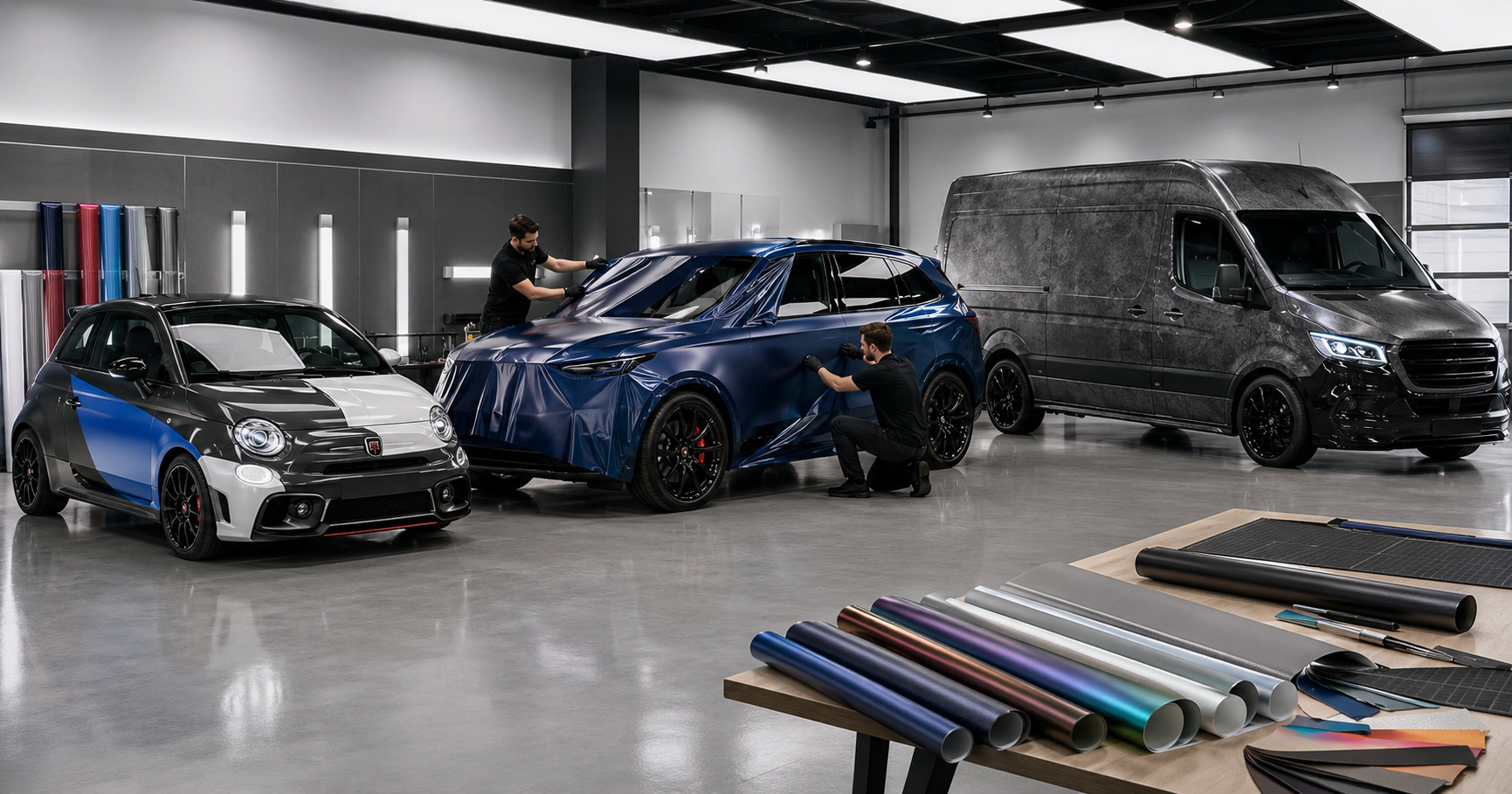
Wrapping a car is one of the most popular ways to change its look without repainting, but the pricing can be confusing because quotes vary so widely. The honest range is real: published 2026 pricing guides put a full professional wrap between about $2,000 and $6,000 for most vehicles, with premium finishes and exotic vehicles climbing well beyond that. This guide breaks down what a wrap costs by vehicle size and finish, what actually drives the price, and how to read a quote, whether you are a car owner budgeting or a shop owner benchmarking.
The short answer on car wrap cost
For a full vinyl wrap by a professional shop in 2026, most vehicles land between $2,000 and $6,000. A compact or mid-size sedan typically runs $2,000 to $3,500, a mid-size SUV around $3,000 to $4,500, and a full-size SUV or truck roughly $4,000 to $6,500. Luxury and exotic vehicles, which demand more precision and complex surfaces, often run $8,000 and up, and premium specialty finishes can push a wrap past $10,000. That spread is not shops charging randomly, it reflects real differences in material, labor, and complexity described below.
Why vehicle size drives so much of the price
Vinyl wraps are priced largely by surface area, so size is the single biggest factor. A larger vehicle needs more film and more hours to cover, which is why a sedan sits at the low end and a full-size truck or SUV at the high end. Body shape matters too: large bumpers, wide fenders, spoilers, roof rails, and aggressive body kits all add film and labor. Trucks vary by cab style, since a crew cab has more door panels than a regular cab. When comparing quotes, the vehicle itself explains most of the difference before finish or design even enters the picture.
How finish and material change the cost
The type of vinyl is the next big lever. A standard gloss or matte color-change wrap is the baseline. Premium finishes cost more, sometimes dramatically: satin, metallic, and especially chrome, color-shift, and carbon-fiber-look films carry higher material costs and often demand more installation skill. Printed commercial wraps with custom graphics add design time on top of material. Quality also matters within a tier, since premium film brands cost more but last longer and remove more cleanly. A cheap wrap and a premium wrap on the same car can differ by thousands, which is why the finish is one of the first things a good shop clarifies in a quote.
Full wrap versus partial wrap
Not every job is a full wrap. Partial wraps, covering a hood, roof, mirrors, a section of the sides, or adding stripes and accents, cost far less, commonly $250 to $2,500 depending on coverage and material. This is worth knowing because many customers want a look that a partial wrap achieves for a fraction of a full wrap's price. For commercial customers, a partial wrap with logo and contact information often delivers most of the branding value of a full wrap at much lower cost. Matching coverage to the actual goal is where a knowledgeable shop saves a customer money.
Why labor is most of the cost
A point that surprises many customers: with a professional wrap, the vinyl film itself is a minority of the price. Most of the cost is labor, design, disassembly, surface preparation, and installation skill. A quality wrap requires removing or loosening trim and hardware, meticulously cleaning and prepping the surface, and skilled hands to lay film cleanly around curves and into recesses without creases or bubbles. This is why professional installation costs what it does and why it is worth it: the difference between a wrap that looks painted-on and lasts years and one that peels and bubbles in months is almost entirely installation quality.
Wrap versus paint, and how long a wrap lasts
A vinyl wrap is usually less expensive than a comparable quality paint job and far more flexible, since it can be removed or changed later and protects the original paint underneath from UV and minor wear. Premium wrap films from major brands typically last five to seven years when properly cared for. That lifespan and reversibility are a big part of the value proposition: a wrap is a semi-permanent change that preserves resale-friendly factory paint, which is why many owners choose it over paint even when the upfront cost is similar.
For wrap shops: quoting is where margin is won or lost
For a wrap shop, pricing accurately is the core challenge, because underquoting a complex vehicle or a difficult finish quietly destroys the margin on an otherwise good job. Consistent, structured pricing that accounts for vehicle size, finish, coverage, and prep, plus clear quotes that customers can understand, is what keeps wrap jobs profitable and reduces disputes about scope. Building your pricing into repeatable quotes and jobs and documenting each vehicle's condition and finish in a customer record is what makes quoting fast and accurate. For the deposit and cancellation side of custom wrap work, see our guide to wrap deposits and cancellation policy.
Frequently asked questions
How much does it cost to wrap a car in 2026?
A full professional vinyl wrap typically costs between $2,000 and $6,000 in 2026. A sedan usually runs $2,000 to $3,500, a mid-size SUV $3,000 to $4,500, and a full-size SUV or truck $4,000 to $6,500. Luxury and exotic vehicles or premium specialty finishes can exceed $8,000 to $10,000, depending on complexity.
Why is wrapping a truck or SUV more expensive than a car?
Vinyl wraps are priced largely by surface area, and larger vehicles need more film and more installation hours. Body shape adds to it too, with large bumpers, wide fenders, spoilers, and roof rails requiring more material and labor. Trucks also vary by cab style, since crew cabs have more panels to cover than regular cabs.
How much is a partial car wrap?
Partial wraps covering a hood, roof, mirrors, a section of the sides, or stripes and accents typically cost $250 to $2,500 depending on coverage and material. They are a much cheaper way to change a vehicle's look or add commercial branding, and often deliver most of the value a customer wants at a fraction of a full wrap's price.
Why does the vinyl finish affect the price so much?
Standard gloss or matte color-change film is the baseline, while premium finishes like chrome, color-shift, satin, metallic, and carbon-fiber-look cost more in both material and installation skill. Printed commercial wraps add design time. Better film brands also cost more but last longer and remove more cleanly, so finish choice can change the total by thousands.
Is wrapping a car cheaper than painting it?
Usually, yes. A vinyl wrap is generally less expensive than a comparable-quality paint job and more flexible, because it can be removed or changed later and protects the factory paint underneath. Premium wrap films typically last five to seven years with proper care, making a wrap a reversible, paint-preserving alternative to repainting.
[[END FAQ]]
Pricing figures reflect published 2026 industry guides and are provided as general ranges before tax. Actual wrap prices vary by vehicle, finish, film brand, market, and installer, so request an in-person quote.
Subscribe to our newsletter today
Fresh insights and practical tips delivered every week.