.svg)
How to Wash and Maintain a Wrapped Vehicle Without Ruining the Vinyl
How to wash and maintain a vinyl-wrapped vehicle without ruining the film: hand washing, pressure-washing limits, stain removal, and special rules for matte wraps.

.png)
Helping auto shops work smarter and grow.
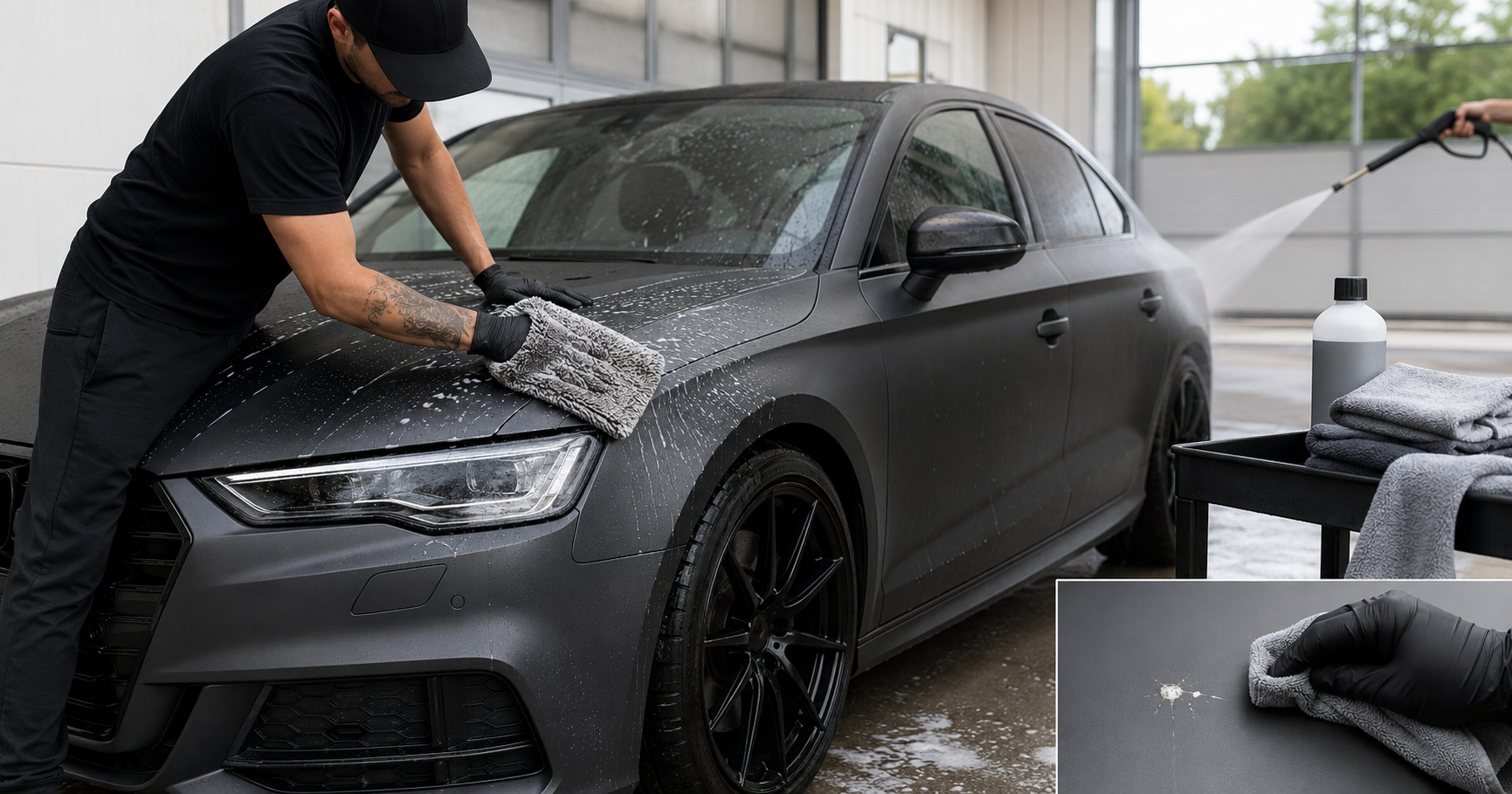
A quality vehicle wrap is a significant investment, and how it is cared for largely determines whether it looks sharp for years or starts peeling and staining within months. Vinyl is durable but it is not paint, and it needs a slightly different maintenance routine. The good news is that caring for a wrap is not hard, it just requires knowing a few rules and avoiding a handful of common mistakes. This guide covers how to wash and maintain a wrapped vehicle, whether you own one or you run the shop advising the customer.
Why wrap care is different from paint care
A wrap is a thin vinyl film with a printed or colored surface and an adhesive backing, and its edges and seams are the vulnerable points. Anything that lifts an edge, degrades the adhesive, or abrades the surface shortens the wrap's life in a way that would not affect paint. High-pressure water aimed at a seam, harsh solvents, automatic car-wash brushes, and letting contaminants sit are the main enemies. Understanding that the film is a surface layer, not a hardened factory finish, explains almost every care rule that follows.
Hand washing is the safe default
The single most important habit is to hand wash rather than use an automatic car wash. Brush-style automatic washes can catch and lift wrap edges and scratch the finish, and even touchless washes often use chemicals too harsh for vinyl. Hand wash with a gentle pH-neutral automotive shampoo, a soft microfiber mitt, and two buckets so you are not grinding grit back onto the surface. Wash in the shade on a cool panel rather than in direct sun, dry with a clean microfiber towel to avoid water spots, and the wrap will keep its finish far longer.
Pressure washing: allowed, with limits
Pressure washing a wrap is acceptable if done carefully, but it is where a lot of damage happens. Keep the pressure moderate, hold the nozzle at least a foot or more from the surface, and use a wide fan tip rather than a narrow jet. The critical rule is to never aim high pressure directly at an edge or seam, since that is exactly how water gets under the film and lifts it. If in doubt, lower pressure and more distance are always the safer choice, because a lifted edge is far more expensive to fix than a slightly less convenient wash.
Dealing with stains and contaminants quickly
Vinyl can stain, so time matters. Bird droppings, bug splatter, tree sap, fuel spills, and road tar should be removed as soon as possible, because the longer they sit the more likely they are to leave a permanent mark, especially on matte finishes. For most fresh contaminants a gentle wash lifts them. For stubborn spots, use a wrap-safe cleaner and a soft cloth rather than scrubbing hard or reaching for a solvent. Never use aggressive degreasers, acetone, or oil-based products, which can dissolve or dull the vinyl.
Matte and satin wraps need extra caution
Matte and satin finishes have specific rules because the look depends on a delicate surface texture that cannot be restored once damaged. Never wax or apply a gloss product to a matte wrap, as it creates permanent shiny patches. Do not machine polish it. Avoid abrasive cloths, and be especially prompt with contaminant removal since matte film shows staining more readily. If a customer wants added protection on a matte wrap, only a product specifically labeled matte-safe should be used. Setting these rules at handover prevents the most common way a beautiful matte wrap gets ruined.
Storage, sun, and the long game
Where a wrapped vehicle lives affects how long the wrap lasts. UV exposure is the slow killer of vinyl, so parking in shade or a garage meaningfully extends the life and color stability of a wrap, particularly for bright colors and matte finishes. Extreme heat and prolonged sun can also stress the adhesive over time. None of this means a wrapped car cannot be a daily driver parked outside, only that a garage-kept wrap will simply look better for longer, which is worth mentioning to customers deciding between finishes.
For wrap shops: aftercare is part of the job
A wrap that fails early because of poor care often comes back as a complaint aimed at the shop, even when the care was the problem. The fix is to make aftercare part of the handover: give every customer clear washing instructions, explain the matte rules if relevant, and note on their record what film and finish was installed so future advice and any rewrap are accurate. Providing that guidance in writing and keeping the install details in a customer and vehicle record, with photos of the finished wrap, protects both the customer's investment and your reputation. For the sales side of wrap work, see our guide to handling deposits and cancellations on custom wrap jobs.
Frequently asked questions
Can I take a wrapped car through a car wash?
Avoid automatic car washes, especially brush-style ones, which can catch and lift the wrap's edges and scratch the finish. Even touchless washes often use chemicals too harsh for vinyl. Hand washing with a pH-neutral shampoo and a soft microfiber mitt is the safe default and the best way to preserve a wrap.
Is it safe to pressure wash a vehicle wrap?
Yes, if done carefully. Keep the pressure moderate, hold the nozzle at least a foot from the surface, and use a wide fan tip. The key rule is never to aim high pressure directly at an edge or seam, because that is how water gets under the film and lifts it. When unsure, use lower pressure and more distance.
How do I remove bird droppings or sap from a wrap?
Remove them as soon as possible, since contaminants left to sit can permanently stain vinyl, especially matte finishes. A gentle wash lifts most fresh contaminants. For stubborn spots use a wrap-safe cleaner and a soft cloth, and never use acetone, aggressive degreasers, or oil-based products, which can dissolve or dull the film.
Can I wax a matte or satin wrap?
No. Waxing or applying a gloss product to a matte or satin wrap creates permanent shiny patches and ruins the finish. Do not machine polish it either. If you want added protection on a matte wrap, use only a product specifically labelled as matte-safe, and avoid abrasive cloths.
Does parking in the sun damage a wrap?
UV exposure is the main long-term cause of wrap fading, so parking in shade or a garage extends the life and color stability of a wrap, particularly for bright colors and matte finishes. A wrapped car can still be a daily driver parked outdoors, but a garage-kept wrap will look better for longer.
[[END FAQ]]
This article provides general wrap-care guidance. Always follow the specific care instructions from your film manufacturer and installer, as recommendations vary by product and finish.
Subscribe to our newsletter today
Fresh insights and practical tips delivered every week.