.svg)
Interior Detailing: How to Deep Clean Your Car's Interior Like a Pro
A step-by-step guide to deep cleaning your car's interior like a professional detailer: the right sequence, tools, and material-specific methods for a spotless cabin.

.png)
Helping auto shops work smarter and grow.
The interior is where you actually spend time with your car, and it is also where dirt, odors, and wear accumulate fastest. A proper interior detail goes far beyond a quick vacuum, working methodically through every surface to leave the cabin genuinely clean rather than just tidied. Whether you want to do it yourself or understand what a professional interior detail should include, this guide walks through the process the way a good detailer approaches it, in the order that actually works.
Work top to bottom and back to front
The first principle of interior detailing is sequence. Professionals work from the top down and generally from the back forward, because cleaning dislodges dust and debris that falls onto lower surfaces. If you clean the seats and carpets first and then wipe down the headliner and dash, you undo your own work. Starting high, headliner, pillars, upper trim, then moving to mid-level surfaces, and finishing with the carpets and floor mats last, means each step does not re-dirty what you already finished. This one habit separates an efficient detail from a frustrating one.
Clear it out and vacuum thoroughly
Everything starts with an empty cabin. Remove all personal items, then take out the floor mats to clean separately. Vacuum comprehensively: seats, including the seams and the gaps where they meet the base, under the seats, the center console area, and the carpets, using crevice and brush attachments to reach tight spots. Move the seats forward and back to reach everything underneath. A genuinely thorough vacuum, getting the grit out of seams and corners rather than just the open surfaces, is the foundation of the whole detail, because any dirt left behind will smear once you introduce cleaning products.
Clean hard surfaces the right way
Hard surfaces, the dashboard, console, door panels, cupholders, and trim, need a gentle approach. Use an all-purpose interior cleaner appropriate to the material and a microfiber cloth, working cleaner into a cloth or a soft detailing brush rather than spraying directly onto surfaces near screens and electronics. A soft brush lifts dust and grime out of vents, seams, buttons, and textured trim where a cloth cannot reach. Avoid high-gloss silicone dressings on the dashboard, since they create glare and a greasy feel, and choose a matte, UV-protectant finish instead. The goal is clean and factory-looking, not shiny.
Treat upholstery and carpets by material
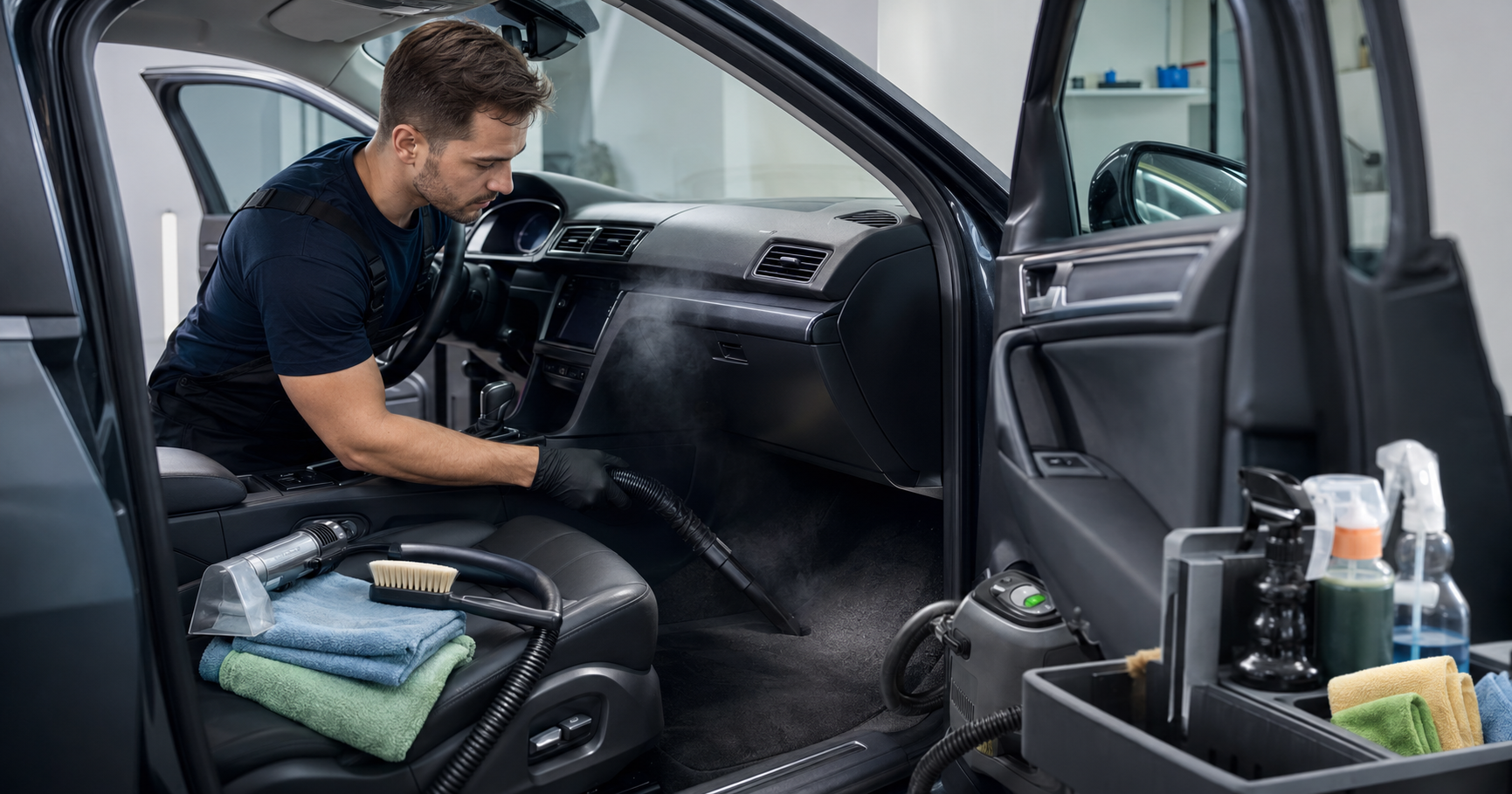
Soft surfaces need the right method for the material. Cloth seats and carpets respond to a dedicated fabric cleaner and agitation with a brush, followed by extraction or blotting to lift the loosened dirt, and this is where steam cleaning is especially effective for stains and sanitizing. Leather needs a pH-balanced leather cleaner and a soft brush, followed by a conditioner to keep it supple and prevent cracking, never harsh all-purpose cleaners that dry it out. Treating everything the same is the most common interior mistake, since what cleans cloth can ruin leather and what is safe on leather will not lift a set-in carpet stain.
Glass, odors, and the finishing touches
Interior glass is done last so overspray from other steps does not undo it. Use an automotive glass cleaner and a clean microfiber towel, and do not forget the top edge of the windshield and the interior mirror. For odors, the durable fix is removing the source, a deep clean of carpets and upholstery, rather than masking it with a fragrance that fades in days. Persistent odors may call for an enzyme treatment or an ozone or similar service on the professional side. Finish with the floor mats cleaned and fully dry before they go back in, since damp mats breed the very odors you just removed.
How professionals get better results
The difference between a home interior clean and a professional one comes down to tools, products, and method. Professionals use steam for sanitizing and loosening grime without heavy chemicals, extraction machines to actually pull dirt out of fabric rather than pushing it around, dedicated brushes for each material, and the correct product for each surface. They also work in a consistent sequence every time, so nothing is missed and nothing is re-dirtied. You can get strong results at home with patience and the right supplies, but this is exactly why a professional interior detail looks and smells different from a driveway effort.
For detailing shops: consistency and proof sell interior work
Interior detailing is one of the most satisfying services to sell because the transformation is so visible, and that visibility is also the marketing. Before-and-after photos of a genuinely restored interior are some of the most persuasive content a shop has, and documenting each vehicle's starting condition protects against disputes over pre-existing stains or damage. Delivering a consistent interior process every time, and capturing the result, is what builds the reputation that fills the schedule. Recording each job with before-and-after photos tied to the customer record makes that repeatable. For how to package and price this work, see our guide to detailing pricing, packages, and add-ons.
Frequently asked questions
What order should I clean a car interior in?
Work from the top down and generally from the back forward, because cleaning dislodges dust and debris that falls onto lower surfaces. Start with the headliner and upper trim, move to mid-level surfaces like the dash and doors, and finish with the carpets, floor mats, and glass last. This prevents you from re-dirtying areas you have already cleaned.
How do I clean car seats?
Clean by material. For cloth seats, use a dedicated fabric cleaner, agitate with a brush, and extract or blot to lift the dirt, with steam cleaning especially effective for stains. For leather, use a pH-balanced leather cleaner and a soft brush, then apply a conditioner to keep it supple. Never use harsh all-purpose cleaners on leather, as they dry it out and cause cracking.
How do professionals get rid of car odors?
By removing the source rather than masking it. A deep clean of the carpets and upholstery, where odors usually live, addresses the cause, while fragrances only cover it temporarily. Persistent odors may require an enzyme treatment or a professional ozone or similar service. Ensuring carpets and mats are fully dry afterward prevents new odors from forming.
Should I use a shiny dressing on my dashboard?
It is better to avoid high-gloss silicone dressings, which create windshield glare and a greasy feel and attract dust. A matte, UV-protectant finish looks more factory-correct and protects the dash from sun damage without the drawbacks. Apply it to a cloth rather than spraying directly near screens and electronics.
Is professional interior detailing worth it over doing it myself?
You can achieve good results at home with patience and the right products, but professionals have steam cleaners, extraction machines, material-specific brushes, and the correct products for each surface, plus a consistent method. That combination lifts dirt out of fabric rather than moving it around and sanitizes more effectively, which is why a professional interior detail typically looks and smells noticeably different.
[[END FAQ]]
This article provides general interior detailing guidance. Always test products on an inconspicuous area first and follow the manufacturer's instructions for your vehicle's specific materials.
Subscribe to our newsletter today
Fresh insights and practical tips delivered every week.