.svg)
The Numbers Every Appearance and Protection Shop Should Watch Monthly
You do not need a finance background to run a shop well. Here are six numbers to review monthly that tell you whether your appearance shop is actually healthy.

.png)
Helping auto shops work smarter and grow.

Most appearance shop owners track exactly one number: what is in the bank at the end of the month. That tells you what happened, but not why, and never early enough to change it. A handful of simple monthly numbers will tell you whether your shop is actually healthy, where the money is leaking, and what to fix next. You do not need an accountant or a spreadsheet habit, just six figures reviewed once a month. Here is what to watch and what each one is telling you.
Average ticket: are you selling or just working?
Your average ticket is total revenue divided by number of jobs. It is the single fastest indicator of whether your pricing and upselling are working. A shop can be exhausted and busy while the average ticket quietly sits too low, which means you are trading a lot of labor for very little margin. Watch the trend month to month rather than the absolute number. If it is flat or falling while your job count rises, you are working harder for the same money, and the fix is usually package structure and add-ons rather than finding more customers. Our guide to pricing packages, add-ons, and memberships covers exactly that.
Job count and mix: what are you actually selling?
Count the jobs, then break them down by type: basic details versus ceramic, tint versus PPF, small jobs versus full installs. The mix matters more than the total, because your high-margin services are what fund the business. If 80% of your volume is low-ticket work, your capacity is being consumed by your least profitable jobs. Tracking mix tells you whether your marketing is attracting the customers you actually want, and whether your team is successfully moving people up to the premium options you offer.
Quote-to-close rate: how good is your sales process?
Of the quotes you send, how many turn into booked work? Most shops have no idea, which means they cannot tell whether a slow month was a demand problem or a follow-up problem. A low close rate usually points at one of three things: quotes that take too long to send, no follow-up after the quote, or pricing presented without enough explanation of value. This is often the cheapest number to improve, because the customers already contacted you, and even small gains here are pure additional revenue with no marketing spend. See why fast quotes win jobs for how to fix a slow response.
No-show and cancellation rate: what is your schedule costing you?
Track how many booked appointments never arrive. Auto and appearance shops commonly see no-show rates in the range of 15 to 20% of booked appointments, and in a shop where a single slot can be a full-day install, that is enormous. Knowing your actual rate turns a vague frustration into a measurable problem you can attack with confirmations, reminders, and deposits. If your rate is meaningfully above that range, fixing it is almost certainly the highest-return change available to you this quarter, and collecting deposits on high-value jobs is where to start.
Repeat and returning customer share: is anyone coming back?
What percentage of this month's jobs came from customers you had served before? This is the number that separates a business from a treadmill. Retaining an existing customer is far cheaper than acquiring a new one, and repeat customers typically spend more, so a shop with a healthy repeat share is fundamentally more profitable than one constantly buying new leads. If this number is near zero, you are rebuying your entire customer base every month, and follow-up is your biggest opportunity.
Reviews gained this month: is your reputation compounding?
Count new reviews. Because recency matters in local search, a steady monthly flow of reviews does more for your visibility than a large old pile, and it also drives the decision of every customer comparing shops. Treating this as a monthly number turns reviews from something that happens by luck into something you manage. If the count is inconsistent, the cause is almost always that nobody is reliably asking after each job, which is what building a review engine solves.
Make the numbers easy to see
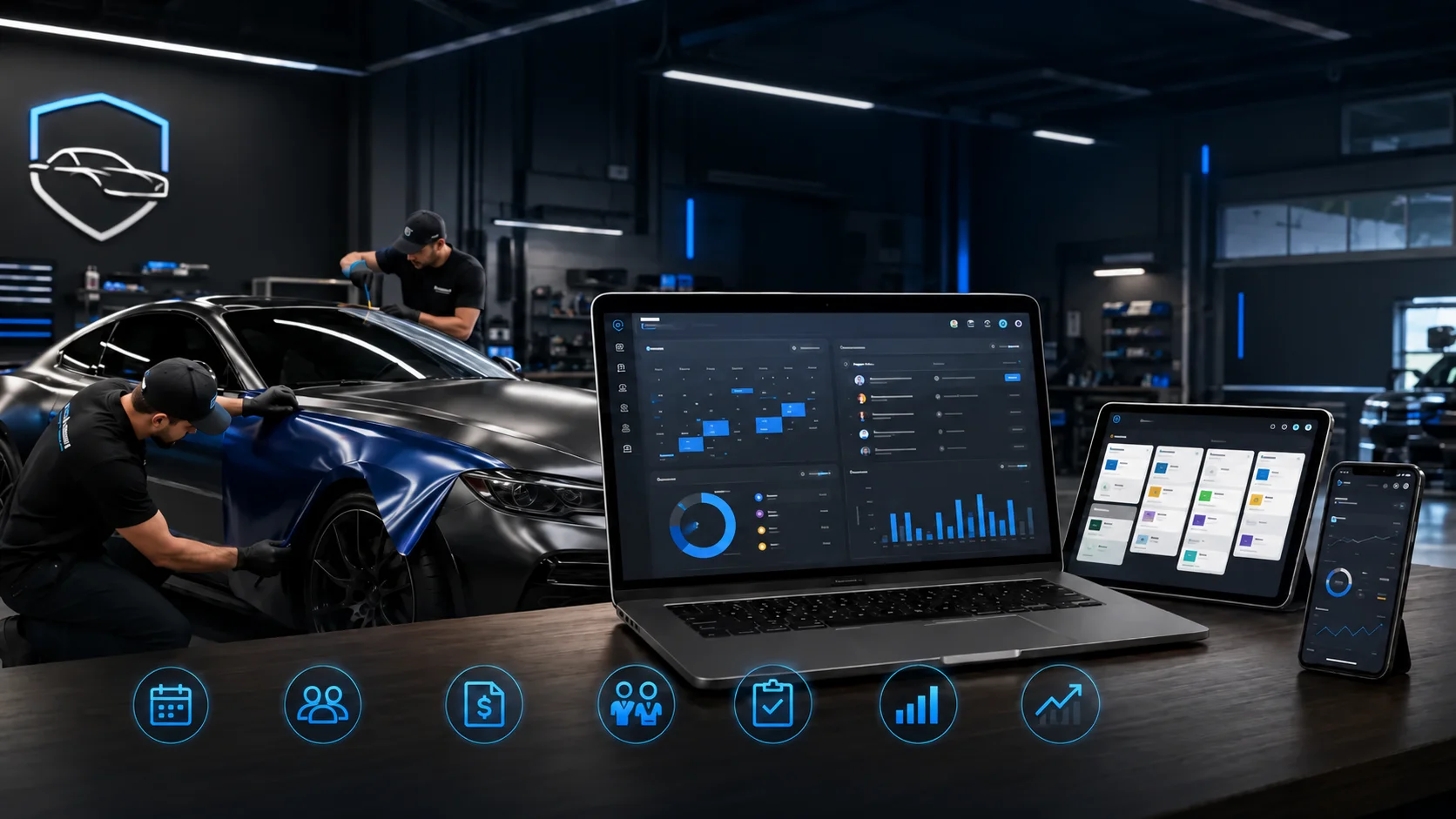
The reason most owners do not track these is not laziness, it is that pulling them by hand from receipts, a calendar, and memory is genuinely painful. When jobs, quotes, customers, and appointment outcomes all live in one system, these six numbers become something you glance at rather than something you dread assembling. Having real-time reporting on top of your actual job and customer records is what makes a monthly review realistic for a busy shop owner.
How it comes together
You do not need a finance background to run a shop well, you need six numbers once a month: average ticket, job count and mix, quote-to-close rate, no-show rate, repeat customer share, and new reviews. Together they tell you whether you are pricing right, selling right, protecting your schedule, keeping customers, and building a reputation. Review them monthly, pick the weakest one, and fix that. That single habit separates shops that grow deliberately from shops that just stay busy.
Frequently asked questions
What is the most important number for an appearance shop to track?
Average ticket, calculated as total revenue divided by number of jobs, is the fastest indicator of whether pricing and upselling are working. A shop can be extremely busy while its average ticket sits too low, meaning a lot of labor for very little margin. Watch the monthly trend rather than the absolute figure.
Why does service mix matter more than total job count?
Because your high-margin services fund the business. If most of your volume is low-ticket work, your capacity is being consumed by your least profitable jobs even when the total count looks healthy. Tracking mix shows whether marketing is attracting the right customers and whether your team is moving people to premium options.
What is a quote-to-close rate and why track it?
It is the share of quotes you send that become booked work. Without it you cannot tell whether a slow month was a demand problem or a follow-up problem. Low close rates usually trace to slow quotes, no follow-up, or pricing presented without explaining value, and improving it is cheap because those customers already contacted you.
What no-show rate should I expect?
Auto and appearance shops commonly see no-shows in the range of 15 to 20% of booked appointments. In a shop where one slot can be a full-day install, that is a very large cost. Measuring your actual rate turns it into a problem you can attack with confirmations, reminders, and deposits on high-value jobs.
How often should I review these numbers?
Once a month is enough for most shops. Review all six, identify the weakest, and focus on fixing that one before the next review. The value comes from the consistent habit rather than from tracking more metrics, and having jobs, quotes, and customers in one system makes the review quick rather than painful.
Benchmark figures reflect published automotive and small-business industry data and are provided as general ranges. Your own targets depend on your services, market, and shop size.
Subscribe to our newsletter today
Fresh insights and practical tips delivered every week.