.svg)
What Is Paint Correction? A Car Owner's Guide to Swirl Removal and Paint Restoration
What is paint correction? A clear guide to what it fixes, why it is priced in stages, how it relates to ceramic coating, and when it is worth doing.

.png)
Helping auto shops work smarter and grow.
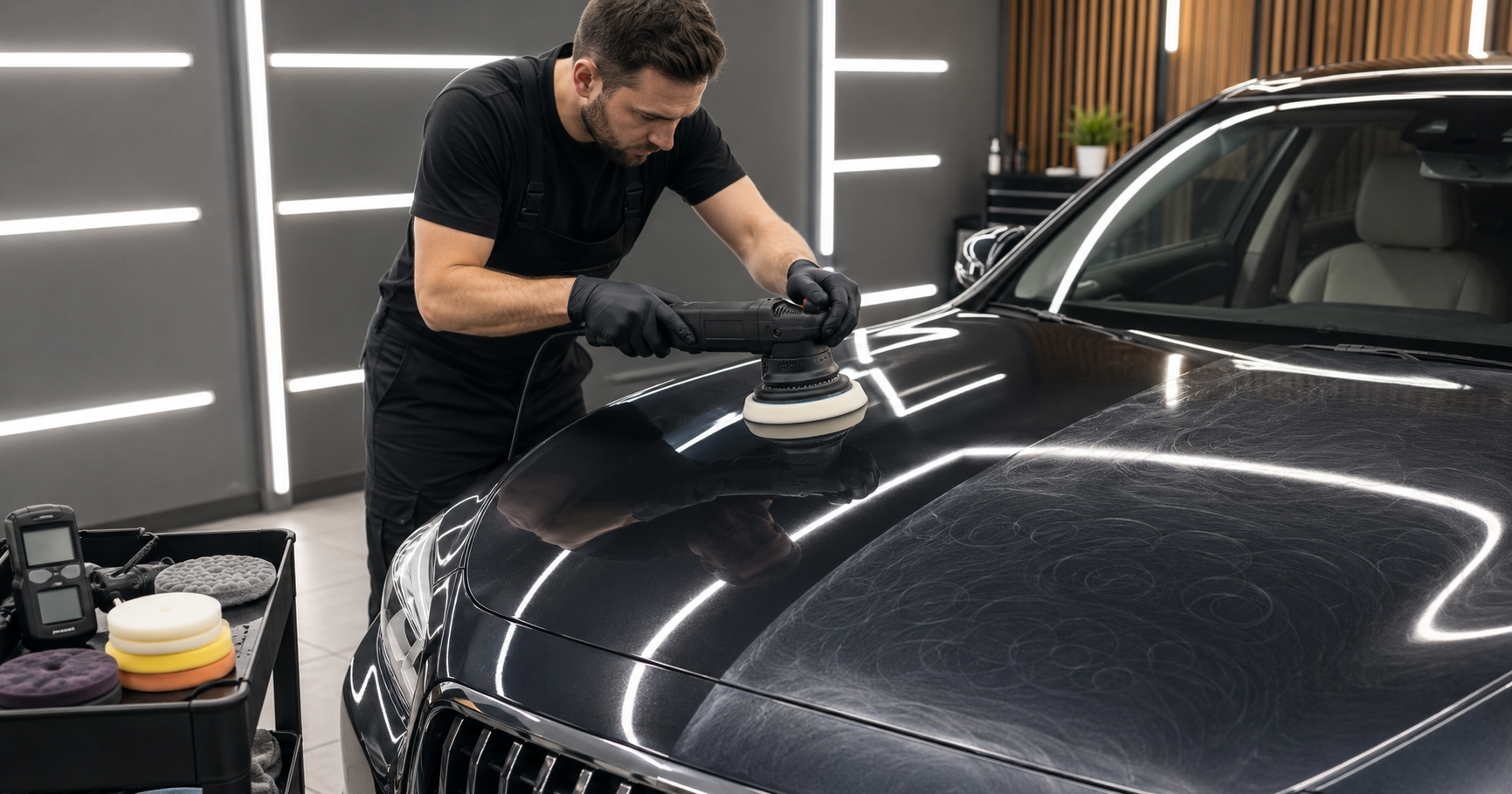
If you have looked into ceramic coating or asked why a detail costs more than a wash, you have probably run into the term paint correction. It sounds technical, and shops do not always explain it well, which leaves customers unsure whether they need it or are being upsold. Paint correction is a real, skilled process with a specific purpose. This guide explains what it is, what it fixes, how it is priced by stages, and when it is genuinely worth doing, so you can make an informed decision or explain it clearly to your customers.
What paint correction actually is
Paint correction is the process of machine-polishing a vehicle's clear coat to remove imperfections and restore clarity and gloss. Over time, paint accumulates fine defects: swirl marks from improper washing, light scratches, water spots, oxidation, and haze. These are not on top of the paint, they are tiny irregularities in the clear coat itself that scatter light and make the finish look dull. Correction uses a polishing machine with graded compounds and pads to level an extremely thin layer of clear coat, removing the defect and leaving a smooth, reflective surface. It is restoration of the existing paint, not a coating added on top.
What it fixes, and what it cannot
Correction removes defects that sit within the clear coat: swirl marks, spider-webbing, light to moderate scratches, buffer trails, water spots, and oxidation. What it cannot fix is damage that has gone through the clear coat into the color coat or primer, such as deep scratches you can catch a fingernail in, rock chips, or dents. A useful test is that if a scratch has not broken through to a different color, correction can usually improve or remove it, while a scratch showing white primer or bare metal needs paint repair, not polishing. Setting that boundary honestly is what separates a trustworthy shop from an overselling one.
Why it is priced in stages
Paint correction is commonly sold as single-stage, two-stage, or multi-stage, and this reflects how much work the paint needs. A single-stage correction uses one polishing step to remove light defects and boost gloss, suitable for a newer or well-kept car. A two-stage adds a compounding step before polishing to tackle more significant swirls and scratches. Multi-stage correction, with several compounding and refining passes, is for heavily damaged or neglected paint and can take a full day or more. More stages mean more labor and more clear coat carefully removed, which is why the price climbs with the number of stages rather than being one flat rate.
How it relates to ceramic coating
This is the connection most customers miss: paint correction almost always comes before ceramic coating, and reputable shops include it. A ceramic coating seals and protects the surface it is applied to, so if you coat over swirled, hazy paint, you lock those defects in for the life of the coating. Correcting first means the coating goes over a flawless surface, which is why a proper ceramic package costs more than just wiping on a coating: most of the labor is in the correction beneath it. Understanding this explains why two ceramic quotes can differ so much, one may include real correction and the other may not.
Is paint correction worth it?
It depends on the paint's condition and the owner's goals. For a car with visible swirls and lost gloss, correction produces a dramatic, genuine improvement that a wash or wax cannot, and it is essential before a coating. For paint that is already near-flawless, a full multi-stage correction may be unnecessary, and a lighter enhancement is enough. Because correction removes a small amount of clear coat each time, it is also not something to repeat endlessly, so it should be done deliberately and then protected. The honest answer a good shop gives is that it depends on the paint, assessed in person, not a blanket yes.
Setting expectations so results hold
Correction results last only if the paint is then cared for properly. The most common cause of swirl marks returning is improper washing, particularly automatic car washes and single-bucket washing that grinds grit back into the paint. After correction, a proper wash technique, or better yet a protective layer like a sealant or ceramic coating, preserves the work. This is worth explaining clearly to customers, because a customer who sees swirls come back in two months, from their own car wash habit, may wrongly blame the shop. Good aftercare guidance protects both the finish and the shop's reputation.
For detailing shops: document the transformation
Paint correction is one of the most visually dramatic services a shop offers, and it is also one of the hardest to convey in a quote, since the value is invisible until the work is done. That makes documentation powerful. Before-and-after photos under proper lighting show the customer exactly what they paid for and become some of the best marketing a shop has. Recording the paint's condition, the stages performed, and the result on each job also protects against disputes and supports the coating warranty that often follows. Capturing all of that with before-and-after photo documentation tied to the customer record turns skilled work into visible proof. For the customer-facing side of coatings, see what ceramic coating customers actually ask.
Frequently asked questions
What is paint correction?
Paint correction is the process of machine-polishing a vehicle's clear coat to remove imperfections such as swirl marks, light scratches, water spots, and oxidation, restoring clarity and gloss. It levels an extremely thin layer of clear coat to eliminate defects within it. It restores the existing paint rather than adding a coating on top.
What defects can paint correction remove?
It removes imperfections within the clear coat: swirl marks, spider-webbing, light to moderate scratches, buffer trails, water spots, and oxidation. It cannot fix damage that has gone through the clear coat, such as deep scratches you can feel with a fingernail, rock chips, or dents, which require paint repair rather than polishing.
Why does paint correction have different stages?
The number of stages reflects how much work the paint needs. Single-stage correction removes light defects with one polishing step, two-stage adds a compounding step for more significant swirls and scratches, and multi-stage uses several passes for heavily damaged paint. More stages mean more labor and more careful clear-coat removal, which is why price rises with stages.
Do I need paint correction before ceramic coating?
Almost always, yes, and reputable shops include it. A ceramic coating seals whatever surface it is applied over, so coating over swirled or hazy paint locks those defects in for the life of the coating. Correcting first ensures the coating goes over a flawless surface, which is why most of the labor in a proper ceramic package is the correction beneath it.
How long does paint correction last?
The correction itself is permanent in that the removed defects are gone, but new swirls and scratches can appear if the paint is not cared for properly afterward. Improper washing, especially automatic car washes, is the most common cause of swirls returning. Protecting the corrected paint with proper wash technique or a coating preserves the result.
[[END FAQ]]
This article provides general education about paint correction. The right approach for any vehicle depends on an in-person assessment of the paint's condition by a qualified detailer.
Subscribe to our newsletter today
Fresh insights and practical tips delivered every week.