.svg)
How Window Tint Shops Can Grow With the Right CRM and Workflow
Tinting is a high-volume business with fast decisions and hands-on work that can't pause. Here is how window tint shops grow with the right CRM and workflow built for their rhythm.

.png)
Helping auto shops work smarter and grow.
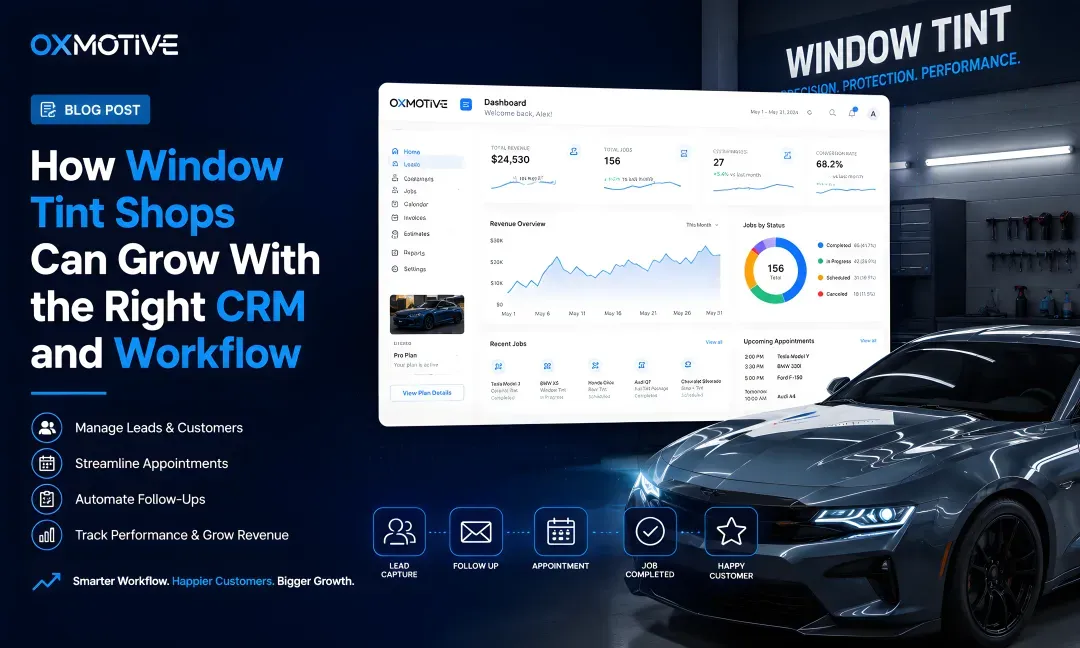
Window tinting is a high-volume business with a fast pace all its own. Customers shop several shops at once, decide quickly, and expect fast turnaround, while installers are heads-down applying film and cannot stop to manage the phone. That combination, lots of inquiries, quick decisions, and hands-on work that cannot be interrupted, creates a specific operational challenge. The tint shops that grow are the ones that handle this volume without letting customers or details slip through the cracks. This guide covers how a window tint shop can grow with the right CRM and workflow built for its particular rhythm.
The tint shop's high-volume challenge
A tint shop's economics run on volume, doing many jobs efficiently, which is exactly what makes managing it hard. Inquiries come in constantly and customers decide fast, so a slow response loses the job to a competitor. At the same time, the people who could respond are installers focused on precise work they cannot pause mid-film. The result is a constant tension between capturing demand and doing the work, and in that tension, leads get missed, quotes get delayed, and jobs get recorded haphazardly if at all. Recognizing that the core challenge is handling high volume without dropping anything is the first step to building a shop that can grow rather than one that stays capped by chaos.
Capture every inquiry so none slip away
With decisions happening fast, the tint shops that win are the ones that capture and respond to every inquiry quickly. That requires bringing all inquiries, calls, texts, social messages, web forms, into one place the team can see and act on, rather than scattered across platforms an installer misses while working. When leads land in a single visible queue, whoever is free can respond fast, even with a quick acknowledgment, which is often all it takes to win a job in a fast-moving market. For a high-volume tint business, this lead capture is directly tied to revenue, because at volume, even a small share of missed inquiries adds up to significant lost work over a month.
Keep the schedule tight and full
Volume businesses live and die by the schedule, so keeping it organized and full is central to a tint shop's success. Efficient booking that maximizes how many jobs you can fit, minimizes gaps, and reduces no-shows directly drives revenue when your model depends on throughput. Clear scheduling that the whole team can see prevents double-bookings and confusion, while appointment reminders keep the calendar from leaking to no-shows. For a tint shop, an hour of empty bay time is lost revenue that cannot be recovered, so the tools that keep the schedule tight and full are not administrative niceties, they are core to the economics of the business.
Track each vehicle's film and coverage
Even in a fast, high-volume shop, the details of each job matter, particularly what film was installed and where. Recording the specific film type, coverage, and any warranty information for each vehicle protects you when a customer returns with a question or a warranty claim, and it makes future service straightforward. Tint also has regional legal considerations around allowable levels on different windows, so keeping clear records of what was done on each vehicle is simply good practice. Capturing these details quickly as part of the job, rather than trusting memory across dozens of vehicles, is what keeps a high-volume tint shop professional and protected as the numbers add up.
Turn one-time jobs into repeat and referral business
Tint might look like a one-and-done service, but the customer relationship has real ongoing value that many shops leave on the table. A satisfied tint customer may return to tint another vehicle, want other services you offer, or refer friends, and they are far more likely to do so if you stay in touch. Keeping organized customer records and following up, thanking them, asking for a review, reaching out about other services, turns a transactional tint job into a lasting relationship and a source of referrals. In a volume business built largely on new customers, adding a layer of retention and referral compounds growth on top of the constant new-customer flow rather than relying on it alone.
The workflow that ties it together
What lets a tint shop handle all this at volume is a workflow where capturing leads, scheduling, recording jobs, and following up all run through one system the whole team uses, including from the floor. Because installers cannot stop to manage admin, the system has to be fast and mobile-accessible, letting whoever is available capture a lead, book a slot, or record a job in seconds. Keeping customer and vehicle records, scheduling and jobs, reminders and follow-up, and a mobile app together in one platform is what makes running a high-volume tint shop smooth instead of chaotic. For how this combination works across related trades, see our guide on the CRM and mobile app for wrap, tint, and tire shops.
How it comes together
Window tint shops face a distinctive challenge: high volume, fast customer decisions, and hands-on work that cannot pause to manage the business. Growing means capturing every inquiry so none slip away, keeping the schedule tight and full to maximize throughput, recording each vehicle's film and coverage for protection and future service, and adding a layer of retention and referral on top of the new-customer flow. The tint shops that pull this off run it all through one fast, mobile system the whole team uses. Build that workflow, and a tint shop can grow its volume without drowning in the chaos that volume creates.
Frequently asked questions
What is the biggest operational challenge for a tint shop?
Handling high volume without dropping anything. Inquiries come in constantly and customers decide fast, so a slow response loses the job, but the people who could respond are installers doing precise work they cannot pause. That tension between capturing demand and doing the work is where leads get missed, quotes delayed, and jobs recorded haphazardly. Managing high volume cleanly is the core challenge a growing tint shop must solve.
How does a tint shop stop losing leads?
By capturing every inquiry, calls, texts, social messages, web forms, into one place the team can see and act on, rather than scattered across platforms installers miss while working. When leads land in a single visible queue, whoever is free can respond fast, even with a quick acknowledgment, which often wins the job in a fast-moving market. At volume, even a small share of missed inquiries adds up to significant lost revenue.
Why does scheduling matter so much for tint shops?
Because volume businesses live and die by throughput. Efficient booking that fits more jobs, minimizes gaps, and reduces no-shows directly drives revenue, while clear scheduling the whole team can see prevents double-bookings, and reminders keep the calendar from leaking to no-shows. For a tint shop, an hour of empty bay time is unrecoverable lost revenue, so keeping the schedule tight and full is core to the economics, not just administration.
Should a tint shop track what film was installed?
Yes. Recording the specific film type, coverage, and warranty information for each vehicle protects you when a customer returns with a question or claim and makes future service straightforward. Tint also has regional legal considerations around allowable levels on different windows, so clear records of what was done on each vehicle are good practice. Capturing these details as part of the job beats trusting memory across dozens of vehicles.
Can a tint shop build repeat business?
Yes, and many leave this value on the table. A satisfied tint customer may return to tint another vehicle, want other services, or refer friends, and is far more likely to if you stay in touch. Keeping organized records and following up, thanking them, asking for a review, mentioning other services, turns a transactional job into a lasting relationship and referral source, compounding growth on top of the constant new-customer flow.
[[END FAQ]]
This article offers general business guidance. Tint laws vary by region, so always follow local regulations on allowable tint levels.
Subscribe to our newsletter today
Fresh insights and practical tips delivered every week.