.svg)
Why Auto Dealers Are Expanding Service and What Independent Repair Shops Can Learn
Why dealership service departments matter and how independent repair shops can compete through convenience, vehicle history, communication, and retention.

.png)
Helping auto shops work smarter and grow.
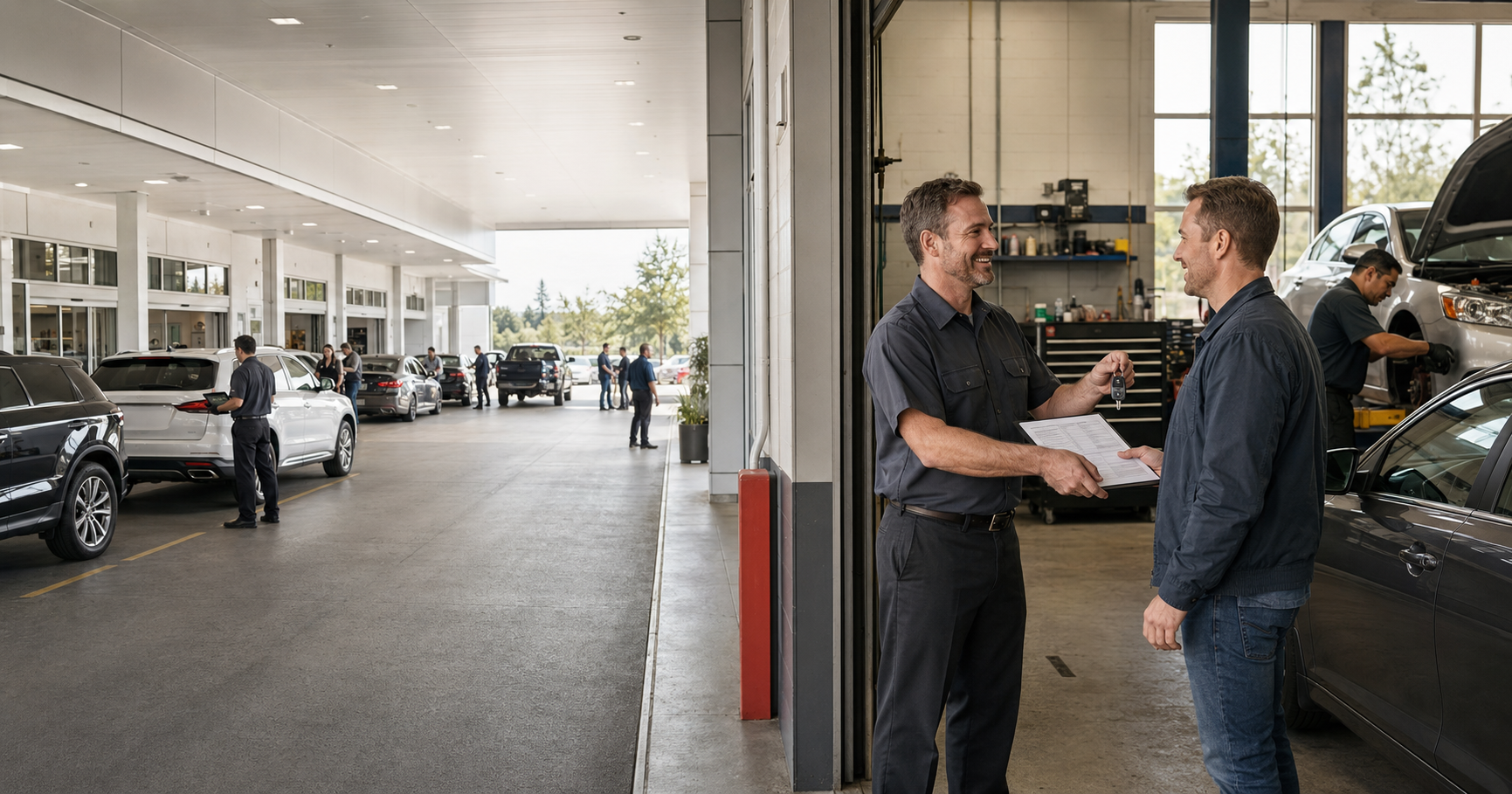
Auto dealers are not treating service as an afterthought. Repair and maintenance keep the customer relationship active long after the vehicle sale and create recurring work when vehicle sales fluctuate. Independent repair shops should not copy the dealership model blindly, but they should understand why organized follow-up, convenient communication, complete vehicle history, and consistent multi-location service are becoming competitive advantages.
Dealership service departments are a large part of the automotive service market
Franchised dealers have long operated service departments, so the change is not that dealers suddenly began repairing vehicles. The important point is how strongly service and parts support the broader dealership relationship.
The National Automobile Dealers Association reports that U.S. franchised light-vehicle dealerships wrote more than 276 million repair orders in 2025 and generated more than $164 billion in service and parts sales. The NADA 2025 full-year data shows the scale of dealership service activity.
Those numbers describe the franchised dealer sector, not the performance of every individual dealership. They do show that service is a major operational business, not merely support for vehicle sales.
Service keeps the dealership connected after the vehicle sale
A vehicle purchase may happen once every several years. Maintenance, inspections, tires, repairs, recalls, accessories, and seasonal needs create more frequent reasons to interact.
Every completed service adds to the vehicle history and gives the business a chance to earn the next visit. If the experience is organized, the customer becomes easier to serve because the dealership knows the vehicle, prior work, communication preference, and recommended next step.
Independent shops have the same opportunity. The customer relationship should not restart at every appointment. OXMotive centralizes customer profiles, vehicle records, service history, media, and communication so the shop can use prior work to improve the next visit.
Service relationships can support the wider ownership lifecycle
A dealership can stay visible throughout the years between purchases by servicing the vehicle. That relationship may later affect accessories, warranty conversations, trade-in discussions, or the next purchase, although outcomes vary by customer and dealer.
Independent shops do not sell new vehicles, but the lesson still applies. A customer who trusts the shop may bring another household vehicle, refer a family member, approve future maintenance, or remain loyal after replacing the car. The service history is the foundation for recognizing those opportunities without forcing a sales conversation.
Convenience is part of the service product
Customers do not judge a repair visit only by the technician's work. They also judge how easy it was to book, understand the estimate, receive updates, approve changes, know when the vehicle was ready, and retrieve the vehicle.
Dealerships often invest in appointment processes, service advisors, waiting areas, transportation options, and communication because the experience affects future service and vehicle relationships. Independent shops may not need the same physical scale, but they need a reliable customer journey.
Map the process from enquiry to delivery. Remove repeated forms, unclear handoffs, and status calls. Use appointment reminders and clear pickup instructions. OXMotive's scheduling, job statuses, automated SMS, and two-way texting can help a smaller team deliver an organized experience without building a large front office.
Complete vehicle history makes recommendations easier to trust
A customer is more likely to understand a recommendation when it connects to documented inspections, previous work, images, and service timing. Vague advice without context feels like a sales attempt.
Keep the vehicle record current. Save completed services, declined work, condition notes, photos or videos, approvals, and relevant follow-up. When the customer returns, review the history before repeating an inspection or recommendation.
Digital evidence can make the conversation clearer. The shop should explain what was observed, why it matters, the available choices, and what can happen if the customer waits. Avoid pressure and do not overstate urgency.
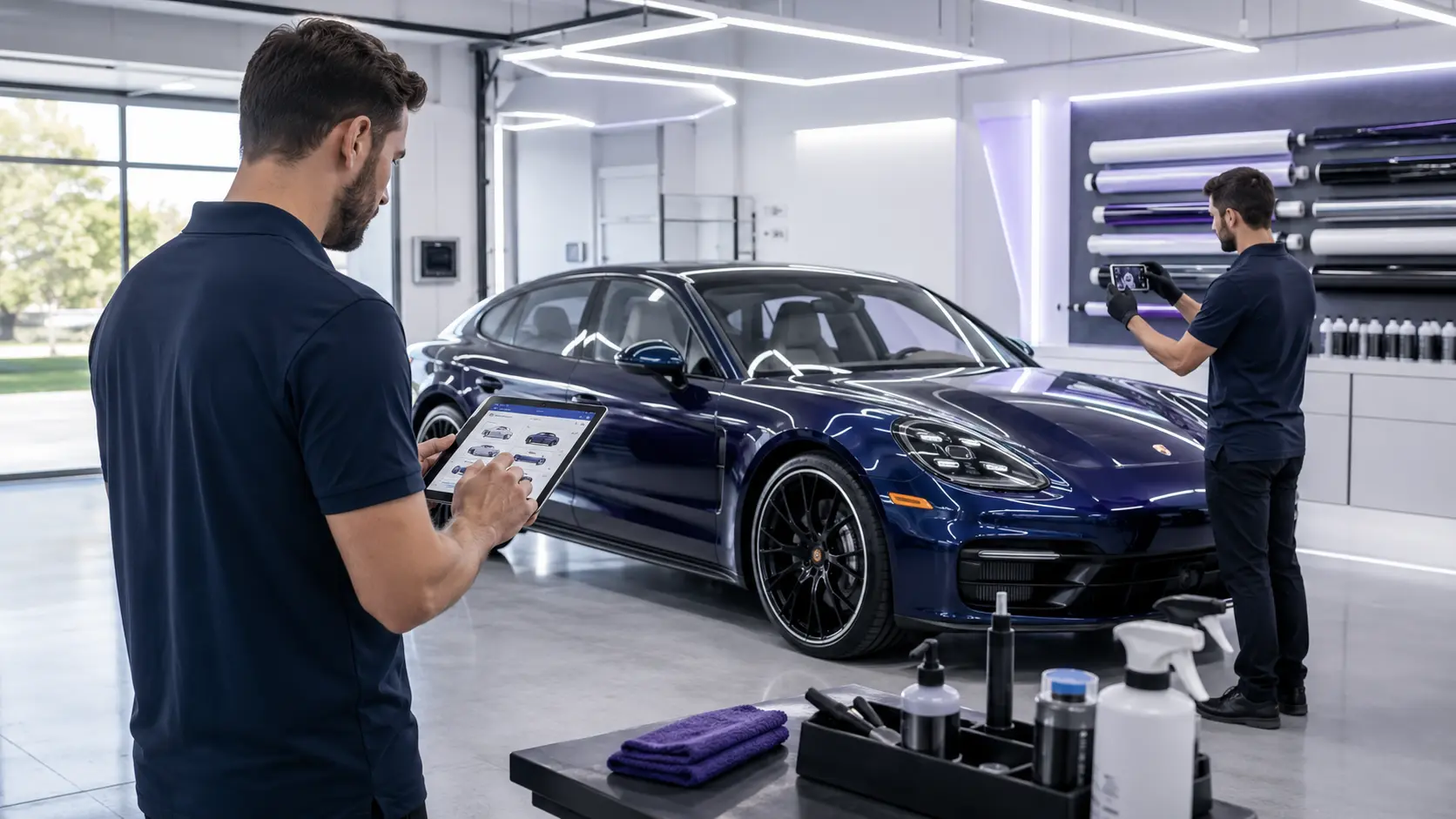
OXMotive attaches media and service records to the customer and vehicle. See how digital vehicle inspections use photos and videos to support repair approvals.
Declined work is a future service opportunity when handled respectfully
A customer may decline work because of budget, time, uncertainty, or the need to prioritize another repair. Treating every decline as a lost sale wastes useful information.
Record the recommended work, observation date, customer decision, estimate context, and appropriate follow-up. Do not assume the condition remains unchanged. A later message should invite a new assessment or scheduling conversation, not state that an old finding is still current.
Use a follow-up process based on priority and customer preference. OXMotive's customer history and automated follow-up can help the shop remember the recommendation without relying on the service advisor's memory.
For practical language, review service advisor scripts for presenting recommended repairs without pressure.
Multi-location consistency can make dealer service easier to use
Dealer groups may operate several rooftops or service points. Customers expect the brand to recognize them, even when they visit a different location.
Consistency requires shared definitions for services, statuses, customer communication, permissions, and reporting. The customer and vehicle history should be available to authorized staff, while location-specific capacity and responsibility remain visible.
Independent groups with multiple repair shops face the same issue. If each location has separate records, pricing language, and messages, the business feels fragmented.
OXMotive's multi-location support and cross-location reporting help owners maintain a common operating view. The guide to one unified customer database across auto shop locations explains the foundation.
Dealership follow-up turns completed service into a retention system
The service relationship weakens when the business disappears after pickup. A good follow-up system first confirms satisfaction, then provides care information, reminders, or a relevant next-service invitation.
Segment outreach by completed work, vehicle, time, declined recommendations, and customer preference. Do not send every customer the same promotion. Keep operational messages separate from marketing permissions and follow applicable email and text rules.
Independent shops can often make follow-up feel more personal because the team is smaller and closer to the customer. OXMotive gives the shop structured history to support that personal attention at scale.
Independent shops can compete on focus instead of dealership size
An independent repair shop does not need a showroom, manufacturer affiliation, or a large service drive to win loyal customers. It needs a clear reason to choose the shop and a consistently professional process.
Possible advantages include specialization, local ownership, direct access to decision-makers, flexible communication, familiarity with the customer's vehicle, and a more focused service menu. The shop should turn those strengths into operating standards rather than relying on personality alone.
Respond quickly, document work, explain choices, keep promises, and follow up. Software should make those behaviours easier. It should not imitate dealership complexity.
A service scorecard should measure retention and operating quality
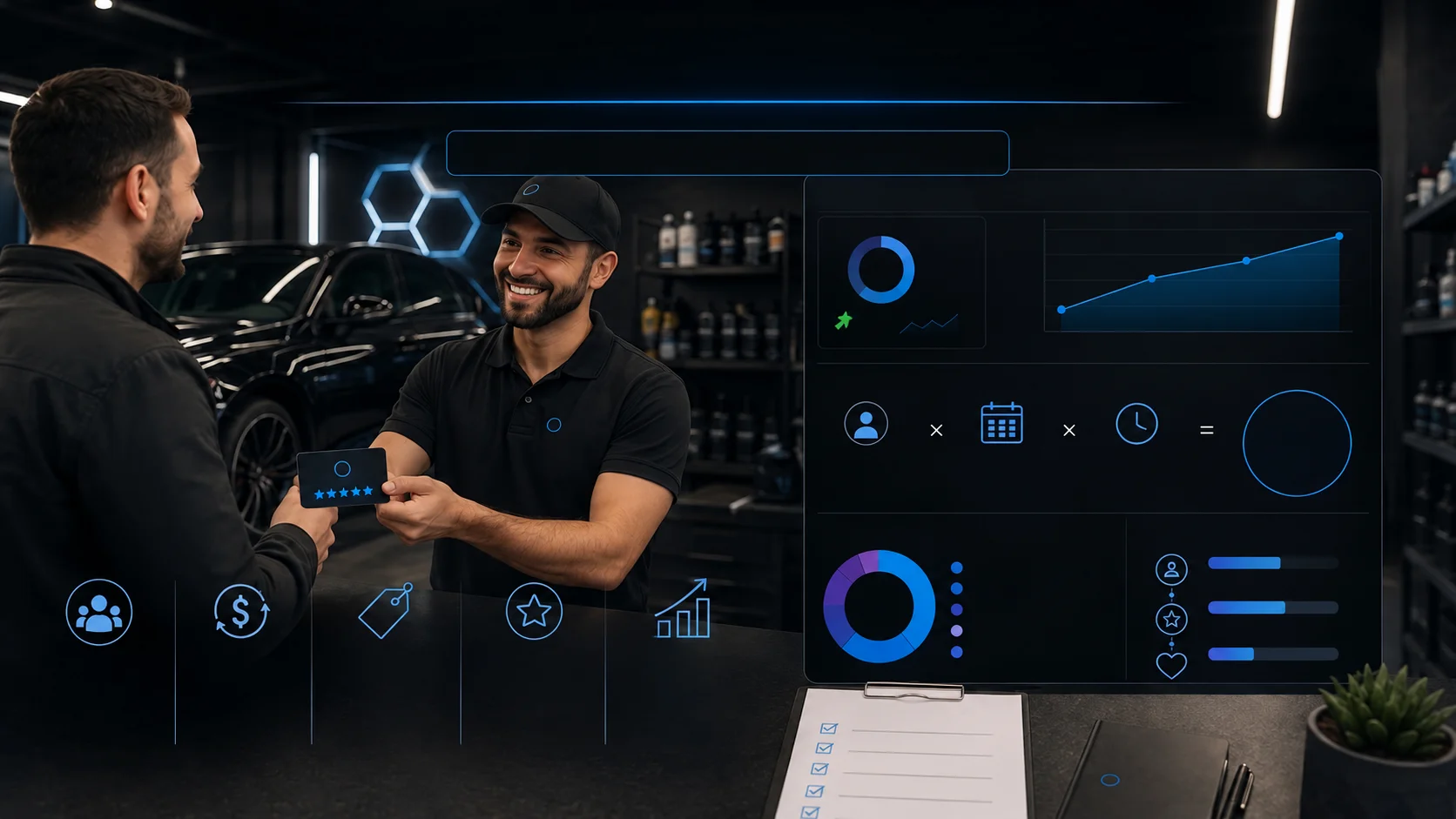
Revenue shows the result but not the reason. Track appointment lead time, show rate, estimate approval, completed jobs, promised versus actual completion, customer response time, declined-work follow-up, repeat visits, reviews, and complaints.
Use this retention calculation:
Customers who returned during the period divided by eligible prior customers x 100 = repeat-customer rate
Define eligibility consistently so a customer served yesterday is not treated as overdue. Compare services and locations to find process issues, not just rank employees.
OXMotive reporting helps owners review job, service, user, and location activity without rebuilding the story from separate systems.
What independent repair shops should learn from dealer service success
The lesson is not to become a dealership. It is to recognize that service is a long-term customer relationship supported by convenience, history, communication, follow-up, and measurement.
A smaller shop can apply those systems with less overhead and a more personal experience. Start with one source of truth for the customer and vehicle, a clear workflow, timely updates, and a next-service plan after every completed job.
Frequently asked questions about auto dealers and repair services
Are auto dealers new to vehicle repair services?
No. Franchised dealers have operated service departments for a long time. What matters is the scale and strategic value of service and parts within the dealership customer relationship.
Why are dealership service departments important?
They create recurring customer interactions after the vehicle sale and generate substantial repair-order and parts activity. Service history can also support retention when the experience is consistent.
Can independent repair shops compete with dealerships?
Yes. Independent shops can compete through specialization, convenience, trust, local relationships, clear communication, and consistent follow-up without copying dealership overhead.
What dealership practices should independent shops adopt?
Adopt organized booking, documented vehicle history, visual inspections, clear approvals, status updates, declined-work follow-up, customer retention, and useful reporting.
How does OXMotive help independent auto shops compete?
OXMotive connects customer and vehicle records, jobs, appointments, media, SMS updates, follow-up, reporting, roles, and multi-location operations. It helps smaller teams deliver a consistent service experience.
Subscribe to our newsletter today
Fresh insights and practical tips delivered every week.