.svg)
Why Houston Is a Growth Market for Vehicle Wrap Shops: A Practical Operations Guide
Why Houston can support vehicle wrap growth and how shops can manage fleet quoting, approvals, scheduling, communication, and follow-up.

.png)
Helping auto shops work smarter and grow.

Houston can generate strong demand for vehicle wraps, but a large market does not automatically produce a profitable shop. Long service areas, commercial fleets, heat, scheduling pressure, design approvals, and inconsistent quoting can consume the opportunity. Wrap businesses that want to grow in Houston need an operating system built for commercial customers and a city measured in long drives, not just a strong portfolio.
Houston creates real wrap demand through population, business, and goods movement
Houston combines a large resident market with substantial commercial activity. The U.S. Census Bureau estimated the city population at about 2.4 million in 2025 and reports significant transportation and warehousing economic activity. Houston Census QuickFacts provides current population, household, business, and transportation context.
The Port of Houston adds another layer. Port Houston's official statistics describe a major cargo and employment engine tied to terminals, trucking, logistics, industrial operations, and suppliers. That ecosystem puts commercial trucks, vans, service vehicles, trailers, and fleet units into daily use.
This does not guarantee that every wrap shop will grow. It means Houston has a broad base of vehicle owners and businesses for whom visible, consistent branding can matter. The opportunity favours shops that can quote accurately, manage fleets, and deliver the same result across multiple units.
Houston wrap shops should choose a service area before chasing every lead
A lead can look profitable until the team spends unpaid hours measuring, collecting a vehicle, delivering proofs, or driving across the metro area. Large geographic coverage without rules creates slow response and weak margins.
Define primary, secondary, and special-project zones. Decide which work requires the customer to visit the shop, which fleet inspections can happen on-site, and when a travel or mobile consultation charge applies. Group fleet visits by area when possible.
Track lead source and service area with the customer record. If one area produces many enquiries but few profitable jobs, adjust the offer, qualification, or coverage rather than assuming more advertising will solve it.
OXMotive centralizes leads converted to customers, vehicle records, quotes, appointments, and job history. That gives the owner evidence about where good work comes from instead of relying on the loudest phone calls.
Commercial and fleet quoting must separate coverage from complexity
Houston commercial vehicles vary widely. A plumbing van, pickup, box truck, trailer, delivery vehicle, and industrial unit do not create the same design, material, access, disassembly, or install requirements.
Build a structured quote using vehicle class, coverage, material, design, removal, surface condition, access height, hardware, curves, installation environment, unit downtime, and fleet quantity. Define what is included in the first unit and what can be reused for later units.
Do not discount a fleet only because the vehicle count is high. Savings should come from repeatable design, measurements, production, and scheduling. If every unit arrives in different condition or configuration, the labour may not repeat.
Use this estimate:
Base unit cost + vehicle-specific complexity + design and setup + operational risk = minimum quote before volume savings
OXMotive's structured quoting can keep the framework consistent while preserving notes and images for each vehicle.
Fleet customer records should connect the account, vehicle, and artwork
A fleet relationship becomes fragile when the shop cannot identify which file, material, colour reference, or installation note belongs to a specific unit. The fifth vehicle should not restart the discovery process.
Create an account record for the business and a separate vehicle record for each unit. Store unit identifiers, make and model, body variation, approved artwork, material, coverage, installation date, repair history, and photos. Record the customer's approval contacts and billing or scheduling preferences.
When a damaged panel needs replacement, the team should be able to find the original job context. When a new vehicle is added, the estimator should see what can be reused and what must be inspected again.
OXMotive's centralized customer and vehicle history supports that continuity. For more on the underlying workflow, review how wrap shops use CRM records to grow across locations.
Design approval must survive busy customers and multiple stakeholders
Commercial wrap approvals often involve an owner, office manager, marketing contact, fleet manager, or driver. If feedback arrives through separate texts and emails, the shop can produce the wrong version while believing it has approval.
Identify the authorized approver before design begins. Use a written brief and clear revision process. Name proof versions consistently and state what approval authorizes. Store the final proof and approval with the job.
Set deadlines tied to the install date. If approval is late, explain how production and bay scheduling will move. Do not absorb every customer delay while promising the original completion date.
OXMotive's customer records, media, and two-way communication help keep the decision trail visible to sales, design, and production teams.
Houston heat and weather require realistic installation scheduling
Exterior temperature and humidity can affect vehicle intake, technician comfort, shop conditions, material handling, and customer expectations. Severe weather can also disrupt vehicle movement and appointments. The shop should follow material manufacturer instructions and its own safety requirements rather than forcing work into unsuitable conditions.
Define climate-controlled work requirements, vehicle acclimation time, surface preparation, material storage, and acceptable application conditions for the products used. Build schedule buffers when fleet vehicles arrive hot, wet, dirty, or directly from active work.
Send preparation instructions before the appointment. Tell customers when the vehicle must arrive, what condition is required, how long the shop needs it, and what may cause rescheduling. OXMotive reminders and two-way texting can make those expectations consistent.
Deposits and readiness gates protect long commercial bookings
A wrap job should not occupy production time and a bay when the deposit, artwork, vehicle inspection, or material decision is incomplete. Commercial customers may have internal delays, but the shop still needs clear rules.
Create readiness gates for accepted quote, deposit, design brief, proof approval, vehicle measurements, material availability, and install date. Define which gate triggers material ordering and which confirms the bay.
If a fleet rollout includes several vehicles, schedule in controlled batches. The first completed unit becomes a quality and process check before the shop commits every remaining vehicle.
OXMotive connects quoting, deposits, scheduling, reminders, and job records so the team can see whether a booking is genuinely ready.
Houston wrap shops need communication built for diverse business customers
Houston customers may have different roles, operating hours, and language preferences. Census data shows that many residents speak a language other than English at home. A shop should record the customer's preferred communication language and channel rather than making assumptions.
Create clear templates for quote delivery, proof approval, deposit request, vehicle preparation, reminder, delay, completion, care instructions, and follow-up. Translate customer-facing material professionally when the business offers another language. Do not rely on improvised technical translations for legal or warranty terms.
OXMotive's centralized communication helps the team deliver the same information while preserving a visible conversation history.
Follow-up turns one Houston fleet wrap into recurring work
Commercial graphics have a lifecycle. Vehicles are added, reassigned, damaged, rebranded, sold, or removed from service. Shops that disappear after installation leave future work to whoever contacts the customer next.
Schedule post-install checks, care guidance, and account reviews based on the job. Keep track of fleet units and ask whether new vehicles are planned. Record removal or replacement history when work returns.
Use OXMotive service history and follow-up to keep the relationship connected to real completed work. The communication should be useful, not a generic monthly promotion.
How Houston wrap-shop growth fits together
Houston offers a large customer and commercial market, but profitable growth depends on focus. Define the service area, standardize complex quotes, organize fleet records, control approvals, respect installation conditions, protect bookings, communicate clearly, and follow up.
Those systems turn local demand into repeatable operations. Without them, the same market size that creates opportunity can produce travel waste, scheduling chaos, and inconsistent work.
Frequently asked questions about Houston vehicle wrap shops
Why can Houston support growing vehicle wrap shops?
Houston has a large population and substantial commercial, transportation, warehousing, port, and small-business activity. These conditions create a broad base of personal, commercial, and fleet vehicles that may need graphics.
What customers should Houston wrap shops target?
Choose segments the shop can serve profitably, such as local service businesses, fleet operators, commercial vehicles, or personal customization. Match targeting to equipment, location, installation capability, and service area.
How should wrap shops price fleet jobs?
Price the base unit, vehicle-specific complexity, design and setup, materials, labour, and operational risk before applying volume savings. Discount only where the work genuinely becomes repeatable.
How can Houston wrap shops manage multiple fleet vehicles?
Connect the business account to individual vehicle records, approved artwork, materials, installation dates, photos, and repair history. Schedule controlled batches and audit the first completed unit.
How does OXMotive help a Houston wrap shop grow?
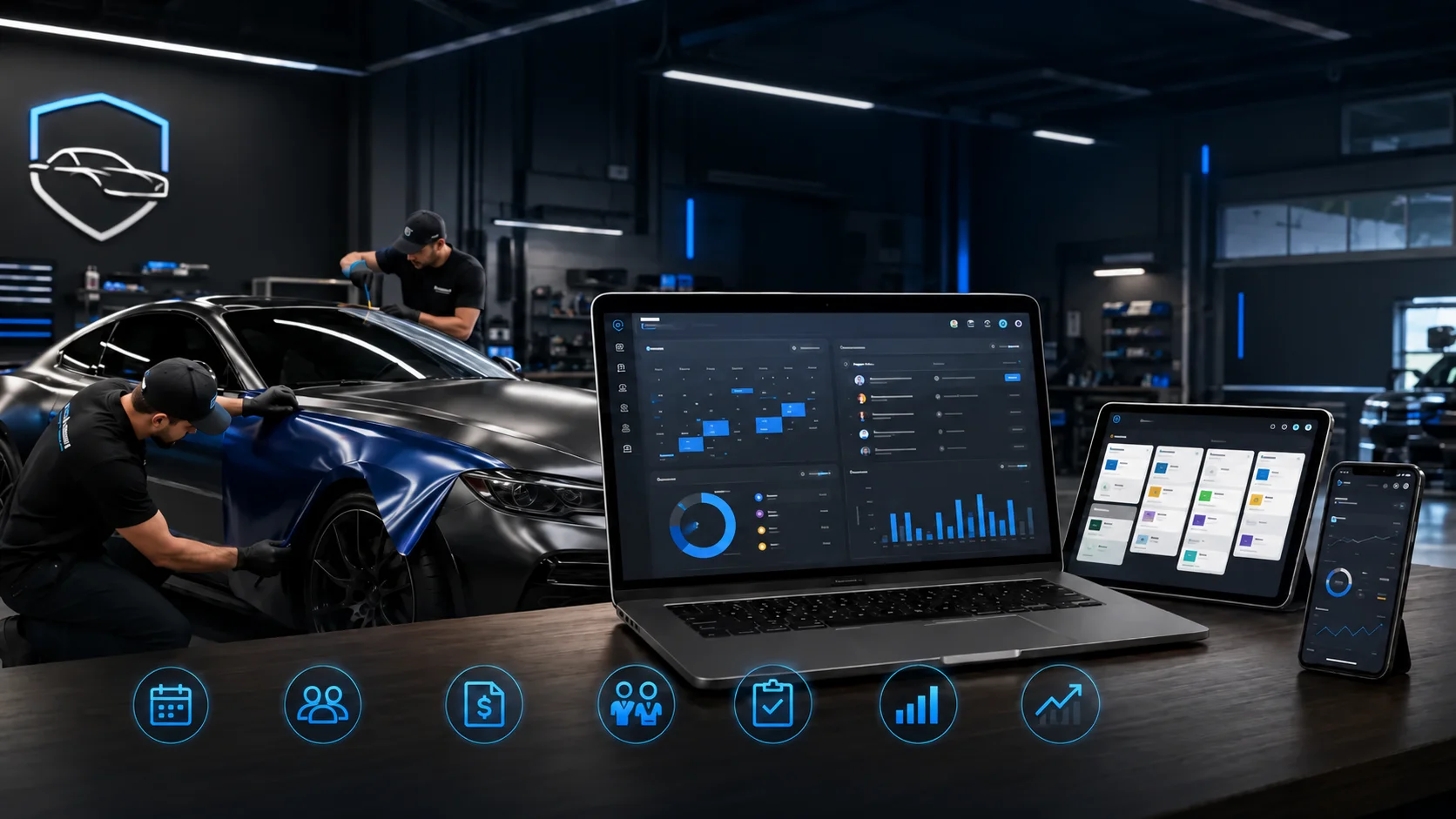
OXMotive connects customer and vehicle records, structured quotes, deposits, appointments, SMS, media, follow-up, reporting, and multi-location support. It gives the shop one operational record from lead through repeat fleet work.
Subscribe to our newsletter today
Fresh insights and practical tips delivered every week.