.svg)
Email Marketing for Tire Shops: 7 Retention Campaigns That Bring Customers Back
Seven practical email campaigns tire shops can build from customer and service history to improve retention and repeat bookings.

.png)
Helping auto shops work smarter and grow.
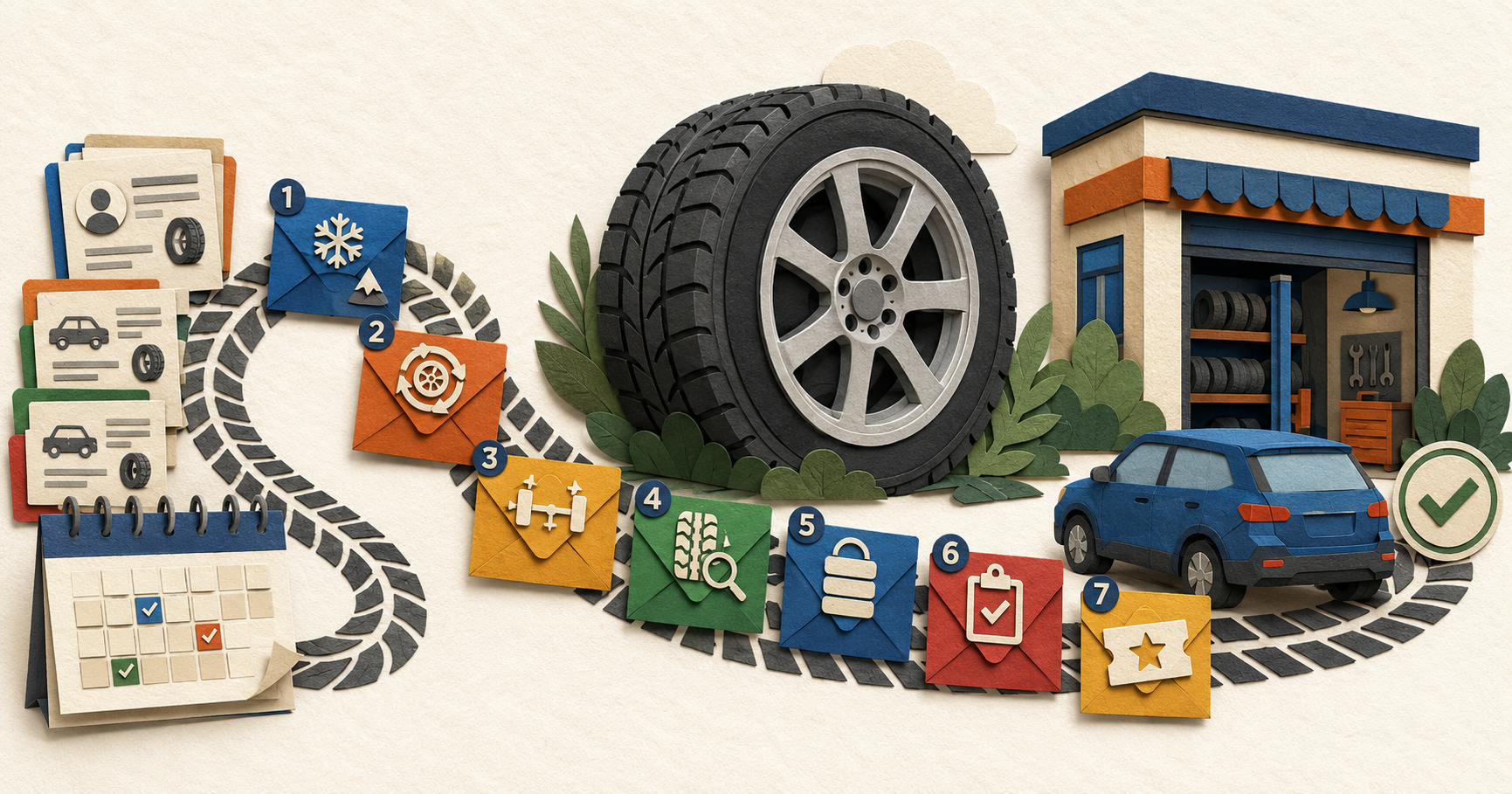
Tire shops usually have enough customer data to drive repeat business, but most of it sits unused after the invoice is closed. Email retention works when the message is tied to the customer's vehicle, previous service, season, or safety need. These seven campaigns show tire shop owners how to turn service history into useful follow-up without sending the same promotion to everyone.
Email retention starts with clean tire and vehicle records
A campaign cannot be relevant if the shop does not know which vehicle the customer owns, what service was completed, when it happened, and what should happen next. A name and email address alone produce generic marketing.
Capture the customer, vehicle, service date, tire or wheel service, seasonal status, storage reference when applicable, inspection notes, declined recommendations, preferred location, and communication consent. Keep the fields consistent across staff and locations. If one employee writes "winter swap" and another writes "seasonal service," the email segment may miss half the eligible customers.
OXMotive centralizes customer profiles, vehicle history, job records, and service information. Shops can use organized records and exports to prepare relevant audiences for an email platform instead of building lists from memory or separate spreadsheets.
1. Seasonal changeover emails should arrive before the calendar is full
The worst time to remind customers about seasonal tire service is after every preferred appointment has gone. Start outreach early enough to spread demand across the schedule.
Segment by previous seasonal service, storage relationship, vehicle, location, and last appointment. The message should explain what the customer can do now, not manufacture urgency. Include booking options, the correct shop location, and any information the customer needs to provide.
Example subject: Plan your seasonal tire change before peak weeks
Send a second reminder only to customers who have not booked. Remove customers who already scheduled so they do not receive a message that makes the business look disconnected.
2. Stored-tire customer emails should confirm what happens next
Storage customers expect the shop to remember them. If the business holds their tire set but waits for the customer to call, it wastes one of its strongest retention relationships.
Send a service email that confirms the shop has the stored set on record, explains how to request an appointment, and states how much lead time the location needs to prepare the tires. Avoid exposing sensitive storage identifiers in an email.
Use service history to confirm the correct vehicle and location before building the audience. OXMotive's shared customer records help authorized teams see prior services when customers use another branch.
3. Tire inspection follow-up should turn findings into a clear next step
A technician may note wear, pressure concerns, damage, or an upcoming replacement need, but the recommendation disappears once the customer leaves. A useful follow-up email summarizes the finding without exaggerating it.
State what was observed, what the shop recommended, and how the customer can schedule an inspection or service. Do not diagnose a new problem through email or present an old observation as the vehicle's current condition.
Example subject: Follow-up on the tire condition noted during your visit
Attach the message to a documented service record. When photos or notes are available, staff can answer the customer's response with context rather than repeating the inspection.
4. Wheel and tire care emails should earn attention before selling
If every email asks for a booking, customers learn to ignore the shop. Educational messages can keep the relationship active between seasonal visits.
Useful topics include checking pressure as temperatures change, understanding visible damage, preparing for storage, protecting wheel finishes, knowing what information to bring when shopping for tires, and recognizing when a professional inspection is appropriate.
Link to a concise resource on the shop's website. Keep advice within the shop's expertise and direct customers to manufacturer guidance or an inspection when the answer depends on the vehicle or product.
OXMotive customer segments can help separate educational messages by prior service or vehicle type. The email platform sends the campaign; the CRM provides the service context that makes it relevant.
5. Missed appointment and no-show emails should recover the relationship
A no-show creates an empty bay, but an angry email rarely wins the customer back. Send a calm message that acknowledges the missed appointment, explains the rescheduling method, and restates any applicable policy.
Do not automatically waive or threaten fees through a campaign. Give staff a clear process for exceptions. Customers may have booked the wrong branch, missed a reminder, or experienced a real emergency.
Example subject: Would you like to reschedule your tire appointment?
Pair email with consistent appointment reminders and booking records. OXMotive scheduling and customer communication help the shop see whether the appointment was confirmed and what the customer was told. See seven systems for reducing auto shop no-shows.
6. Post-service emails should confirm satisfaction and request feedback
The first email after service should protect the customer experience, not push another sale. Confirm that the visit met expectations, provide relevant care information, and make it easy to report a concern.
After the customer has an opportunity to respond, invite them to leave an honest review. Send the same review opportunity regardless of predicted sentiment. Routing only happy customers to public review sites can create review-gating problems.
Record complaints and resolutions in the customer history. A problem that is handled well can preserve the next seasonal booking. For the full approach, review how auto shops earn more five-star reviews without review gating.
7. Win-back emails should use history before offering a discount
An inactive customer did not necessarily leave because the price was high. They may have moved, sold the vehicle, changed locations, forgotten, or had a poor experience.
Build a segment of customers who are beyond the expected return window, then exclude recent bookings, opt-outs, and records without appropriate consent. Reference the prior relationship and offer a useful reason to return. A seasonal booking window, new location, expanded service, or easier appointment process may be more persuasive than a coupon.
Example subject: Still need help with your next tire service?
Use discounts selectively. Constant discounts train customers to wait and can reduce margin during already-busy periods.
A simple campaign calendar keeps tire shop email manageable
Owners do not need a new email every week. Build a calendar around the actual customer lifecycle: early seasonal planning, peak reminder, post-service check-in, care education, inspection follow-up, and inactive-customer win-back.
Measure booked appointments, completed service revenue, unsubscribe activity, complaints, and repeat visits by campaign. Opens and clicks can help diagnose a message, but completed customer action matters more.
Use this calculation:
Completed jobs attributed to the campaign divided by eligible recipients x 100 = campaign booking rate
Define attribution and eligibility consistently. Do not count customers who were already booked before the email.
Canadian tire shops must build consent into email retention
Commercial email sent to recipients in Canada must follow Canada's Anti-Spam Legislation. The CRTC explains that businesses generally need consent, identification information, and an unsubscribe mechanism. Implied consent can expire, and the sender should be able to prove the consent it relies on.
Review the CRTC's CASL guidance, keep consent records, and process opt-outs promptly. Shops operating elsewhere should review the rules that apply to their recipients. This article is operational guidance, not legal advice.
How the tire shop retention system fits together
Useful email retention combines clean records, lifecycle-based segments, timely campaigns, clear booking paths, consent controls, and measurement tied to completed work. OXMotive provides the customer and service history that makes the audience more relevant, while the email platform handles campaign delivery.
The system succeeds when customers receive fewer messages that make more sense. That protects the relationship and gives the shop a more predictable path to the next appointment.
Frequently asked questions about tire shop email marketing
What emails should a tire shop send customers?
Prioritize seasonal reminders, stored-tire scheduling, inspection follow-up, care education, post-service check-ins, missed-appointment recovery, and win-back campaigns. Each email should have one clear purpose.
How often should tire shops email customers?
Frequency should follow the service lifecycle and customer preference. Avoid a fixed weekly schedule when there is no useful reason to contact the customer.
What data makes tire shop emails more relevant?
Vehicle details, service history, seasonal status, location, stored-tire relationship, inspection notes, last visit, and consent status help create useful segments.
Can Canadian tire shops email past customers promotions?
They must determine whether they have valid consent under CASL and meet identification and unsubscribe requirements. Implied consent can expire, so current CRTC guidance and proper records matter.
How does OXMotive support tire shop email retention?
OXMotive organizes customer, vehicle, job, service, location, and communication data. Shops can use that structured information and exports to build more relevant audiences in their chosen email platform.
Subscribe to our newsletter today
Fresh insights and practical tips delivered every week.