.svg)
How PPF Shops Can Quote Paint Protection Film Without Undercharging for Coverage
A practical PPF pricing framework for coverage tiers, labor, film cost, complexity, deposits, and consistent customer quotes.

.png)
Helping auto shops work smarter and grow.
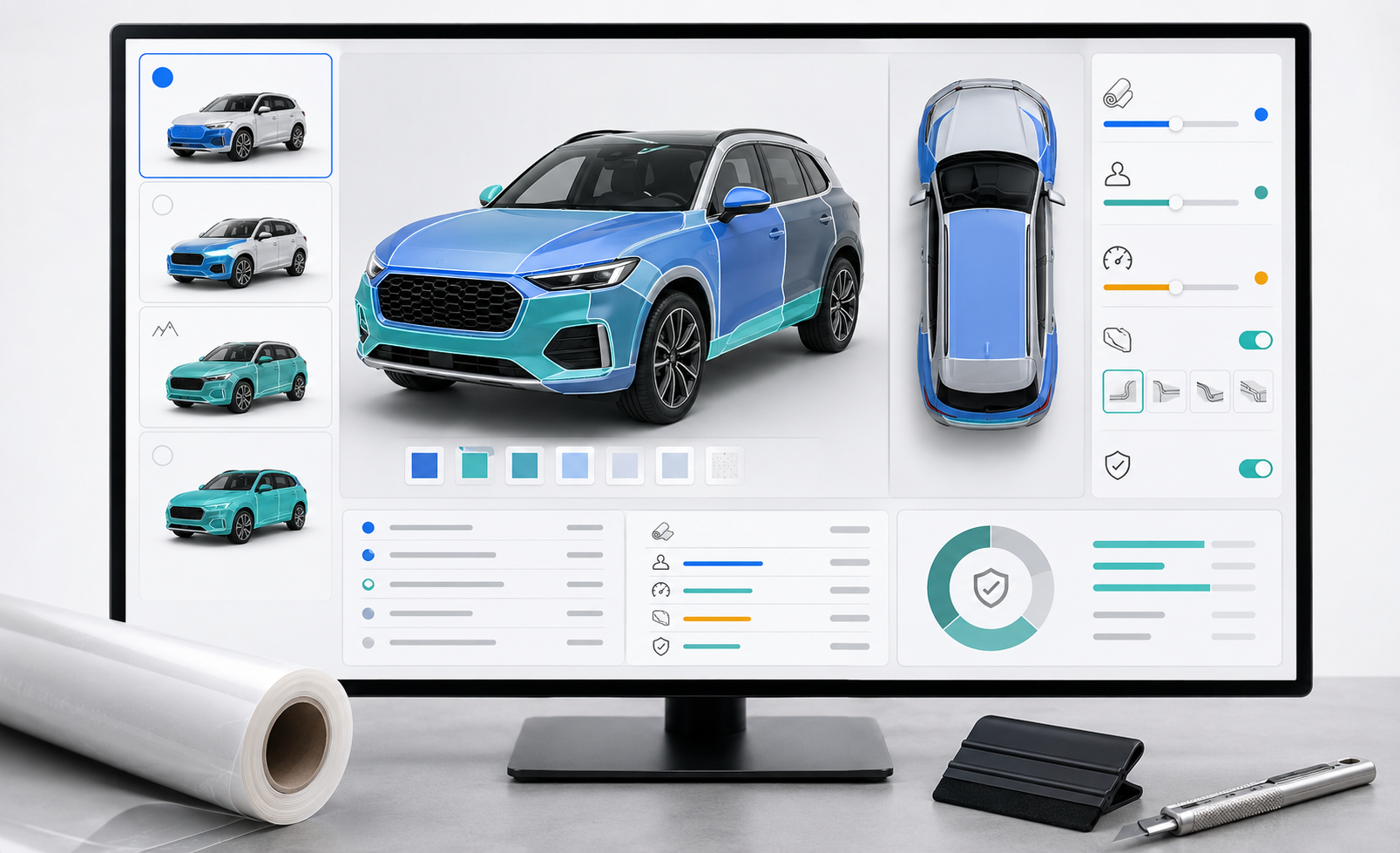
Paint protection film shops often lose margin before the installer touches the vehicle. The quote says “full front,” but the customer expects wrapped edges, extra pillars, headlights, difficult trim removal, and paint preparation that were never priced. A reliable PPF quote defines the coverage, calculates the real job cost, and charges consistently for the complexity of the specific vehicle.
How should a PPF shop define each coverage tier?
A coverage tier should be a written panel list, not a casual label. “Partial front,” “full front,” and “track pack” can mean different things at different shops. If the estimator and the customer picture different coverage, the job is already exposed to a margin problem and a difficult handoff.
Build a standard menu that states exactly what is included. A partial-front package might include the bumper, partial hood, partial fenders, and mirror caps. A full-front package might include the full hood, full fenders, bumper, mirror caps, and selected lighting. A track package could add rockers, A-pillars, a roof strip, and impact areas behind the wheels. Full-body coverage should still list included exterior surfaces and exclusions.
Public package menus show why definitions matter. NineOtto separates bumper, partial-front, full-front, track, full-body, and exotic coverage, with different published price bands for each. Toronto PPF also lists partial, partial-plus, full-front, and full-body packages. These are useful examples of market structure, not universal price benchmarks. Film, labor, vehicle design, warranty, and local operating costs all change the right price for your shop. See the NineOtto PPF menu and Toronto PPF service menu.
Put the panel list in the estimate and customer approval. OXMotive can turn those definitions into structured quote options, so every estimator starts with the same base coverage instead of rebuilding the job from memory.
Which vehicle complexity factors should change a PPF quote?
Coverage area is only the first pricing input. Two vehicles can receive the same full-front package and require very different labor. Deep bumper recesses, sharp transitions, large grilles, parking sensors, badges, cameras, textured trim, and limited edge access can add hours and increase rework risk.
Use complexity factors that your team can observe before quoting. Record body shape, panel count, film orientation, edge-wrapping requirements, disassembly, pattern availability, custom bulk installation, paint condition, existing coatings, previous film removal, and the need for correction or decontamination. Also note special finishes such as matte or satin paint, where film selection and visual consistency matter.
A simple multiplier system keeps judgment inside guardrails. Start with the standard package labor allowance. Apply a documented adjustment for moderate or high complexity, then add specific line items for removal, correction, extra panels, or unusual disassembly. Do not invent a multiplier from another shop. Review completed jobs and calculate how your own actual hours differ by vehicle type and difficulty.
The goal is not to charge more whenever possible. It is to stop easy vehicles from subsidizing difficult ones. A structured quoting workflow in OXMotive can keep the coverage tier, complexity level, add-ons, photos, and approval in one customer record. That gives the installer a clear scope and gives management data to improve the pricing rules.
How can a PPF shop calculate a repeatable price from film and labor costs?
A repeatable price begins with direct job cost, not a competitor’s advertised package. Use the following framework with your own numbers:
- Film allocation: usable square feet required multiplied by landed film cost per square foot, then adjusted for your measured waste.
- Loaded labor: preparation, pattern, installation, disassembly, reassembly, and quality-control hours multiplied by the real hourly labor cost.
- Other direct costs: consumables, outsourced work, payment fees, and any job-specific transport or storage.
- Risk allowance: a measured allowance for rework on the vehicle or installation class, based on completed-job history.
- Required selling price: total job cost divided by one minus the target gross-margin rate.
For example, if a shop calculates a direct job cost of C and targets a gross margin of M, the formula is Quote = C ÷ (1 - M). Use M as a decimal. This is a reproducible calculation, but the inputs must come from your payroll, film invoices, completed jobs, and overhead model.
Measure waste rather than guessing. For several completed jobs in the same package, compare film issued with usable coverage installed. Measure actual technician time from vehicle intake through final inspection. If the quoted labor allowance is repeatedly below actual time, fix the template before selling the next job.
A CRM helps when the estimate and actual job history can be reviewed together. OXMotive keeps the quote, customer, vehicle, appointment, and service record connected, making it easier to compare what was sold with what the team delivered. See why wrap shops lose money between quote and install.
What must a PPF estimator capture before sending a quote?
A fast quote is valuable only when it is complete. Use this checklist before giving a firm price:
- Vehicle year, make, model, trim, body style, and VIN when needed.
- Customer’s driving use, protection goal, and expected ownership period.
- Exact panels, partial-panel boundaries, and edge-wrapping expectations.
- Film brand, product line, finish, warranty, and compatible top-coat options.
- Paint condition, chips, scratches, repaint history, and existing ceramic coating.
- Existing film or vinyl that must be removed.
- Badges, sensors, cameras, trim, and parts requiring removal or special handling.
- Template-cut versus bulk-install approach where relevant.
- Preparation, correction, curing, and realistic vehicle downtime.
- Photos of the vehicle and close-ups of complex or damaged areas.
- Price, tax, deposit, balance timing, exclusions, and change-order process.
Train estimators to mark unknowns instead of silently absorbing them. A remote photo estimate can be presented as preliminary until an in-person inspection confirms paint and installation conditions. If the customer adds pillars, rockers, or extra protection after booking, issue an updated quote and get approval before work continues.
OXMotive gives the estimator a consistent customer record for the answers, reference photos, messages, and approved scope. That reduces the chance that an important detail stays in one employee’s personal text thread.
Why should PPF shops collect a deposit before ordering film?
Film and reserved bay time create real exposure. If a customer disappears after the shop orders a special product or blocks several installation days, the shop carries the cost. A deposit confirms intent and establishes the booking before materials are committed.
Set a written policy based on the costs the shop actually incurs. The policy should explain when the deposit is due, what it reserves, whether any part is nonrefundable, what happens after material is ordered, and how rescheduling or cancellation works. Have local counsel review the language and follow applicable consumer law. Do not hide the policy in a receipt after payment.
Tie the deposit to the approved quote and appointment. OXMotive can connect the booking deposit, quote, schedule, and customer communication, so the front desk can see payment status before placing an order or reserving the bay. Automated reminders can also reduce manual chasing.
The same discipline applies to add-ons. If the customer upgrades from full front to track coverage, update the scope, price, deposit requirement, and schedule together. That protects capacity and prevents the installer from being handed a bigger job in the original time slot.
How should a PPF quote be presented so the customer can compare coverage?
Customers struggle when a quote is a single number with technical language around it. Present two or three clearly separated options. For each option, show the panels covered, what is not covered, film line, preparation, warranty, turnaround, deposit, and total price.
Lead with the protection goal. A commuter concerned about highway impact may need a different recommendation than an enthusiast preparing for track use. Explain where each option places the film edge and why the price changes. Use vehicle photos or a simple coverage diagram where possible.
Do not compete by making the scope vague. If another quote is cheaper, help the customer compare panels, edge work, film, prep, warranty, and installer process. A clean, written comparison builds trust and makes the value visible without attacking another shop.
Centralized two-way SMS can keep questions and approvals attached to the job. OXMotive lets the team respond from the same customer record instead of losing decisions across voicemail, personal phones, and social messages. See how detailing shops add ceramic coating profitably.
How it fits together
Profitable PPF quoting is a system. Define each coverage tier, measure vehicle complexity, calculate from your real film and labor costs, document the scope, collect the deposit, and present options that customers can understand. OXMotive supports that workflow by keeping the quote, deposit, appointment, photos, messages, and service history connected. The software does not choose the right price. It helps the shop apply its pricing method every time.
Frequently asked questions about pricing paint protection film
How do I price paint protection film?
Calculate film allocation, loaded labor, consumables, job-specific overhead, and a measured risk allowance. Divide total job cost by one minus your target gross-margin rate, then adjust only through documented coverage and complexity rules.
What is included in a full-front PPF package?
There is no universal definition. Many shops include the full hood, full fenders, front bumper, mirror caps, and selected lights, but your quote must list every included panel and any edge or trim exclusions.
Should a PPF shop charge more for difficult vehicles?
Yes, when the vehicle requires more labor, disassembly, custom installation, preparation, or rework risk. Use a consistent complexity framework based on actual completed-job hours rather than an arbitrary surcharge.
How much deposit should a PPF shop collect?
Base the deposit on committed material, reserved capacity, and the shop’s cancellation exposure. Publish the terms clearly, connect the deposit to the approved quote, and have the policy reviewed for local legal compliance.
Can a PPF shop give an accurate quote from photos?
Photos can support a preliminary quote when they clearly show the vehicle, paint, and requested coverage. Make the final price subject to inspection when coating, repaint history, damage, removal, or complex disassembly cannot be confirmed remotely.
Subscribe to our newsletter today
Fresh insights and practical tips delivered every week.