.svg)
Window Tint Shops: How to Book More Installs and Stop Losing Customers to Voicemail
A practical booking system for tint shops using missed-call texts, fast quotes, online booking, reminders, and follow-up.

.png)
Helping auto shops work smarter and grow.
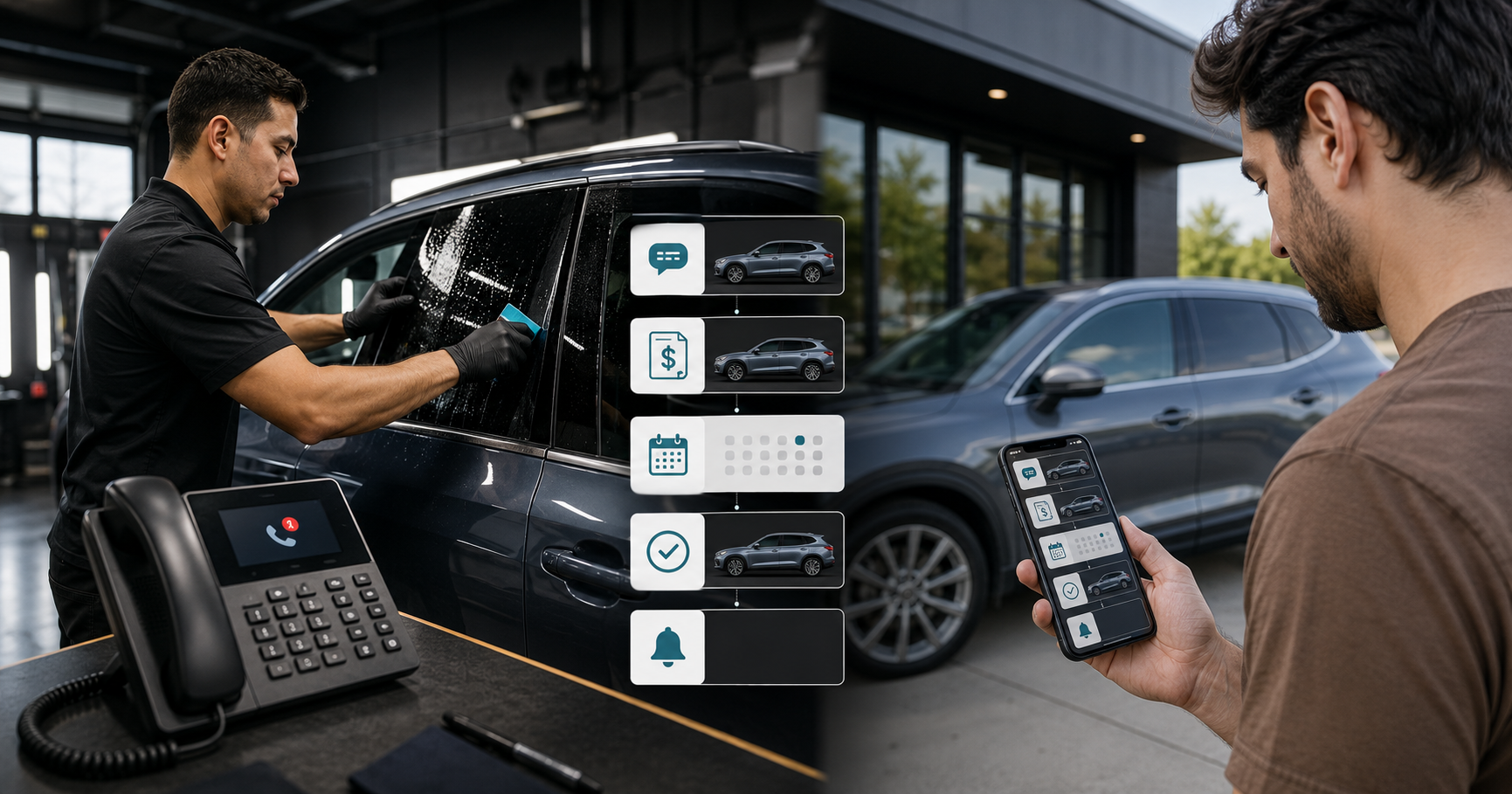
A tint shop can lose a sale while the installer is still inside a door panel. The phone rings, the team cannot answer, and the customer calls the next shop before anyone checks voicemail. A simple booking system captures the inquiry immediately, collects the details needed for a quote, and moves the customer toward a confirmed install without pulling the installer away from the vehicle.
Why do window tint shops lose bookings when demand is strong?
Tint work is fast-moving and interruption-heavy. Customers often want a price now, ask whether the shop can take a walk-in, and compare several businesses in the same hour. Meanwhile, the people best qualified to answer are installing film, preparing glass, inspecting a vehicle, or speaking with a customer at the counter.
The problem is not only a missed call. It is a broken handoff. A caller leaves a first name and no vehicle details. A direct message arrives on social media. Someone else asks for a quote by text. The team responds from different phones, and nobody can see which inquiry was answered or booked.
Start by defining one lead path. Every phone call, website request, text, and walk-in should create or update a customer record. Capture the vehicle year, make, model, body style, requested windows, current film or removal needs, preferred film type, and desired appointment timing. The record should also show the next action and who owns it.
OXMotive gives the shop a shared place for customer details and two-way SMS. The point is not to add administration. It is to prevent a qualified inquiry from depending on one employee remembering a voicemail after the bay closes.
How can a tint shop turn a missed call into a text conversation?
A missed-call text should acknowledge the customer quickly and ask for the minimum details needed to help. It should not pretend that a person answered. Use a clear message such as:
Thanks for contacting [Shop Name]. The team is with a vehicle right now. For a tint quote, reply with the year, make, model, body style, windows you want tinted, and your preferred appointment day.
Keep the first response short. Do not send a long menu, legal disclaimer, and promotion before learning what the customer needs. Once the customer replies, the team can clarify tint line, shade goals, existing-film removal, local legal requirements, warranty, and timing.
Create response templates for common situations, but let staff personalize them. Useful templates cover quote intake, photo requests, film options, removal inspection, appointment availability, deposit or booking instructions, and aftercare. Review the templates whenever products or policies change.
OXMotive keeps the text thread attached to the customer record. That lets the front desk or installer continue the conversation without asking the customer to repeat everything. It also creates a clear trail of what was quoted and approved.
How should online booking work for a walk-in-heavy tint shop?
Online booking should organize demand, not eliminate walk-ins. Reserve defined capacity for booked installs, quick jobs, inspections, and same-day opportunities. If every slot is open online without considering bay time and installer skill, the calendar can promise work the shop cannot deliver.
Offer booking choices customers can understand. A request for a two-front-window match is different from a full vehicle with old-film removal. Ask enough questions to estimate duration, but do not force the customer through a complicated form. When inspection is required, offer a consultation or provisional appointment instead of pretending the job is fully confirmed.
Make the confirmation state obvious. “Request received” is not the same as “appointment confirmed.” Tell the customer when the shop will review the request, whether a deposit is needed, what to bring, how long the vehicle is expected to stay, and how rescheduling works.
Current tint software commonly combines quote and installation scheduling with SMS reminders. For example, Tint Shop Solutions publicly describes online quoting, appointment scheduling, and automated text reminders in its product workflow. The operational lesson is simple: the booking, quote, and communication should be connected. See Tint Shop Solutions’ published workflow.
With OXMotive, online bookings, customer records, reminders, and messages can stay in one system. Walk-ins can be added to the same schedule, so the team sees the complete day rather than separate online and paper calendars.
What information does a tint shop need to send a fast, accurate quote?
Slow quotes often begin with incomplete intake. Build a standard question set that lets staff price common jobs without starting over each time:
- Customer name, mobile number, and preferred contact method.
- Vehicle year, make, model, trim, and body style.
- Windows requested, including windshield strip or full windshield where legal.
- Existing film, adhesive, bubbling, damage, or removal needs.
- Desired outcome such as heat rejection, glare reduction, privacy, appearance, or matching rear glass.
- Film product and warranty options offered by the shop.
- Any inspection needed for frameless glass, unusual trim, sensors, or previous damage.
- Price, tax, appointment length, deposit, preparation instructions, and exclusions.
Create saved quote options for repeatable work, then add line items for removal or special conditions. Do not quote only by vehicle category if the actual scope can vary. A coupe, pickup, SUV, and sedan may require different window counts and labor even when the customer uses the same phrase.
Structured quotes in OXMotive help the team use the same products, wording, and pricing rules. The quote can remain connected to the text conversation and appointment, reducing the risk that a lower verbal price overrides the approved written scope.
How much revenue could missed tint calls be costing each month?
Use your own call and booking data instead of a generic industry benchmark. Review four representative weeks and calculate:
Monthly gross-profit opportunity = missed calls per week × qualified-enquiry rate × recoverable booking rate × average gross profit per install × 4.33
For example, do not assume every missed call is a buyer. Mark which callers were genuine tint enquiries, which were spam or unrelated, and which eventually booked. Then estimate how many qualified enquiries could reasonably have been recovered with an immediate text and timely follow-up.
Use gross profit per install, not ticket value, if the goal is to understand business impact. Subtract film, direct labor, and other job-specific costs using the shop’s own accounting method. Track the same calculation after implementing missed-call texts to see whether contact and booking performance changes.
OXMotive can help the shop keep inquiry status and customer history visible. The useful metrics are response time, quote sent, booking confirmed, show status, job completed, and follow-up result. Those stages reveal where the booking flow is leaking.
How can tint shops reduce no-shows on booked installs?
A no-show wastes a time slot that may be difficult to refill. Reduce uncertainty before the appointment. Send confirmation immediately, then a reminder at the timing your shop has tested. Include the date, arrival time, address, expected duration, preparation instructions, balance or deposit status, and a simple way to reschedule.
Ask the customer to confirm. If there is no response, create a follow-up task rather than assuming the appointment is safe. For longer or higher-value jobs, use a clearly disclosed deposit and cancellation policy that reflects reserved capacity and applicable local rules.
Review no-shows by service type and lead source. A full-vehicle appointment may need a different reminder sequence than a quick two-window job. Do not bury important instructions in a promotional message.
Automated reminders and two-way texting in OXMotive let the customer confirm or ask a question in the same thread. The schedule then reflects current information instead of relying on staff to send individual texts. Learn more in this practical guide to reducing automotive appointment no-shows.
How should a tint shop follow up with customers who did not book?
Many customers need one more clear answer, not repeated discounts. Follow up after the quote with a short message that references the vehicle and requested service. Ask whether they need help comparing film options, checking availability, or understanding what the quote includes.
Separate outcomes. Mark the inquiry as booked, considering, timing issue, price objection, chose another shop, or no response. That prevents endless generic messages and helps the owner see why jobs are lost.
Follow-up also matters after installation. Send aftercare instructions, check for questions, request a review at an appropriate time, and retain the service history for future vehicles or referrals. Relevant, permission-based communication is more useful than an unsegmented blast.
OXMotive can automate follow-up while keeping replies in the customer record. The team can see the original quote and completed work before responding. For practical SMS ideas, see how automotive appearance shops can use SMS across the customer journey.
How it fits together
A tint shop books more installs when every inquiry has a path. Capture missed calls by text, ask consistent quote questions, combine booked and walk-in capacity, confirm the appointment, and follow up based on the customer’s actual status. OXMotive connects those steps so speed does not depend on an installer stopping work to manage several inboxes.
Frequently asked questions about window tint shop booking
Should a window tint shop use online booking?
Yes, if the booking options reflect real job duration, installer skill, and inspection needs. Keep capacity for walk-ins and make it clear whether the online action is a request or a confirmed appointment.
What should a missed-call text from a tint shop say?
Acknowledge that the team is currently busy and ask for the vehicle year, make, model, body style, requested windows, and preferred day. Keep it short, honest, and easy to answer.
How fast should a tint shop reply to a quote request?
Set a response target the shop can consistently meet and measure it. An immediate acknowledgement can collect details while a qualified staff member prepares the accurate quote.
How can a tint shop reduce appointment no-shows?
Send clear confirmations and reminders, ask customers to confirm, disclose cancellation terms, and make rescheduling easy. Use deposits for appropriate jobs when the policy is transparent and legally compliant.
What customer details should a tint shop keep?
Keep contact consent, vehicle details, requested and installed film, shade or product selection, warranty information, photos, quote, appointment history, messages, and aftercare notes in one record.
Subscribe to our newsletter today
Fresh insights and practical tips delivered every week.